Tuesday, August 9, 2011

Tackling Monsters

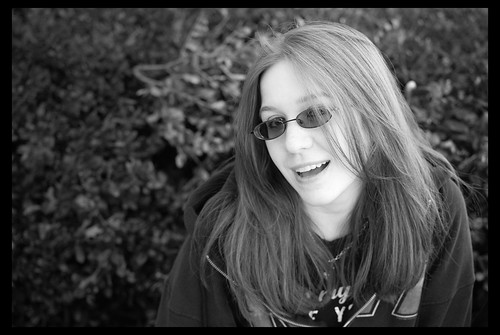
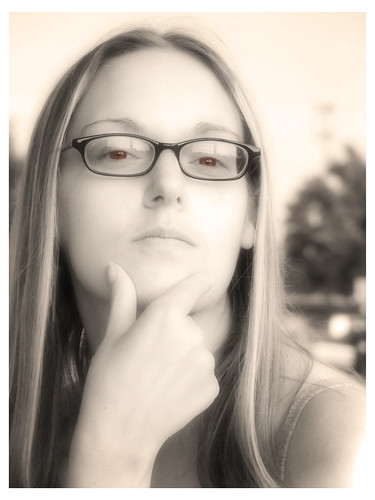
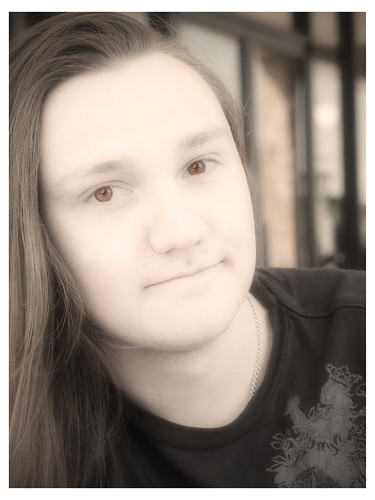
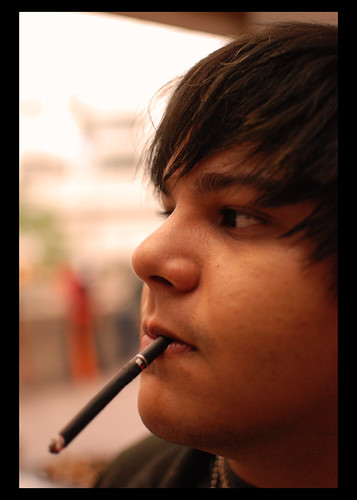
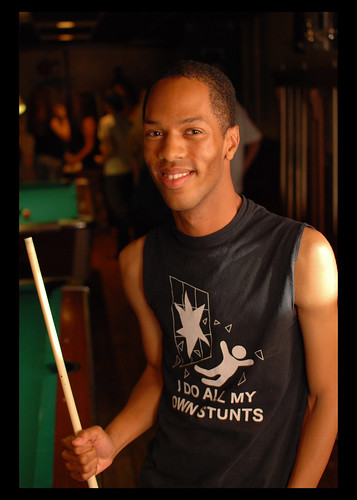
I've had my new E-P3 for just over a week now. It's all I'd hoped for in regards to the pleasure of photographing people. Its controls are intuitive, JPGs masterfully rendered, in-camera edits purposeful and great to use... it is, above all else, a portrait camera. A week of ownership and I already feel the thing disappear in my hands like a good camera ought to do.

There is a test I have not subjected it to, however.

Around this time last year I was with a good friend and fellow photographer, Ted, carving rubber tracks into the asphalt of Blue Ridge Parkway and the general area around Shenandoah. It would be my last month utilizing my old workhorse, the D40x. The year before yielded a plethora of amazing candid portraiture crafted from the view of a sharp, fast prime (my first, the Nikkor 35mm f/1.8 DX). As stated before, my sense of satisfaction with the skill I'd acquired candidly snapping portrait after portrait after portrait left me hungry for a new beast to conquer. And by god I found that beast, but by no means feel it has yet been conquered.

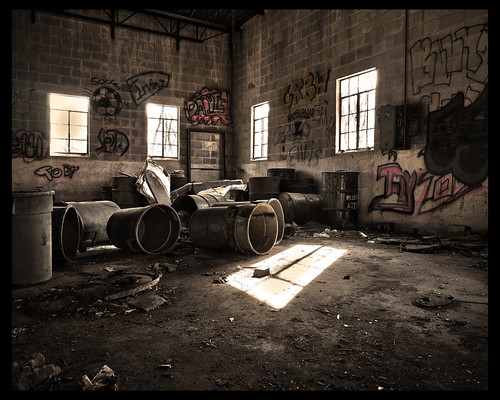
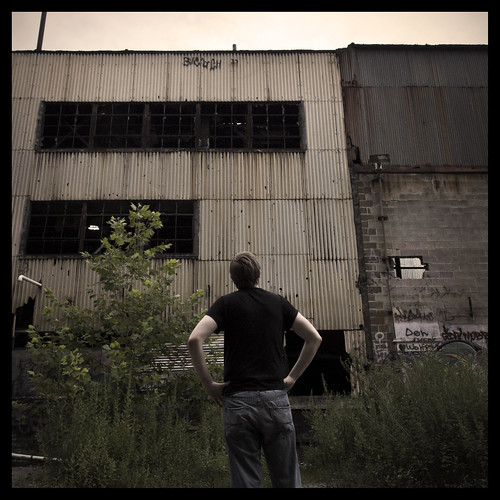
Abandonment photography.

A bit over 3 months since the Great Accident (which wasn't nearly as "great" as the capitals might indicate but certainly a matter of "great" personal impact), I've yet to really enter the violent, flagrantly consequence-disregarding sprint at which I pursued my muse before. To this day, despite every verse building momentum to my hopeful re-entry into this fringe photographic discipline, it just hasn't happened. At this point I'm becoming concerned that I may have lost more nerve than I'm letting onto, especially to myself.

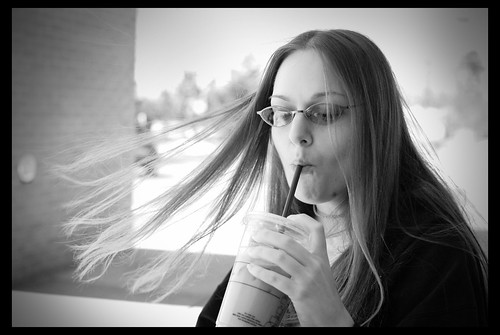
Thus far every move I've made in regards to recomposing my lost camera system has been centric around people shooting, a subject I am very comfortable with and well acclimated to. Whereas the rotting decay and abandonment of Western society requires heavy risk assessment, quick and stealthy entry, exit and all-around travel and above all else involved the acceptance and understanding of self-inflicted danger to health, snapping candids while sitting at Starbucks requires little other than $5.04 for an iced caramel macchiato. There is no inherent risk involved, but similarly there is not necessarily any personal reward.

For every locale into which I managed to infiltrate there was a glorious rush of satisfaction so strong and invasive it has lasted to this day, this very minute. As static and inanimate the subject matter, behind the images were stories, memories, novels worth of adventure and thought and emotion packed into still triggers that dared called themselves photographs. Unlike the legions of casual memories recorded by casually captured candids, these images spoke volumes, grand, masterfully woven tales of past, present and future of the locale itself, the people who once inhabited it and the photographer behind the lens. Like no other photographic focus, they spoke with meaning. This from the rough images I'd managed to spin without ever having even identified and perfected my technique. A monster still to be tackled.

Of course a recovery period is expected when climbing from an accident of the sort I was involved in, but the dramatic drop in momentum towards personal goals remains a shock. So many weekends I would readily wake up early and rush out to squeeze in some adoration toward my photographic musings, but now I feel a kind of dread, the sort of amplified caution that keeps pre-teens scared of highways while learning to drive for the first time. Not even a year ago I was done with that persistent reluctance, but it has once again crept into scope and left me feeling set back at least a year and a half from a creative-progress standpoint. Here I am, sitting at Starbucks snapping portraits of friends over coffee and trying to pass it off as high art when the opportunity is there to revisit these ever changing abandonments and perfect my technique, indulge my muse and produce genuine impact with the images it drives me to create. Clearly I am not doing what needs to be done.

Excuses have poured from my rationalization centers but any time spent intently pondering them leads to almost immediate dismissal. Blame has been applied from the weather to my camera, but none of it holds up. It is Summer, a hot and humid season for sure, but even during the bitter days of Winter I managed to pursue the images I wanted as there are always measures that can be taken to counter a spell, be it hot or cold. The right-tool-for-the-job camera argument has been slightly more anal. Somehow I've managed to talk myself out of on-location shooting under the premise that Olympus cameras are built specifically for people shooting, as if they are tools unworthy of anything but. To myself I say "What a crock of shit". It has never, NEVER been the camera that made the photographer. Hand an artist a Polaroid and damnit he will produce ART. Physical limitations once had credence but I am once again able to move about with minimal, if any, pain. Legal complications technically always have merit, but my risk has always been measured and I am once again in a position of minimal risk given the right locale. Put simply, I am being a sissy. And I have no idea why.

To some measure it's likely natural aversion to risk of physical harm given the great measure of it I came to. Compounding that risk aversion may be an underlying sense of "I can't put myself up to more risk after having just lucked out so much". My experience has had the effect of a teenager's first car accident, the teen formerly driving with wanton disregard for life and limb only to exercise much greater care after the fact knowing in great detail the potential consequences. In most circumstances this is a sensible and beneficial reaction, but in my case it is resulting in a stressful personal dilemma and negative impact upon my life goals. Perhaps my situation is less like that of the teenager learning a fear of mortality and more of a Sportsman injured so badly he dreads returning to the sport. Like a Grand Prix driver in a terrible car accident, suddenly reluctant to take the wheel in quite the same way as he did before.

I am currently taking baby steps toward my ultimate return to the practice of urban decay photography. It is too alluring to ignore and too invigorating, too life altering to forget. But no amount of tip-toeing will ever satisfy the hunger of a muse once fed to extremes. My capabilities are more than apparent to me. At the moment I am simply handicapping myself to placate a survival mechanism. When, oh when, will I reassert my authority over my own reluctance and take that plunge back into my potential. My capability. Myself, as if there was never a hiatus at all.

Tuesday, August 2, 2011

Too Impatient to Wait: E-P3 Break-In

Work ran a tad late last night. It is my tradition to try and be in no later than 6:30am or so, early enough to where an 8 hour day at the office won't cut too deeply into my evening time. Yesterday the total hours clocked was 11. Normally this would only mildly irritate me ritualistic habits during the week, but yesterday was no normal day. Oh no, yesterday there was a gem awaiting me in a little UPS box. It called my name from miles away, demanded exclusivity of my attention, beckoned me to come and coddle it in my hands.

Okay, so clearly it did none of that REALLY, but nonetheless, an extra few hours of anticipation really made my giddiness skyrocket for when I came home to unbox my brand new and utterly lovely E-P3.

First impression upon getting the awful cardboard and peanut packaging out of the way... complete surprise. It's one thing to read about a camera body online, hear how its construction is methodically dissected and its size/handling relate to the average man-hands, but having the body physically in front of me and the tactile nature of my introduction to it had me very much taken aback. My GF1 was solid, but clearly built of flexible plastic. Same goes for my old D40x. Both of which were fairly light cameras, not nearly so weighty as to really be noticeable over the shoulder unless mounted with a particularly large lens. Completely different story with the E-P3. I'd read about its solid metal construction, but didn't grasp what kind of confidence that inspires when held in the hand. I've had metal film SLR cameras with faux leather gripping but nothing that was quite as elegantly incorporated as in this little digital camera. And it was very little compared to my expectations. Whereas my mental concept of the camera had it being significantly larger than the GF1 that preceded it, I was shocked to find the camera in my hands occupy nearly the exact same amount of space. It was small like the GF1 but deeper to the point at which it was recognizably easier to hold, especially in the two-handed manner that provides the steadiest shots (I never knew where to cradle the GF1 with my second hand, an issue not too dissimilar than that which I have with the XZ-1 compact). I could ramble on and on and on, but the bottom line is that the body alone left the impression that I had invested in a far more professionally minded camera than I ever have before, both in terms of construction and meticulous attention to the most important aspect of any photographic instrument, ergonomics.

The kit lens held just as much surprise, though not all necessarily positive. The GF1's kit zoom, the 14-45mm f/3.5-5.6, felt extremely solid in the hands. It was on the larger side, but the nature of its construction excused that bloated presence on the front of the camera. Olympus' kit zoom, the 14-42mm f/3.5-5.6 Mk.II, was a far more diminutive piece. From a size viewpoint, when collapsed, it felt like a couple of 14mm f/2.5 pancakes on top of one another, just as thin around and only maybe as deep as 2 stacked on top of one another. I rather like the smaller presence it has on the front of the camera compared to the old 14-45mm, especially without its hood to tempt an even more gaudy appearance. Its construction didn't feel quite as solid, however, with a much more coated plastic feel than the 14-45mm. With the impression left by the all-metal body, the kit lens felt a little disappointing in this respect, but it more than made up for it in the feel of the action of the zoom and focus ring. Panasonic's lenses suffer the same drawback as Nikon's zooms, the rotation of the barrel proving horribly sticky and difficult to dial in with minute adjustments both with the zoom ring and the focus ring. Here Olympus managed to impress me to high degrees - the zoom and focus rings rotated with the kind of buttery smoothness of higher end Zeiss or Voitlander glass, allowing me to dial in a focal length or fine tune the focus directly rather than the routine I'd become accustomed too of snapping too far, dialing back, then trying to dial forward again into the sweet spot. For a kit zoom it is a joy to use.

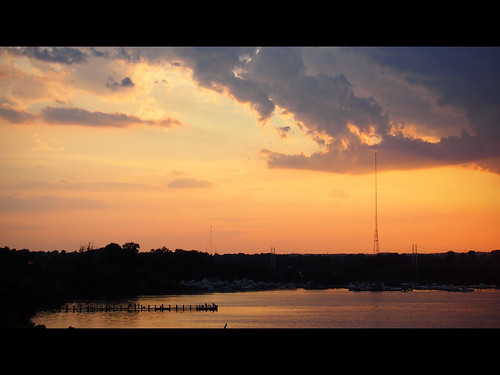
By the time I'd unpackaged and assembled the camera the sun was setting in front of a dramatic, stormy sky. Perfect conditions under which to test out such an aesthetically appealing tool. I set my tablet to stream the inspirational sounds of various Post-Rock artists, popped in the earbuds and began a little photo walk. Most of the camera's settings I kept as default as possible, adjusting one thing at a time as I saw necessary. The interface was very intuitive, not too dissimilar from that of the XZ-1 but with a bit more depth available for greater image adjustment in-camera. Immediately I was able to find and adjust image options with limited hassle, the greatest hick-up being the difference in when the scroll wheel was utilized in comparison to the 4-way directional buttons underneath. For the walk I kept the camera in auto ISO (which surprisingly took liberties all the way to ISO 1600, something I will have to change in the future as that is not an ISO I am comfortable with using), used the iEnhance color mode which very intelligently pumped specific depths of color while leaving other, less appealing ones alone, left it in Program shooting mode and stuck with fine JPG files. Although I failed to reduce the noise reduction algorithm's intensity (which is to say turn NR off completely) and didn't notice how broad the spectrum of auto ISO was (just a tad higher than I was comfortable with from an image quality standpoint), the resultant images did not disappoint.

Out of camera JPGs were produced masterfully, with saturation, sharpness and contrast exactly where I would have rendered them in post. For deeper color shots they may very well have even be handled better than what I could have produced as my ability to work with color in RAW is lacking (mostly due to uncertainty and simple lack of knowledge). The OLED screen of the E-P3 is marvelous, showing images in amazing clarity and perfectly calibrated color, contrast and gamma, the way the images would look if printed. In fact, the screen was so good that it made my horribly uncalibrated laptop screen feel utterly inadequate for any kind of image review at all. This isn't a foreign concept to me - when I had a Canon G10 in my bag the screen on back of the camera was similarly stunning, but it tended toward blowing out the image review with over-saturation and contrast compared to how the printed image would ultimately look and especially how the image appeared on a computer monitor. In this case, however, the camera's screen is legitimately better at presenting the image to the point where it's almost difficult to know whether my laptop's uncalibrated screen can be trusted as all in any even minor post-work. I tried a few small JPG edits for my crop from the photo walk but had an issue with channel clipping, indicating to me that the camera itself was rendering the JPGs at the maximum limits of their tolerance already meaning they needed no post-work done upon them at all. It was odd. I've never dealt with any image, JPG or RAW, that didn't need or benefit from at least a small degree of post. JPG shooting with the E-P3 runs the risk of changing my process completely by limiting the computer to nothing more than an elaborate cropping, alignment and framing tool. And that's certainly not a bad thing.

I have yet to push the limits and test the RAW capabilities of the camera but find myself much less eager to do so. My interest is far more focused in perfecting the manual adjustments available for JPG rendering. It's been a very long time since I've worked with any camera able to produce such lovely images out-of-camera and I'm more than eager to lock in the settings that are most appropriate for stills and people shooting respectively. Before I feel comfortable with any attempt at RAW editing I would certainly need to calibrate my laptop screen as well, preferably to match the calibration of the camera's OLED screen for consistency across the board. Somehow, I suspect RAW simply won't see much use anymore.

Given the praiseworthy first impressions this camera has left me with, my anticipation for the future additions I have planned for the system have grown ten-fold. The VF-2 viewfinder and 85mm f/1.8 lens are especially high on the list of anticipated items. Having tested the Panasonic 14mm f/2.5 on the E-P3, the 12mm f/2.0 has somewhat fallen by the wayside as something that would certainly be nice to have but isn't nearly as crucial as originally thought as the E-P3 accommodates that lens surprisingly well (distortion is relatively high, but shot in RAW the distortion is corrected automatically in ACR). Some manner of normal-to-long fast prime is definitely an eager addition to the bag, though. Portraits will be able to sing with this tool at my disposal.

In the months to come I finally feel a sense of jollity at the future of my pursuit of photography. Limited to the XZ-1 I felt encumbered and weighed down by both poor perception and inability to adapt to different shooting conditions. This E-P3, however, re-opens doors that were never entirely shut, simply closed to the point of only a crack being left between door and frame. I never fell off the horse, and my acquisition of this new camera is an empowering testament to my sense of dedication to the art of photography. Amazing I ever doubted it to begin with.

Monday, August 1, 2011

A New Tool on the Horizon

Let's get one thing out of the way - I am a consumerist whore. Much as I would love to say I'm steadfast with the "It's the photographer, not the camera" preaching, the fact is I am a shallow bastard and also want a camera that "looks cool" and has a crisp shutter sound that tickles my ears.

For a couple months after my recovery I've been using the XZ-1 and I've had some decent success with it. As a tool, the compact has proven itself to be competent and pro-minded, with extensive controls I appreciate and a lens second to none I've ever seen in a compact. It is a fantastic camera, plain and simple. But fantastic as it is, there has always been a strong pang deep down for something a little more... substantial.

The XZ-1 is small. Diminutive. Easy enough for my hands to hold, but very difficult to hold steadily unless cradled in a frankly retarded manner with two hands. Its shutter barely exists, making a nearly mute click-click when triggered that doesn't ever jostle the hands. Shooting it feels like playing with a toy, a tiny mock-up that doesn't hold strong in situations where a more professional demeanor is desired. Misguided as the perception may be, it's very difficult to be taken seriously as a photographer when the only tool at your disposal is a point and shoot. The camera will still have a place in my bag of tricks, but with a much more casual (and therefore limited) capacity. It is a camera for nights out at the mall with friends, at restaurants, at events where you'd rather not be noticed as "that guy with the camera".

Originally my camera lust directed me to wait for the rumored pro-model GF1 replacement. To some degree I'm still waiting for that camera, but am not leaning on its release as a crutch like I once was. First I'd heard it was due to be released this month or next, but the new word is that its release has been pushed back till the very end of the year, simply too long for me to suffer by with naught but an overpowered compact package. Used GF1s still sell for upwards of $900, so a direct replacement seemed out of the question. Panasonic's latest offerings, the GF2/GF3 and G3 all have the wrong ideas behind them from the perspective of a photographer. More and more it feels like Panasonic is marketing to the mass consumer, implementing touch screens and dropping direct control dials and buttons. More so, the JPG output of Panasonic cameras only managed to worsen with the cramming of more megapixels on the same sensor die (although the RAW image quality remains upper echelon).

It took time, but my patience and brand loyalties wore down enough to where I much more readily jumped ship, this time redirecting my system investments into yet another brand - Olympus. I've spoken plenty on the impressive JPG output of Olympus cameras, a strong need for the event shooting I am often tasked to do. RAW does not disappoint either, with much better support in ACR for Olympus lenses making my lens correction process as simple as selecting the utilized lens from a drop-down list. Despite owning and frequently using the LVF-1 viewfinder on my old GF1, I'd be lying if I didn't admit the unit was piss poor at its job, with utterly low resolution and color reproduction, whereas Olympus is nearly famous for the VF-2 viewfinder it managed to produce for use with its PEN line. And that is a rather important difference that influenced the shift - the presence of a compatible and VERY competent viewfinder. Something I've missed ever since I dropped the Nikon branding (and DSLRs in general) was the intimate feeling of composing through a clear eyepiece. Especially when candidly photographing people, I would constantly have one eye to the cup of the viewfinder and the other still open, one ensuring the proper composition of the image and the other keenly trained on the subject unobscured and ready to trigger a mental reaction to coax my finger down on the shutter. With the LVF-1 on the Panasonic this was much more difficult to achieve as the image in one eye did not even remotely match the other. Having tested the VF-2 on an Olympus, I already know the unit will more than exceed my expectations, necessities, hopes, dreams, etc.

So, finally, after much bantering about the process of thought behind it all, I get to my original point - my new tool. It is due to arrive via UPS today, and unlike previous system investments I don't find myself suffering the typical latent buyer's remorse. Despite being of a different brand, it will still accommodate the few Panasonic lenses I have left over from my GF1 days with the caveat that those Panasonic lenses will never be capable of producing clean JPGs but can absolutely produce stunning RAW files. Unlike the GF1 and its strict RAW shooting experience, this new tool will be able to generate gorgeous JPG results out of camera, with a plethora of customization options available for adjusting the color space and how various aspects of the resultant image are handled. And with the reintroduction of intimacy to the shooting experience with the VF-2 viewfinder, I foresee a resurgence of candid portraits in my portfolio. Mentally, a system is ready to be constructed, with different elements already prioritized and a reasonable timeline of acquisition drawn out. A body and kit lens now, a 45mm f/1.8 next month, a VF-2 and spare battery not long after that, and a 12mm f/2.0 before the end of the year. All lovely tools for a lovely trade.

E-P3, can't wait to meet you!

Thursday, July 21, 2011

Portrait Photography Reboot

The XZ-1, like most Olympus cameras of the level at least above their typical point-and-shoots, features on its mode dial a special little mode called "ART". I've tooled with it before, mainly the dramatic tone setting which brings out very stark, HDR-like image quality that can honestly either make or break any given scene. There are other settings in this particular mode as well - diorama, which gives a very misaligned tilt-shift look to things, high contrast black and white which literally permits each pixel of the image to be either black or white with no in-between (it works a charm in high-ISO situations, for sure), pinhole which looks as its name describes, all of which are certainly neat, not necessarily all particularly useful. One setting, however, I've developed something of an affinity for when doing my random candid snap shooting while sitting up at the coffee house bored to tears - portrait mode.

Unfortunately, when in an ART mode, most settings are handled automatically, allowing very little control over aperture and ISO and shutter speed, the trinity of essentials. Most fortunately, however, Olympus programmed the portrait mode to function much in the manner I would set it myself, maintaining the lowest possible aperture to best limited depth-of-field and handling the colors in just the warming way I would have treated them in post anyway. Then, to up the effect, the digital equivalent of a softening filter is applied to the resultant image, smoothing over all the harsh details better than I was ever able to achieve with a diffuse filter back when I was shooting weddings. The JPG results are truly beautiful, but seeing as I can't leave well enough alone, I have a tendency to apply my own little touch to the resultant images and much to my surprise find the files very receptive to the effects I apply.

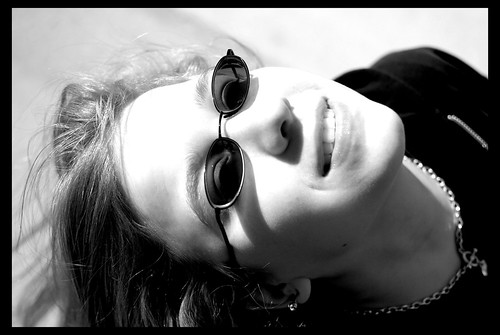
Some time ago I stumbled upon a fun manner of producing very clean black and white portraits with digital. Whereas the use of a red filter while shooting in black and white did leave a person's face brighter than most of what surrounded it, the details in the skin were all typically still there. With digital, however, and especially with the way bayer matrices feature far more green photosites than red, the application of a red filter in post did something magical for faces. The blemishes, discolorations and little things like freckles vanished under the digital filter. Even better, when the adjustment layer saw its opacity reduced to allow some measure of color through, the face managed to retain the much cleaner appearance sought after with high level portraiture.

It only came to reason that I should try the tactic on a portrait shot in the appropriate ART mode. The results were glowing, quite literally. In-camera softening of the JPGs already smoothed over the fine details in the skin, the addition of the digital red filter completely eliminated them. Any extra clarity afforded by the RAW was not missed given the sharpness retained in the details that mattered. Having been a RAW guy for so long, it was so nice to find a mode on the camera that eliminated a good portion of the post work I would otherwise have to do the hard way.

No other point to this post, really, just a long thank you to Olympus for designing an extra set of modes that prove incredibly useful to people photographers.

Tuesday, July 19, 2011

Two week later, JPGs still haunting

The uncertainty I'm experiencing in the selection of a new pro-body to use for my future photography is simply ridiculous. It should not be this difficult, the conundrum my mind has generated being several grades of retarded. A choice must be made, lest I fall in line with the legion of unfulfilled shooters in this digital world who won't invest in a system because it was planned to be released obsolete and replaced by the next high-tech fad only months later.

A friend came to me recently asking me for a patriotic photo to be used for the cover of his flag store's catalog. I was certain I had a fitting shot (which I was unfortunately unable to find before the deadline), so I proceeded to sift through the digital archive of photos I've taken since '04. It was a surreal experience, really, seeing the story of my life as told only incidentally by the photos strewn about the clusters of the disk. I had no idea that my innate inclination to photograph everything I see and do would ever amount to anything more than the select few I published online (and otherwise).

Once past the wall of indecipherable RAW formats that heavily populated all of 2011 and most of 2010, a gorgeous presentation of people photos dominated the theme of mid 2010 to about 2008. All were JPG, out-of-camera images shot with the D40x, and they were all gorgeous as-processed by that camera. They reminded me how much I miss that style of shooting, with no involved and numbing post-process necessary. That was all done beforehand, allowing the publishing process to quickly flow.

People don't much dominate my photography anymore, but I'm fairly confident that is because I traded in the ease of JPG shooting for a strict RAW process. And that transition was only due to a change in primary subject focus - I had been candidly snap shooting people for years, to the point where it came so naturally I wasn't impressed by the results anymore. The need arose for a new subject, so I traded in the Nikkor magic for the GF1 and perfected the shooting of decayed interiors as best as I could. Now I'm at another transitional period, with an interest equally in both people and static interiors. Two very different subjects, best shot with 2 very different approaches and most appreciated when approached with 2 very different post-process focuses in mind.

More and more the JPG output of my next pro-grade body is scaling the ladder of priority. Panasonic has never had very good JPG processing, only heavily detailed RAW files. For serious, static subjects, that is well and good, but I find my need for such heavy focus on the serious and static diminishing. I'm back to shooting people again, snapping at events and randomly while sitting at Starbucks. I do not want to be stranded in front of my computer for any amount of time to churn those files into usable images when the end result is ultimately only ever going to be a snapshot. Much as I love the G series that Panasonic has produced, impressed as I am by their bodies, their lenses and their image output, they will never be a strong replacement for candid people shooting until their JPG processing engine is heavily overhauled.

My choices are becoming increasingly difficult because I cannot adequately pursue my thematic affections without being invested in two systems. I am forced to choose between them. Panasonic has the best system for architectural and interior shooting, with in-camera correction of all distortion and aberrations in its RAW files so that, once in Photoshop, the hardest tasks are over and it all comes down to the artistic side of RAW processing. No matter what I do, I will always have a soft spot for Panasonic cameras and invest in them accordingly, they're simply that good.

For people shooting, however, my options open up and become much more difficult. In keeping with the MFT standard, Olympus has always been well known for having superb JPG output, with plenty of customization available for JPG processing and in-camera editing. With the recent release of their E-P3, a 45mm f/1.8 was also announced, a cheap and utterly fantastic lens for medium portrait shooting, making that camera seem a clear winner for dedicated people photography. On the flip, however, Fuji also has a camera equally up to the task of candid people shooting with the X100. Its APS-C sensor generates much cleaner higher ISO output, has just as much customization and flexibility with its JPGs and excels in just about ever area in candid people shooting, from flash sync to dynamic range retention. Of course, the issue there is its lack of interchangeable lenses (and the relatively wide 35mm equivalent lens isn't particularly geared to people shooting) and horrendous production schedule (the camera, ordered today, would take literal months to arrive, for sure). In both cases, severe compromise in some area is necessary, and it isn't yet clear to me what I'm willing to sacrifice.

Word in the rumor mill is that Fuji is in talks with MFT standard members Olympus and Panasonic about either potentially joining in the MFT standard or otherwise contributing to it. Panasonic hasn't yet released its scheduled GF1 spiritual successor, and I could only hope in a however unlikely miracle that the gift of Fuji to its potential MFT brethren is its JPG processing magic. If the GF1 successor churns out delicious JPGs then I would certainly love to a be a one-camera-system kind of guy. Today, however, with how things stand in the EVIL camera world, it appears I'll be waiting at least one more year before that kind of magic makes it way into the list of options. For now... choices...

Thursday, June 30, 2011

Identifying "Good Enough"

I've gone through a lot of phases with my shooting, the tools I've used and how I've used them. We've all had transitional dilemmas in how we develop our images, from being dejected by images that receive any treatment in post to afraid of developing an image with so much post as to give away that it has been treated to being afraid the image doesn't stand out enough because it hasn't gone through enough post. It's weird, really, how the process is processed mentally, and for simplicity's sake I'm going to assume everyone goes through the post-processing dilemma in the same manner as I do. Point being I am now at the stage where the mentality on post work has come full circle and the question nags at my brain, "Do I need to back off".

Over the past 8 months my post-process has taken on a very defined style that matches the subject matter I was mostly shooting perfectly. My images were always of decay and detritus, so the colors were muted, textures kept tack sharp, areas burned and dodged appropriately, etc. It's a style that has become a process so ingrained in my brain that I do it on autopilot, not unlike a daily work commute done so many times there's no memory of the time between when you left home and arrived and work. So long as the content of the image matches the style everything works out great, but when the image is of different subject matter I become lost and can't produce an attractive image to save my life. This was the dilemma I faced editing photos I took in Pittsburgh this past weekend, and it spawned yet another question, "What is good enough".

A majority of this dilemma comes down to one choice I made last year, a transition that spoiled me as much as now maddens me - switching from JPG to RAW. Back when I was still a Nikon faithful I refused to shoot RAW because the file sizes were ridiculous, the format wasn't universally recognized and the files were easily corrupted. It didn't matter at the time because Nikon's processing produced JPG images that looked just as good as a processed RAW, and since a majority of my shooting was of random street subjects and people my post work was very light. The catalyst for my transition came when I adopted Micro Four-Thirds with the GF1. Panasonic had (and still has) a long way to go as far as JPG processing was concerned, so the only way to get maximum image clarity from the camera was to exclusively shoot in RAW. Given what I was shooting this was not an issue, the images would require patience and labored attention anyway. But more so, the clarity of the RAW images led to an addiction. It became clear to me that the potential of a smaller sensor isn't necessarily realized unless the image is captured and processed in RAW. Everything I did was therefore heavily focused on the RAW editing process.

Fast forward to 3 months ago, an accident claims my greatest tool and I am forced to replace it with an even more sub-par sensor, a 1/1.6" XZ-1, a compact. And as time has gone on, especially after the photos shot in Pittsburgh last week, the divide between the convenience of JPG and quality of RAW has widened into painful obviousness.

The XZ-1 produces great looking RAW files. Even with the small sensor, the lens is so sharp that RAW produces images that can be sharpened into the clarity my GF1 provided. The great shortcoming, however, is its lack of latitude with color. If I were still shooting abandoned buildings all the time that would be fine, but as I'm recovering my subjects are less and less served by the desaturation and more by responsibly pumped color. Unfortunately, color management is a skill I've yet to learn in RAW developing. So then the idea entered my head, "I'll just go back to shooting JPG, Olympus is known for their great JPG images". Then comes the brick wall.

Olympus cameras are known for their JPG files because they feature art filters, special in-camera processing techniques that generate VERY stunning image results. So stunning, in fact, that I couldn't resist using them. Perhaps my greatest folly was shooting in JPG+RAW because it was once I got home to begin processing that the difference stood out to me. As amazing as the tones and contrast of the JPG images were, they paled in comparison to the texture retention and fine details recorded by the RAW files. Thus the internal war began - which was more important, the look of the image while zoomed out or the textures retained when zoomed in. It's a battle I'm still grappling with.

Desperate to retain texture while achieving the gorgeous look of the JPG images, I attempted to combine them in Photoshop with different layers and blending techniques. Not only was it a painfully long experimental process (as each image had to be handled very differently), the fatigue experienced creating those blends caused me to falter in very simple post work such as lens correction and color channel balancing. Whereas I had a method down with the GF1 and could crank through images one after the other, the shots from the XZ-1 enslaved me to my computer, requiring far more post work than the resultant images warranted. Although the process of shooting them was exhilarating, the post has brought me to a point of rethinking my approach to imaging in general.

Shooting in RAW and RAW alone is one thing. It sees its potential realized when the images are well thought out and meticulously captured with a specific look already in mind. JPG is clearly more functional as a spontaneous shooting format, which I would do well to remember as it saves the photographer from hours laboring in post. The gray area is the mentality behind shooting in which the art filters come into play - spontaneous artistic shooting. In Pittsburgh I shot in RAW+JPG because I not only wanted the effects of the art filters but I wanted the clarity of a RAW for optimum sharpness. Who knew if one of those randomly snapped images wound up being so good as to warrant dedicated time in post to bring forth its full potential. After this miserable experience, however, I've learned that keeping all the options open is paralyzing-by-choice. Get the tones of the JPG or get the clarity of RAW, but never both. Have the latitude to develop the image differently over time or settle with excellent processing out-of-the-box you can never duplicate. Insisting on having a RAW file comes down to one final question, "Is it worth the post work".

Having shot RAW for several months its very hard to step back from an image and see it simply for the way the camera manufacturer intends. The post-process I developed made the images feel more personal, but with varying subject matter it has planted me in front of a monitor far longer than I care to sit. When processed in-camera, each manufacturer has its own process and parameters, however customizable, by which the image data is developed. It may not be the way I would have processed it, the noise reduction may be too strong (I'm a fan of fine film-grain-ish noise) and the sharpness may not be at the peak I prefer, but it sure saves a hell of a lot of time. As much as I may want the clarity of the RAW data, I may very well regress to a strict JPG diet for all unplanned, spontaneous images I may capture. Frankly, anything is better than slaving over an image for hours just to try and get some semblance of what it looked like as a JPG but a fraction sharper.

Friday, June 17, 2011

Interruptions

Proverbially, we are told that "shit happens". Logically, we tend to ignore such a sentiment until the "shit" happens to us. When "shit" is a direct consequence of one's own action or decision, it's easy to digest and move on. Occasionally, though, insane, seemingly random occurrences of "shit" seem to crawl from sewer drains, cracks in the drywall and corners of the closet to introduce a complication that is impossibly brutal and cannot be prepared for. This random, brutal "shit" and I have been introduced.

Without getting into too many deliciously juicy details from a gore-junkie's wildest imagination (and for the protection of all involved), I was recently involved in a rather bad (and I am told that is an understatement) car accident. Bad enough that I have been out of commission for some time, but after 6 weeks am slowly transitioning into my life as it was prior to the accident. The event has had several impacts, many long-term ones that will likely manifest in mental scarring (which isn't necessarily a negative). But in relation to what this blog is supposed to be about, how my main hobby-hoping-to-go-business is affected, the impact was surprisingly high. But, again, that is not necessarily a negative either.

The most obvious impact would be my lack of a camera system. My camera died a tragic death in the accident, as well as the lens attached to it. Warranties do not cover such damage as missing mode dials, cracked casings, dirtied silicone and sticky-from-the-red-stuff focus rings. And as much as the system I had assembled was something with which I could work wonders, it is unlikely to ever be reassembled as the camera body is no longer made and the lens has become increasingly rare (prices compared to when originally purchased are simply prohibitive). My system is now incomplete, with 2 lenses left and the various accessories.

In this situation I have 3 choices that reflect reason: A) Purchase a camera body that works with my remaining equipment but is not a body that fits within my concept of a pro-grade tool, B) Sell the remaining gear for what it's worth and change systems entirely, effectively starting from scratch and at a loss, and C) Purchase a pro-grade compact as a stand-in for the time being and wait to see what comes out new this Fall that fits within the system I had. As much of a trial of patience as it is, I went the C route. For now, my only camera is an Olympus XZ-1, the best (in my opinion, anyway) pro-grade compact available. It will serve all the purposes I require of a camera for the time being, and when the next oh-la-la camera comes along that tempts my wallet, I will then have both a complete system for professional work and a compact for those nights out with friends when the bulk isn't reasonable. AND the extra time necessary for the next oh-la-la camera to come out gives me ample time to save up the funds necessary to buy both it and a replacement for the lens lost in the accident. Provided my patience holds fast, I should come out the other end of this with an improved tool set that, barring further intervention of random fate, should last me for a long time.

Amusingly, I was scheduled to sign the lease on my new studio at the Bromo Seltzer Tower the day after the accident occurred. I was lucky to have family both involved and interested in preserving that space for me once I got back on my feet - the studio was held pending my return to the living. As it stands I'm scheduled to sign a revised lease and acquire the space early at the start of next month, but my original intent on the use of the space has gone through some necessary modification. Without a competent system camera, I'm not likely to be investing in new studio lights and backdrops and other such things intended for model shooting. Truth be told, I lack the drive I had prior simply because it takes more energy now to pursue things that used to come on their own when I was at prime. Model, product and event photography have taken a backseat to photographic exploits that require far less involvement and stress, exploits that equate to sketching to more traditional artists. I'm not mentally or physically in a position to pursue the professional ideal, and as such the studio will more than likely end up more an exhibit of work I've already done for the time being. Printing, matting, framing, and maybe even some editing of those sketches I snap to keep my skills keen. Until I am once again functioning at least near to my fullest potential the studio will be my miniature gallery.

It is disappointing that I won't be able to chase down the business elements of photography like I originally intended. Money will not be made, gigs will not be booked, clients will not be met, rapport will not be built. However, all of these things will be realized eventually, given sufficient time. And in the time I have, a very important element of this business ideal can still be pursued. Advertising. Image. I will have the time to shape a face for my business uninterrupted by the business itself. A sort of head start. When Kneejerk was first brewing in my brain there were hundreds of ideas floating about that never saw any attention because the act of taking pictures was too distracting. Now I have at least a few months to let those ideas come forward, polish them off and put them into practice.

Typically I feel like traumatic events like this accident shouldn't affect the victim over the long term. Surely a few months down the road, once reintroduced to normal life, the old habits set back in and the personality resumes from the point it had left off. Technically I'm still in the wake of the episode so my opinion right now is horribly biased. There are a few sentiments that I used to hold and bury deep down that died in this accident, though. Not items that I will openly talk about, but certainly baggage that I'm glad to be done with and bid adieu. As terrible a thing the accident was, I will come away from it with some very happy realizations. Amazing how clear things become when the contrast between one's lowest low and those wonderful things worth hanging onto is cranked to 11. It is good to know for sure what matters.