Monday, August 11, 2014

Ruminating on Lost Jollity (that word I used to describe my mentality back in 2011)

Time is a weird and wary thing.

I've spent the last 2, maybe 3 months in what can best be called a "rotting" state. The ebb and flow of my day to day life has hit such an excruciating point of vast monotony that it has been a difficult process climbing out of the pitfall of negative brain space. It is that mental state that has at least encouraged my revival of this forum on which to speak my mind, much against the wallflower trend I've taken on most social platforms in the past year. I've become afraid of my own opinion, afraid of self expression.

In doting on the empty space of this blog, I took the time to read entries past to decipher where I was mentally, emotionally, at its inception, and to seek a potential causality to my ensuing motivational pitfall. Can't much find that source, that root cause, but it at least made me happy to realize I was once much happier and thus have the potential to be that happy again.

One post involved looking back on work from the year prior as a sort of gauge to my progress and development in photography. Taking that same concept and applying a small twist, I find myself ruminating over the photos I took at that time I was most innately chipper.


I look through these images and I mainly notice one thing. I was photographing everything. And more than that, I was sharing it. Sharing my day to day story. Above all else, I recognize that as something I have completely forgotten how to do. Anymore I am far too encumbered by standards, by expectations. I won't share an image if I don't find it compelling to an exceptional degree. And the impossibility of producing exceptional images every single time, as an unreasonable sort of new standard, has degraded me into a relative mute. No voice and only a disjointed story.

This is potentially an unfair comparison of mental states. I had just gotten over my car wreck and was operating on the high of jumping right back on my feet post-almost-mortem. Photography was the driver, the motivation to keep kicking and screaming and fighting on with my life, and it was imperative that I turn the passion into a business and reap rich rewards of success in the field. And I've done that, and continue to do it. Only I never anticipated that success becoming just another status quot, to the point where the passion has all but drained barring a short stint with time lapse photography like some last hurrah.

Fighting to reclaim my life pushed me to heights I never anticipated. But I've grown sloth and stagnant and stopped fighting. Fighting for my head space is unreasonable given that it's the homestead of the issue. I imagine many photographers have reached this point in their lives in which they lost the gusto of their ego-centrism and were left with a sharp choice - give up the trade or find a subject of passion to fight for. I'm still hunting for that passion, and I have a good idea of where it is. Just have to motivate the bones.

I Stand Corrected (TLR-alike digital is apparently a thing)

Upon conclusion of my earlier post I was prompted to scour the annals of the Great Mighty Internet for TLR-alike digital cameras and patents that have already been established, and lo and behold discovered a dated PetaPixel article detailing a now out of production toy camera that Rolleiflex, the original household name of medium format TLR, released in 2011.

As a first production model of the concept of camera I had in mind, it's relatively close, but certainly priced beyond the reasonable and pared down to aforementioned toy camera status. Down to the need for the faux film winding lever needing a spin to "crank" the camera for each shot, it's less a photographic tool and more a novelty item.

But the concept is there. And with the lower prices of similar technology today (hell, it was lower in price then than what was charged), is more than viable. While my perceived ideal naturally entails a larger sensor able to take advantage of Micro Four Thirds glass, a fixed lens system with, say, a 1/1.7" sensor (or even a 1/2.3" sensor just to get it out the door for first run) is more than adequate to cater to the initial target audience to establish a commercial foothold and thus permit production of a higher grade of camera based around a similar layout.

Call me foolish for my insistence that this model of camera has any life left in it, but I am wholly convinced it would make waves if marketed intelligently to the right crowd (e.g. Instagrammers). I refuse to believe the technology itself is too expensive to gamble on a new design when Panasonic is selling off its smaller Micro Four Thirds bodies with a kit lens for less than $200. With WiFi/Bluetooth connectivity and an intelligent interface able to push images up to social media quickly it seems remarkably fun. Or maybe I missed the boat when everyone started using their cellphones above dedicated cameras for any and all things. But still see enough people indulging in dedicated point and shoot cameras to indicate that this may very well have its appeal, again, especially with the Instagram crowd. As always, it's all in the marketing, and faux vintage is all too easy to capitalize upon at the current stage of our (well, at least American) cultural trends. 

Enamored by Different Formats (that nobody will indulge)


Sometimes I can't help but wonder how or why some things become the industry standards they do. At the same time I also wonder what gene is hiding in my makeup that causes me to rebel so innately against the chosen standard, the conformity. Not because I see it as inherently "bad", but simply because I recognize it's what everyone else will be using. Rebellion by inexplicable nature.

I'm speaking of course of the 3:2 aspect ratio that has been the standard for some time now in the photographic world. Relatively few players in the camera market have ever dared to stray far from that globally accepted standard, and even in straying they did not do so to any extreme (namely Micro Four Thirds players Olympus and Panasonic with 4:3). This baffles me given the breadth of formats formerly accepted by the early film world, from 5:4 large formats to the glorious 6:6 medium format square. A video upload from the amazing folks at DigitalRevTV touched on this concept for me a little bit by accident when elaborating upon the availability of Full Frame for "cheap".


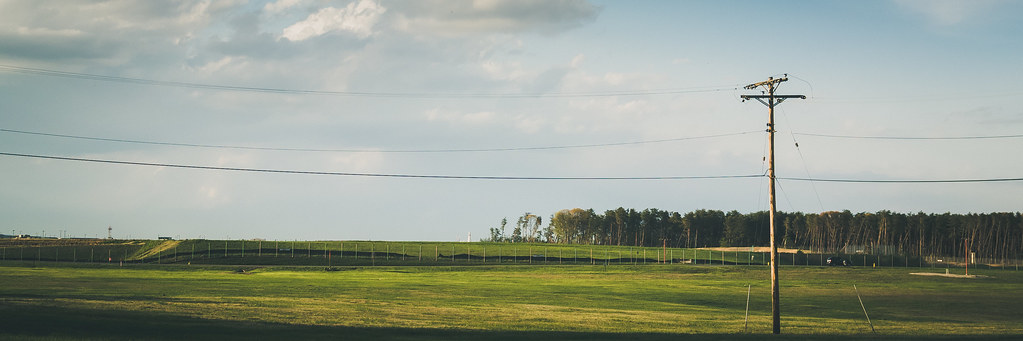
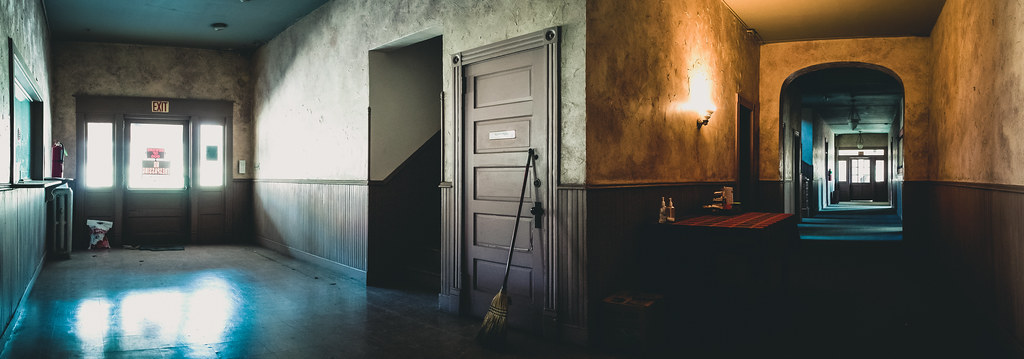
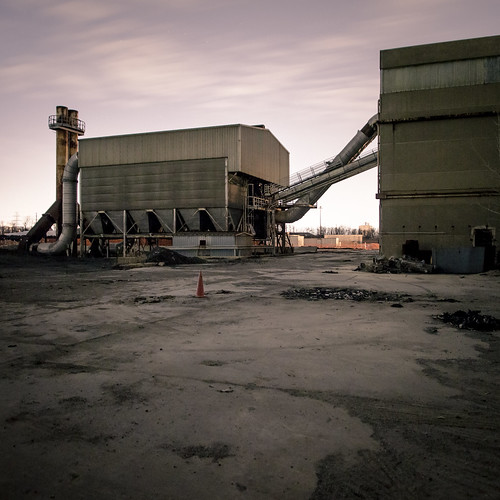
Kai, bucking norms for the fun and the challenge, picks up a panoramic 35mm camera almost instantly. Prior to watching the video I was never aware of the enormously wider 6:2 aspect ratio potential of 35mm film, but seeing some of the sample images produced I fell immediately in love with the format. Much as I have long had an adoration of 6:6 squares for the purpose of photography meant to showcase a single strong, blatant subject (especially for portraits), the 6:2 ratio stood out spectacularly to me as a mean to express the "feel" of a space, the commotion and mood of an area. It's a format best employed for subjects such as my urbex photographic work, in which the images are meant to capture a mood expressed by a space. It would likely play well into real estate as well if not for the stigma against such a format as being atypical, too against the expected norms of such work (although I'll be fighting people to allow its indulgence in the future).


Unfortunately it is a difficult thing to implement in the current market of cameras available. 6:6 squares may be easily produced with simple cropping, and the live-view option of mirror-less camera systems permit composition of images with the square outright, but there is no easy way to generate a 6:2 image. Cropping an image into 6:2 omits so much vertical detail as to be too aggressive a crop, and panoramic stitching disturbs the intended focal length in which the image is meant to be captured. No real winning scenario. Which brings me back to my original gripe about the 3:2 standard aspect ratio exhibited by cameras today.

In the film days it was common for formats to vary, especially with larger format cameras. Different backs would hold different sizes and shapes of film, and as with the panoramic camera Kai adopts in the above video, entire camera systems were developed to capitalize on alternative formats. Yet in today's post-film world, the camera market is markedly absent of alternative formats. A single camera comes to mind which at least attempted to buck this trend to some degree, Panasonic's GH2, whose sensor was designed in a sort of squared-off diamond shape such that the 6:6 aspect ratio used extra photo sites on the top and bottom of the sensor, 3:2 and 16:9 used extra sites on the sides, and 4:3, its "native" aspect ratio, was a sort of happy middle between the two. The sensor actually possessed added pixels to accommodate the different formats, yet in subsequent generations (GH3 and GH4) this variable aspect ratio sensor was abandoned for a traditional design which simply cropped regions out. Arguably both methods function the same in the capacity to which Panasonic utilized it, however I saw such a step as moving toward a wider aspect ratio market in photography that, much to my dismay, was then abandoned.

From the bias of my very personal viewpoint on formats, aspect ratios have either been dictated by tradition or the most common aspect ratios of the screens on which we view photography and video. 3:2 has been long clung to from the days of massively commercialized 35mm film. 4:3 was the old standard aspect ratio of our TV screens and computer monitors, now replaced by 16:9 with cheap consumer HD TVs and flat panel monitors. All formats dictated by established trends in other consumer markets. Large and medium format photography, the progenitors of 5:4 and 6:6, having always been tools of artists and pioneers of the craft, have never been fairly represented in the digital photography world, always relegated to a software crop either in or out of camera, and the truly experimental, pioneering formats such as 6:2 seem like they will never be realistically implemented in the digital photography marketplace.


Arguably, my analysis of the situation is completely off-kilter with the ease and accuracy of panoramic stitching algorithms. Admittedly, paired with adaptive wide angle distortion corrections in Adobe CC, we're closer now than ever before to having the magic of that 6:2 aspect ratio readily available. Some may argue "Why stop there, panoramic stitching opens up a 360 degree world", for which I have no argument as I can't deny that some may find appeal in such enormously all-encompassing images. This all hearkens back to personal taste, and given my photographic methods are largely an endeavor of intelligent omission to create maximum impact, the inclusion of every detail in the frame is not conducive to methods I am comfortable with to create a strong image (although I have to admit the 360 degree panorama produced "planets" I see around are compelling as all hell).

In the end, I find myself eternally wishing for a digital camera that defies commercial norms and adopts a native aspect ratio outside the 3:2 standard. I've long wished to see a sort of mirror-less, TLR-alike offering, a digital camera with a 6:6 square sensor and waist-level viewfinder, something as simple as a square screen built into the top of a box with a flip-open shield to block the sun. The potential of a square format sensor, especially, makes me salivate - the imaging circles of all conventionally produces lenses is exactly that, a circle, and a square format sensor could capitalize on every last inch, touching the edges in such a way as to produce the most attractive, natural vignetting imaginable. I've always dreamed of Olympus producing such a camera, with their strong assortment of sharp, fast prime, perfect in size and weight for a camera system of this variety. At the same time, I recognize the underwhelming market demand for such a product, and the financial suicide such an endeavor could likely be.

Should such a system ever be pursued, I see it finding its foothold in the Instagram community. The digital TLR system of my dreams already hearkens back to antiquated photographic technology, and the novelty of antique feel and operation. Similarly, the Instagram community exhibits appreciation of much of the same, having popularized faux vintage film filters to the degree that a million knockoff photo editing applications have arisen to command market share of the faux film crowd. The other appeal of Instagram is the immediacy of content sharing, so any such camera would likely require connection via WiFi or Bluetooth to a cellphone, or if exceptionally ambitious boast a SIM card slot for a data connection of its own to allow an in-camera interface to share photos instantly with the Instagram community. While not a particularly avid nor eager member of the Instagram community, I have to admit that the existence of such a camera would find me contributing to the community far more. Regularly, on the daily. Much as I do with my current Olympus gear set, quickly editing photos in-camera, sending them to my cellphone and then uploading them to Facebook, I would do the same, only with greater ease and fervor, with such an intuitive little box. On my regular hikes alone, people would insist I stop sharing images for sake of sparing their news feeds the spam.


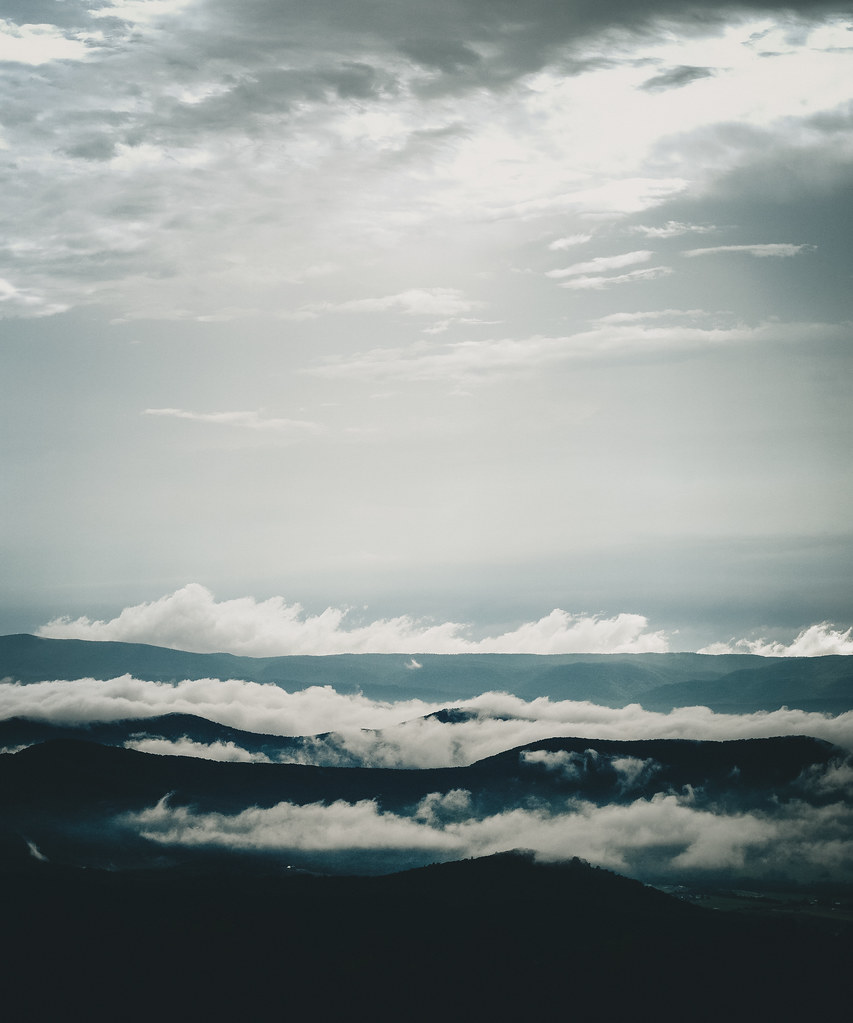
In the mean time my best hope is in learning new techniques with stitched photographs to produce an low distortion image retaining the qualities of the original lens' field of view. Lately that has meant many vertically panning stitches to produce 5:4 and 6:6 images with no crop. The change in field of view, in practice, has produced an almost medium format look to images taken with that method, which absolutely encourages further pursuit of it. Unfortunately this is only realistically doable with nature and landscape, as the distortion produced, even with Adobe Photoshop CC's adaptive wide angle algorithms, is a bit more than I find acceptable for my photography.

On any camera gear related forum, threads are always chock full of people with ridiculous demands of cameras and the price points at which they are offered. Everyone gushes over Full Frame made smaller, fast primes made faster and cleaner images at higher ISO values on smaller sensors. I'm fond of Fuji and their X-series of cameras for putting into practice the kind of mentality that leads me to want a 6:6 square (or really anything other than 3:2) sensor. Fuji took technology that had already been around and implemented the same way for a decade and changed one simple thing - the color filter. Instead of sticking with the status quot Bayer patterned color array, they devised something new and of their own, the X-Trans color filter. By simply adjusting the pixel-by-pixel layout of the color filter their created a line of APS-C cameras nearly able to compete with Full Frame in regard to quality of grain at higher ISO values. While it took some time for Adobe to accommodate the qualities of that array into their software for the development of RAW files, the technology is now accepted widely and is a vast improvement over traditional Bayer designs. Not new technology, simply alternative implementation of what already existed. In that respect, I find my desires for something akin to a square sensor Micro Four Thirds-size camera a little more reasonable than the typical demands on camera forums. Especially with the Micro Four Thirds mirror less world, the lenses are the right size and weight already, the sensor is all that requires the tweaking (well, that and flange distance, I suppose).

Perhaps someone will pick up on this idea one day. Perhaps I'll have to learn how to construct such a camera myself. Any investors in the audience?

Thursday, August 7, 2014

Talking About Nothing (Is Hard)

As much as I've had on my mind as of late (in the realm of photography related thing), I've spoken remarkably little about them. This is to say I've been silent both online (obviously, my web presence is non-existent sometimes) and in person, even among my closest of confidants. In a step away from the usual I would like to expel some of these assorted ruminations from my brain via this forum, not necessarily in the search for input of supportive opinion as much as general release.

Thoughts can be burdensome at times.

I haven't been photographing for myself, for the art, nearly enough in the past 2, maybe close to 3 months. Consciously I'm aware of this and aware of the why - it was touched upon in my previous entry. Too much work, photographic and otherwise, culminating in a gross lack of time in which to do much else other than unwind at home and retreat from a machine gun pace of activity. It's been showing in my Flickr presence, for sure. The web expects constant regurgitation of content, and when that content is spaced out by weeks and months it relegates one to obscurity no matter how pervasive or prevalent that presence may have been in the past. I see fellow photographers managing to keep the pace still, maintaining their pervasive web presence in the social media sphere and am admittedly jealous of the impact, however I am also aware of the time investment and how deplorable a thing that investment is to me. Forever stubborn. Web 2.0 be damned. Good on them, of course.

The chasm of a divide between the immediate personal, financial impact, is something I became keenly aware of today in a strange way. Some nebulous mechanism of motivation possessed me to plot the metrics of my photography business, perhaps to discern some seasonal trend or at the very least a general upward trend since the inception of the business little over 2 years ago. I even put my mathematician/statistician cap on and took outlying data points into consideration and adjusted trend lines on a scatter plot accordingly. Perhaps 2 years isn't enough data, as there is no clear trend from a seasonal standpoint whatsoever. There is, however, a general upward trend, possibly better referred to as an upward rocket. For the first 2 years of data, monthly income earned through my photographic work largely stayed the same, on a gentle wave with a small hump followed by a small dip. All until the last 8 months, the year of 2014 thus far. For no reason, the trend line, the points of data, they double, then triple. Perhaps I hit some sort of breaking point in which word of mouth becomes so unstoppable and powerful it's impossible to further remain obscure in the market? The outlying points of data, the high paying side jobs, increased in frequency, but even when omitted from the plotted trend line it remained on a wicked upswing. At the very least, I feel I've dispelled the effectiveness of social media as a tool to acquire new business (at this stage in the game, anyway), but now I feel I'm on this uncomfortable cusp of transition wherein I can no longer sustain the pursuit of two diametrically opposed career paths and must choose one or the other. That struggle in and of itself is the heart of the beast of my current dilemmas. But enough about business for now, clearly it's going well, the reason I forced myself into this incoherent broadcast of mental rambling was a lack of shooting for myself.

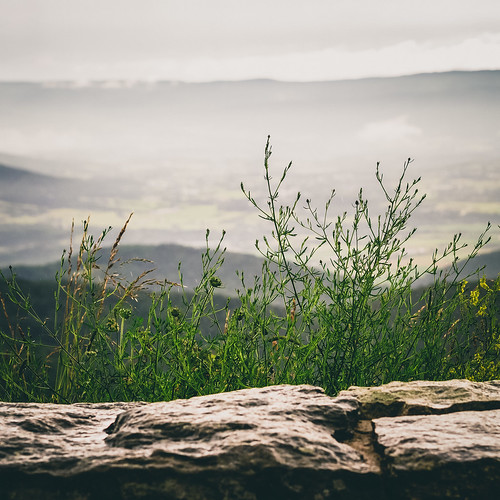
I've been spending the occasional weekend in Shenandoah, on Skyline Drive. And on weekdays I will hike through Patapsco River Valley and randomly snap a few. But these ventures are always mired by the presence of stresses that have remained static for so long it would take days of retreat to effectively rid my mind of immediate awareness of them. This ever present static of thought even manages to invade the post-process - nights spent toying with new and older photos have become utterly joyless. And as a result I share very little. My Lightroom catalog has become a thing defined by my real estate work of the month, no longer swollen with memories of hikes and parties, explorations and camping. I am deprived of tired, maybe lonely, nights sitting at my screen and smiling over various acts of youthful shenanigans, processing images anew and sharing their charm with an avid (albeit ravenous) crowd of internet denizens. I'm simply not ready to be this grown up, this resigned to a miserable future of all work, no play. Unfortunately I'm also not ready to stop working for myself or, of course, give up the bolstered income, the only realistic options to reacquire that past lifestyle.

Whoops, got sidetracked again.

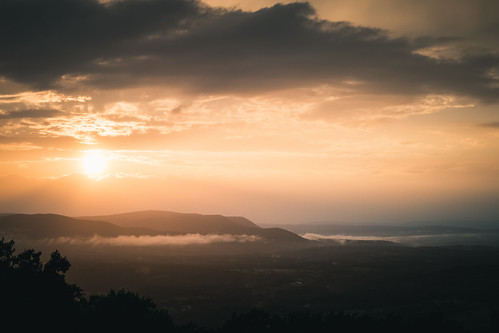
I want to spend days camping in the mountains of the Appalachians off Skyline Drive. That region simply calls to me, which is particularly odd given its distance from the aesthetic of decay and abandonment which otherwise defined my work not even a year ago. Much of the transition in appealing subjects can be sourced to my time lapse work, in which time spent focused on the slow and subtle transitions of nature bred a strong appreciation for nature in general. The mountains especially, and the almost magical contrast in weather patterns they can bring about.

The end of this month will see me spending time in Deep Creek with old high school friends in an admittedly party-type atmosphere. I made the same trip last year, followed up by a week-long road trip with a friend out to Colorado. I would like to say I'll be able to repeat both events this year, although the Colorado prospects are already questionable (seeing as I've yet to acquire a ticket with not even a month of time leading September). It will be the first string of days spent on vacation in quite some time (actual vacation, not "I'm taking the day off because I'm sick" vacation). And I want to photograph everything. Borrow a friend and drive up to the edge of the mountains around the bowl of Deep Creek and photograph the stars. Photograph... not time lapse.

Which is arguably another topic entirely. I enjoy producing time lapse work, but I absolutely despise the production of compiled video. I detest it to the point of having written it off as a desired skill set entirely, and can only hope one day I will encounter someone who is more capable of producing aforementioned video and interested in doing so utilizing my work. For some time I am pretty confident my pursuit of time lapse overtook my focus on strong photography work, and the power struggle of the two at the forefront of my efforts was a thing of internal contention. Today I can comfortably say I am quite simply a photographer, but retain my interest in time lapse work as a side hobby to that... side... hobby (... well, one I earn half-a-living on). Unfortunately with the relentless pace of work I haven't had the time to patiently wait for a segment to complete. Some days it has been miraculous to have 15 minutes to sit and eat a meal. The limitations of my editing platform has also played a strong part in discouraging my formerly dedicated pursuit of time lapse, especially given the rate at which its production destroys hard drives. More than a better time lapse capturing camera, a hardier computer on which to edit time lapse work is necessary, but that is low on the priority totem pole.

Highest on that totem pole, however, is acquisition of a new camera body. With well over 100,000 images captured on my PEN E-P3, I fear imminent shutter death. Curiously, reviewing my photography business records, I've spent remarkably little of my business income on new photography equipment. A flash, a backdrop, a couple umbrellas with CFL lights, and one lens. Not even $800 in equipment expenses in 2 years. So this year I aim to purchase an OMD E-M1, with a well paired battery grip and 12-40mm f/2.8 pro zoom to boot. And it's probably the hardest equipment purchase I'll ever make because I honestly don't feel passionate about it at all. Personally, I'd rather sit happy with an E-P5, a format and style of camera I'm already comfortable and familiar with. It appeals to me, whereas the OMD line's SLR styling offends me in the way pre-torn jeans inspire me to spit nails. I'm making my chosen equipment purchase because it is undoubtedly the smarter choice for work, for the business of photography. It's unfortunate coincidence that I'm also in a position of internally raging about the demands of that very business, my victimization at the hands of my own success. I want to choose the camera that inspires me, not the workhorse. Luckily, however, both use the same battery, and if my trend of exhausting success continues I may very well be in a position to acquire both before the year ends, which is honestly the more optimal route anyway (how many working photographers ever settled for just one camera body, after all).

An eternal issue needing resolution will be the management of my web presence, but the introduction of Square Space to my periphery lends me hope that there actually is an easy and catered option available for the display of a portfolio. And like a snowballing machine, with a published online portfolio I would produce revised business cards and ideally carry on with more business I don't have the time to accommodate. Or perhaps a gallery show should the viewer find appeal in the art, the work that I care about beyond the paycheck leading the (faux) muse? On the cusp of great changes, I simply need to tip the ball over the edge of the hill. I may not be able to keep up, but I'm fairly good at being dragged along for the ride... I am so completely out of control of my own life, it's great.

Sunday, July 20, 2014

Realignment (Or "Trying to Get My Head Together")

Much as I'd like to say it isn't, this blog remains a constant forum of self-analysis for me when I hit the hardest of times in regards to my direction, my bead on the muse, my self-concept in general. Lately, that concept has been under some challenge.

When I began conducting photography as a business venture 3 years ago I only ever foresaw it bolstering my motivation and commitment to photography as an art form. For some time, that was the case, but it seems I've hit a plateau in the business, and with that plateau a new kind of stagnation which brings with it a most toxic and overwhelming sense of defeat. It's something I've found more than a little difficult to overcome.

I say this after having just reviewed my last post to this blog, reviewing the optimism and motivation I had surrounding the time lapse project I'd set myself to complete at the time. I'm still doing time lapse sometimes. Not nearly with the same level of tenacity as before. Nor the same governing direction. More than anything, a clear sense of what I want to achieve feels like the thing I lack. Or, and this is the worse diagnosis of my problem, I have an exact idea of the "what", the muse and where it is, and am completely incapable of reaching it. I just don't know what to do anymore to attain that elusive muse, and for lack of that central key to actualization, I bury my focus into photography as business to plug the hole the art left. Now there's doubt in my mind there's any room for the art at all.

And that's a pretty tremendous problem considering the art is what gave birth to the business. One will not survive without the other. Like my motivation, like the muse, it will stagnate, decay, rot into a hollow old man at the cusp of a dream but unable to break through the transitional challenges faced. I do not want to become that old man.

So, a natural first step is to decipher the lessons that can be gleamed from the course of events that have led up to this point. Here it goes.

I suck at video. No really, I have neither the knowledge, finesse nor patience to produce such a multimedia production on my own. I capture decent video, and my time lapse, though very pedestrian, isn't terrible, and with better equipment would easily grow into something phenomenal, but assembling it all into a proper video is curiously beyond me. It has taken a lot of time and a lot of head-on-brick-wall masochism to come to that conclusion, but denying it is an act of absolute futility. Had I the time for a college course on video production I'm sure I'd pick up the lacking skills I'm unable to divine for myself, but for now I'll be relegating production efforts to others and sticking to simple time lapse segments that will stand well enough on the likes of Flickr.

I love photographing stars. And mountain ranges. And landscapes. Basically all the things completely absent in the flat, commercially overdeveloped region in which I live. This simply means I need to travel more, which is as much within my ability to do as it isn't. A couple hours and a hotel stay aren't much, but what I have in the financial flexibility to take a road trip I lack in availability of time. Weekends are always inundated with photo work which negates my ability to travel while still responsibly being able to perform shoots for paying clients. This is easily the greatest area where the overlap of photography as work and as art butt heads.

I miss other photographers. In 2012 every Tuesday night was replete with fond memory-making times spent with photographers who would become good friends and since the turn of 2013 we've all but disbanded as a regularly meeting group. The lack of interaction with fresh minds, different perspectives and shared ambitions is not simply a missed pastime but a tax in the form of forlorn nostalgia.

I need to clean up my web presence. Or at the very least consolidate it. Last week I read an article regarding the study of "Social Media Fatigue", which is exactly what it sounds like. With the mass of social networks out there, Tumblr, Instagram, Facebook, Twitter, Flickr, 500px, it's so much it's no wonder people managed to eke out a living simply managing the social network web presence of other people. Like the rest of sensible people, I plan on reducing my social media obligations to only those relevant enough to me, only those regularly updated (which, unfortunately may mean the end of this blog, but as mentioned before it has more served as a forum to get my thoughts together than any kind of actual content distributor). This includes a more serious investment in a dedicated web page, something I can more reliably control.

I don't know what my image is anymore. My brand. It used to be pretty obvious, all the detritus and decay, my theme was dictated by this romantic, tragic idea a stint of PTSD spawned after my car accident. Albeit cliche, it inspired a sort of passion in me. It was an image I was enthusiastic about presenting, the concept of rebuilding. At this point I'm not so much in a rebuilding phase, and so I don't know who or what I am other than forgettable and mundane.

I should write more. Photo essays. Many of my publicly shared photos surround events, outings, they have a common theme. They're stories I mean to share, but there's always so much behind the photos that remains in the dark. Even if it's only skimmed, a little literature would go a long way. That narrative I always speak of, it's only going to be effectively realized if expressed in all relevant mediums (and maybe one day video can become part of that narrative... but not yet, because, you know, I suck at it as mentioned earlier).

As for things that would help in accomplishing implied goals from these lessons learned... well, utmost is time. It's the most crucial resource, and yet it is the most lacking. Utilization of time is a thing of trouble for me, not necessarily in that I feel I waste it but that the stress of work and time it demands consumes too much of my brain space. Not the photo work, per say, but the day job. Not that it's unappreciated, but when one's life is consumed 7 days a week by work... yeah, very little time left for any kind of meaningful personal growth. While any free time available could be completely allocated to pursuing the arts, that ultimately leaves no time for destress and recomposition, reclaiming of level brain space. It would be a one way ticket to absolute burnout.

Time... actually, that's about it. Time is everything. A dedicated workspace would be nice as well, as opposed to the multi-computer office often intruded upon and thus uncomfortable for creative labors, but even then I can't help but feel more time available would be the ultimate gift. And that's... actually the answer I was afraid of coming to at the end of this post. It's been my hunch for a while that lack of time is the ultimate doomsayer in my life, but I've often denied it as being a cop out. But now, having elaborated in written detail my concerns and issues... yeah, it's lack of time. To which I can only come to one possible corrective action. Drop off on work. I can't afford to drop my primary employment, thus I would be left dropping my photographic work, and I'm unwilling to do that as it's work I am ultimately more passionate about. Alternatively I would need to bolster my income from photographic work so much that I no longer need the primary job, which would be optimal, but given the nature of the photographic marketplace in our post-millennial world that seems... extremely distant a goal.

So I remain stuck. After all this deliberation... that's a little depressing.

Tuesday, December 31, 2013

Twenty Thirteen (a.k.a The Year After Everything Changed)

Allow me to preface this belated posting with a nod to all the many "draft" posts that never seemed to make it up to this public forum this year. Much as I've been producing content on which to read about, far too much of it stank of whining and complaint and self-pity to warrant any outward interfacing. They were my own tensions with which to wrestle. As such I've deleted many, but published a few backdated entries that were at least sensible.

Now, onto other things.

2013 has been a year to test my fortitude in relation to keeping my brand new business alive and viable, my budgets in vigilant check, and my ego under control. A practice in not rebounding too wildly into a negative state following an overwhelmingly positive year in 2012. I know my history with extreme rubber banding following any extremes of experience - managing a balance was critical this year. And despite what are perceptibly negatives in experience this year, I'd like to think I managed things rather well (and a couple chance positives certainly bolstered that effort to ride the neutral line).

So join me as I stroll down memory lane and consider the wide swathes of change that occurred in 2013 (and perhaps how I'll adapt to them in 2014).

------------------------------------

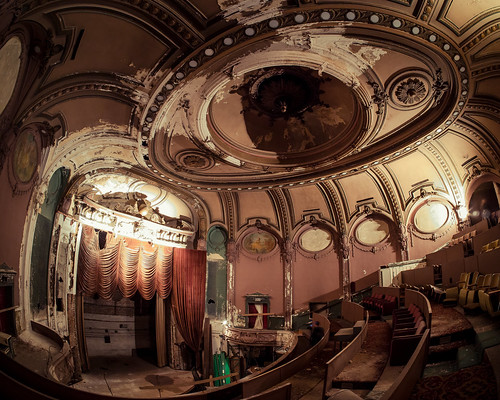
Come January of 2013 I was still very much stuck on my fixation of risky infiltration. Since about October of 2012 a local counterpart and I had developed a drug-addiction like penchant for finding our way deep into properties that weren't necessarily abandoned (at least not in their entirety), an effort that we acknowledged was less geared toward capturing stronger photos but more indulgent of the adrenal rush involved with the video game-like skirting of security patrols and bypass of fixed security points like guard stations and security cameras. Enjoyable as it was, there was no rational way to sustain that practice for long - tempting fate as regularly as we did only bore plainly foreseeable consequences.

Consciously, we broke our high-risk pattern and redirected our energy toward the only other relevant thing to us at the time - portraiture. When I came up with my business plan in 2012, I'd stated that pushing into the realm of fine art portrait work would be a goal to achieve in 2013. However, in practice, my tightly controlled portrait work only ever seemed to involve friends and cold, lonely nights of boredom. The only break portraiture ever made into my business at all in the year was a Valentine's Day portrait setup I ran for a local park, operating a rather suave setup utilizing the PENPal bluetooth transmitter on my E-P3 connected to a tablet connected to a laptop connected to a printer, a complicated mess of frosty tools in the Winter cold that rather efficiently pushed out 8x10 prints for paying customers. It was a fun gig, an experiment in convoluted workflow in a harsh environment that worked surprisingly well but has since not seen renewed use. I fault myself for that - another chance opportunity hoarded all my spare attention for the rest of the year.

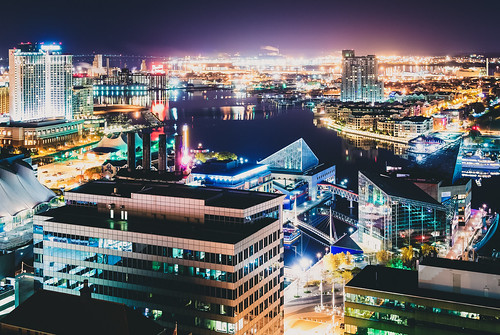
The same week as the Valentine portrait job I was contacted by the COO of a high profile development firm in Baltimore offering the kind of job I hadn't even dreamed possibly coming to my doorstep in just a year's time. Paid and tasked for two entire days to photograph one of the most iconic living structures in Baltimore City. Keys in hand, free reign over whatever spaces I deemed fit to shoot. I still think fondly on that job today as the kind of operation I would like to be involved in more often. Certainly not a bread-and-butter sort of venture for any business model, but it combined the freedom to practice my own sense of aesthetic in tandem with fulfilling my business obligations strictly because I was hired on the merits of my vision and sense of aesthetics. Much as I may operate a business, I still consider myself the eccentric artist, and to be presented such a clear avenue by which I could combine the two... it was a dream job. And when the final day of the shoot came, I sat on the rooftop of that building and enjoyed the sunset with my affectionately chosen post-rock anthems playing over speakers behind me. I felt like I'd conquered something, like David having slain Goliath.

And then, naturally, everything fell to shit.

Occupying the "bread-and-butter" slot of my business model was a contract feeding me travel rental and real estate listings to photograph on the regular. A hefty portion of that work took place in Washington DC, or it did until another photographer local to the DC/Metro area was extended a contract not unlike mine. And suddenly the steady, healthy income stream vanished. Job bookings dropped from 4  or 5 on any given weekend to 2 or 3 in any given month. My well dried up, reducing me to a mere prospector. But with no reliable network for regular business outside the contract that found me obsolete, I did the best thing I could do with the situation. I got back to the experimental and the adventurous shooting I spent the earliest month's of the year trying to get away from. After all, it was that high risk execution of photography that was the very thing that had gotten me noticed in the first place.

With a certain fondness I christened this phase the "UE Renaissance". The latter months of 2012 leading into 2013 involved unconscionably brazen acts of infiltration only because of boredom and a certain jaded sense of the known and available locales popular among practitioners of urban exploration. However, with the weather warming to a tolerable climate, the drive to explore new areas and find new locales saw a sudden crop of freshly rotten places populate the map. To say it was a welcome distraction from the woes of my nearly-lost business revenue would not do this renaissance period justice. In the absence of need for business sense, the thing that had so rooted me to a small area, my gears oriented toward adventure outside my traditionally accepted locus of control. I wanted to get out of the DC Corridor.

So I did.

Beginning with a weekend run up to a friend's place on the Jersey side of Pennsylvania, I developed a quick and early affinity for "Pennsyltuckey". Being from a relatively flat area of the Northeast visually polluted by sprawling highway systems like a blood infection emanating from DC, the contrast in scenery against the rolling, lush green hills hugging tight against wide networks of rivers left me enamored. It was a kind of scenery I'd never much been surrounded by before, and its allure kept me coming back as a reprieve from the relentless concrete makeup of home.

When home or otherwise unable to swing a trip North, pairing with friends in a hiking group introduced me to the local pockets of green oasis. Though small and curiously sequestered, weekly hiking trips became fresh new avenues in which to practice the art of nature photography, a discipline I'd never given much thought prior. And along with it my approach to photo editing churned and cycled with change as I stepped out of the circle of Adobe Devout and embraced alternative software, some engineered for specific effects, somehow working in tandem to create looks I'd hunted unsuccessfully for years. Abandoning the tried and true routine of processing, I stepped into nigh-dreamscape territory. It didn't matter if it was popular or perceived as cheesy. In taking myself less seriously, I took my art less seriously, and in shirking perceptions of expectation I found a most liberating, uplifting kind of freedom that has managed to define the tail end of the year.

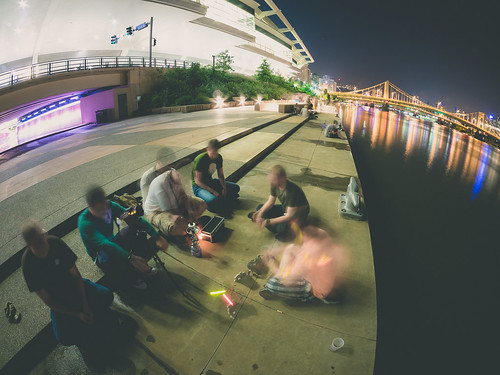
Mid-year saw my personal travels bloom in the self-prescribed ethos "you'll never see it if you're never there". Complacency was a thing for other more stagnant and lethargic people. I had to see things. I had to be places. I had chapters to write in the cognitive novel of memories. And so I rather aimlessly went everywhere I could to do things I hadn't done as they came along. With the renegade UE crews of Baltimore and Tennessee I drank and camped in an abandoned curb stone quarry, feasting on burgers cooked with poor drunken shoddiness in the pitch black. Against every impulse I've held in the past 10 years, I braved Baltimore's Gay Pride Parade and ensuing after-party with a good friend, complete with drunken return train ride and follow-up bar run of regret. With that same friend, insane times were had hiking beneath the Key Bridge with such illustrious happenings as jumping snake attacks and MRSA infected waters (many apologies to this friend who spent days in the hospital combating the infection). Per tradition, my annual pilgrimage to the Steel City took place, but with an entirely new crowd of people and less anchored in the Golden Triangle of the city's commercial district. No, with this new company of incredible people in tow, far sketchier lands, broken towns of proper Pennsyltuckey abandonment, were explored, only to be toasted to, nightly, on a rainbow LED lit riverside.

After the weight and drag of the early year, my muse had ascended from an optimistic cadence to a vivacious tango, a full sprint of energy and motivation.

Two outings at the groaning end of Summer defined this inspired period for me in a uniquely personal way, however, as back-to-back events that acted like remarkable exclamation points to a trans-formative phase of life. A childhood friend I'd heard little from in the years after High School roped me into an outing to Deep Creek for 3 days of relative isolation and mutual catch-up among friends. It was a remarkable weekend retreat for more than just the revelry and company, edging closer to a pointed kind of introspection on the kind of company I keep, the kind of company I want to keep, and the kind of company I should keep.

The crew at Deep Creek, myself included, were all very similar, with relative little differences in the natures of our upbringing, backgrounds and education. Smart, motivated "kids" who took the reigns of their own lives earlier than expected (or sometimes condoned) by parents. In the early years of our growth we all kept the company of less motivated, less capable people. Company that was no less charming or amicable as any friendship should be, but lacking in a mutually shared pursuit of more, of better, of new... of discovery. And in those early adulthood years that shared passion for self-betterment went unfulfilled, at least until we all came into our own having learned to identify the rare company that encouraged us to be more.

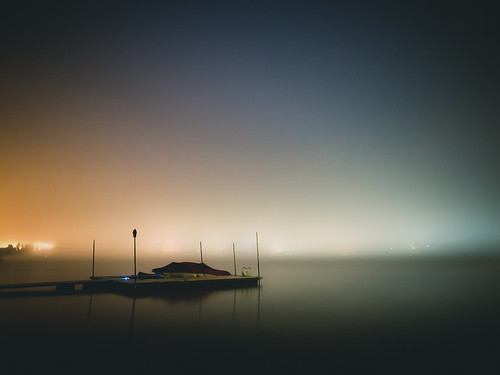
Given that critically common similarity, the willingness and reception to challenge of self, even a mere 3 days spent in the company of those old friends was intoxicating and rich. Paired with the dramatic swing of warm and cold temperatures, brewing incessantly varying degrees of fog and steam and color simply floating in the sky, the weekend provided a thoughtful period in which to exercise what felt like a higher level of photography than ever before. Slower, patient, more thoughtful. Because thought was the definitive aspect of Deep Creek, for all of us. We exhausted ourselves with questions and concepts and ideas that would only ever resonate with those who shared in the driving quest of curiosity and shunned complacency like a heretic in church. For the vacation that it was, however relaxed and carefree, by the end the fatigue was both mental and physical. To date I've yet to muster the mental cohesion to approach many of the photographs I took on that trip.

Only a week after Deep Creek and my closest creative companion and I were on the road following highways West, driving into the sunset until the Rockies in Colorado inevitably halted our charge.

My friend managed to achieve his own impulsive life goal, finding opportunity to comfortably move to Colorado for both work and pleasure. He graciously invited me along for both the company and the help with the long trek. Prior to this trip, I'd never really traveled much beyond areas bordering home, certainly never traversing half-a-country of land westward. Though I'd seen plenty of landscape photos and film of the Midwest, that is all those territories had even been to me, imaginary lands seen in magazines or television screens. The difference in translation, difference in impact would be far, far different when experienced. I knew this, and was giddy for this epic adventure with a dearest friend.

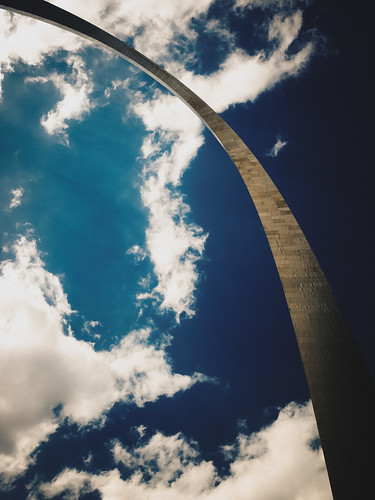
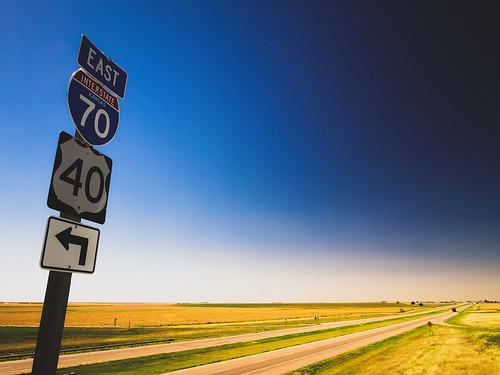
Our first day of the trip was spent driving almost entirely. We drove until we escaped the suffocating familiarity of East coast terrain, until the trees looked different, until the air smelled new. We drove until our backs ached and legs were stiff. We drove until Saint Louis. 16 hours, an entire two-thirds of the trip accomplished in our inspired escape from sameness.

Henceforth it was new territory, sights ne'er before seen (at least for us). Our pace slowed as we drank in the transitioning landscape, in quiet awe of the foreign lands found within our own borders. In particular, I remember Kansas very distinctly. The State had long been presented to me as choice for storm photography and film, and the description of its vast expanse of clearly visible nothing often spoken of sarcastically. Per expectations of aforementioned sarcasm, I was prepared to be utterly catatonic as we crossed the State, bored of the empty sameness. It had never occurred to me that the sheer enormity of that nothing, how truly gargantuan and unending the land stretched into a distance, obscured only by dust storms and the mortal inadequacy of the human eye. A kind of impact that could never be translated by anything but physical presence, experience. Possibly one of the most gorgeous "nothings" one could ever see.

We stayed the night in Kansas, ruminated on the incredible variety within our home country that we were all but blind to in the relative microcosm of the Northeast. I suspect he knew this remarkably different world was out there already, the kind of thing you experience as a child and long to return to well into adulthood. Longer and longer into the journey, and especially in the oasis of Colorado Springs, I gave very serious thought to abandoning my life as I knew it, beginning anew in the refreshing unfamiliarity of this new landscape.

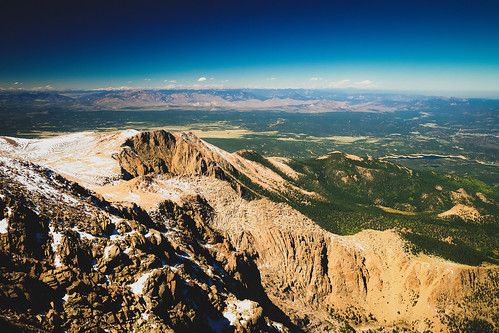
Having marched steadfast in the first day of the trip, we found ourselves with 2 days to spare exploring Colorado before my flight home (which I begrudged). We hiked and photographed throughout the Garden of the Gods and imbibed ourselves on scenic overlooks, every song on the car radio an anthem of arbitrary accomplishment. Ascending Pike's Peak, we stood deaf and dumb in the face of the visage atop the mountain. This was where the Immortals stood. This was the God Perspective. And in keeping with a recurring theme throughout the year, it was appropriately where I incapacitated myself with injury.

Home and able to adjust to responsible living as I waited for my damaged knee to heal, an unexpected trend suddenly re-entered my realm. For months, nearly half a year, my business had fallen completely to the wayside with hardly any clients to speak of available or interested. I had already come to terms with my pipe dream of operating a photographing business having crashed and burned, a one hit wonder forgotten by the next fiscal year. But something changed. Somewhere the market had shifted, or perhaps marketing had somehow managed to appeal in a new way. The contract that once upon a time fed me job after job in DC... suddenly I was being fed clients in Baltimore. And not in small numbers. It didn't take long before 2 or 3 shoots a weekend spontaneously grew to 5 or 6 with last minute bookings, then 7 or 8, then too many to handle in just one weekend, I had to take time off my staple day job to accommodate the influx of new business.

It was back. Not a zombie, the undead, some husk of decayed dreaming revived for an animated sputter before its final aching gasp. It was reanimated, ascended. My contract was feeding me more clients than I could sometimes handle without panic and stress. A businessman interested in kick starting an automotive modification shop commissioned my help in producing images for marketing materials and to promote his brand. Independent realtors came in bidding on my rates with respect for my timeliness and style. So much business it took but 2 months to produce over half of my yearly profits.

I functioned like an unrelenting machine. Until the onset of the expected end-of-year-holidays slow down, there was time for little else but work. Two months spent photographing almost exclusively in the working sphere and I had no idea what to do with myself once the clients put their shoots on hold while they spent time with their families. And so began one of the more curious, certainly more spontaneous pursuits of the year, a left field anomaly.

Time lapse.

Barring aimless toying around in my younger, more experimental years, I'd never pursued time lapse with any sort of dedication to the craft or interest in learning its very delicate intricacies. The underlying inspiration to grapple a new medium was beyond me outside of a basic interest in capturing the sunrises and sunsets I enjoyed on the daily commuting to and from work. Some nebulous driver in my creative core determined the still photo was insufficient, that the light must move and change to inspire and have impact. And so began a rapid ground-up learning of a new skill, one that, try as hard as I may, doesn't seem so much marketable as it does attention-getting (which, who knows, may perhaps make marketable after all).

Beginning with small JPG files for speed and ease, graduating to batch conversions in RAW, manipulating in varied software, the entire post-process was unfamiliar and amorphous. But the initial capture, the process of acquiring the photos required to produce the final video, presented itself to me as an opportunity to relearn relaxation, a sort of meditation to discover how to be at peace in the process of doing nothing after a year of near breakneck pacing. Patience was the critical aspect, and in practicing each morning and evening, I learned to slow down enough to sip at life at an easier pace in contrast to experience binging.

Early on, before I understood the rapid pace at which I'd learn and refine technique, I set myself the shortsighted goal of producing a time lapse compilation in just a month's time, right before the turn of the new year. With much of the post-process still in a rough, unrefined state, I trudged forward regardless, insisting on meeting an arbitrary, unintelligent goal for sake of tenacity. It stood as proof of process, proof of progress, proof to myself that however trivial or inane the pursuit was worthwhile for how it left me feeling upon its completion and for no other reason to speak of. An unimportant, irrelevant objective to all but the progenitor.


I would look forward to 2014 as The Year of the Progenitor.

------------------------------------

With the new year I look forward with contented optimism. With a slew of medical interruptions and the months-long phase of business flat-lining, 2013 proved on the whole to be incredibly difficult to march through without sinking into soured thought and pessimistic predisposition. Having kept my chin up through some of lowest of lows, I greet the new year now with the expectation of positive retribution for sake of karma, but rather resolution in knowing that even if I am met with yet another challenging year, I can manage to stay afloat no matter the punishment it sends forth.

I intend to continue with my pet project of time lapse production, and aim to reach a more professional grade of quality by the end of 2014. With clients still gushing in from my standing contract, I aim to take advantage of the broad networking opportunities more actively than ever before, selling myself to realtors on the basis of those qualities I offer that even the long established businesses fail to provide. The end goal is to broaden the scope of my business' bread-and-butter elements, to lessen the single-point-of-failure of relying on a single business source too heavily. When warm inviting air returns, I may very well make it a point to hike every single day and photograph the nature I once took for granted. I will travel through Pennsyltuckey and make my pilgrimage to Pittsburgh and absolutely drive myself out to Colorado once again, perhaps taking a more northern route through Chicago and South Dakota.

However it's stated the theme remains the same. I aim to make 2014 not a year of sweeping change but one of refinement. My world changed in 2011 when a car accident prompted me to re-evaluate my life and abandon the person, the other me, left dead in that wreckage. 2012 saw the introduction of a life's dream in the establishment and success of a business in photography. 2013 tested my resolve and in a very subtle series of ways polished off the end goals of my expected lifetime, making bare, plain and clear what mattered, what was the kind of underlying passion one doesn't shake with time. The rest is... sand. Dust. Forgettable and forgotten. I step into the new year knowing exactly what I want to do, exactly what I want to achieve, exactly where I want to be.

Let's see if I can beat my own expectations.

Tuesday, December 24, 2013

In This Modern Market (I Am Suffocating)

Abuzz with the persistent nagging hum of a regiment of bees or incoming locusts, the internet has been alarmingly enthusiastic in recent weeks, a slew of smart marketing techniques and vagary that culminated this morning in the official release of Nikon's newest magnum opus, the Df. I would be lying to say I wasn't wrapped up in the image being sold by the Df's cryptic, subtle campaign myself. It was a bit of marketing genius, selling not a camera, but a fantasy. Those ads didn't sell you a camera with a rattling of specifications, they barely showed the camera at all. They sold the perception of a lifestyle, a grizzly guy in Scotland camping in the woods by the beach, wandering wistfully through old castles and enjoying scenic overlooks of old cities. Were they ads for a travel agency, we'd all be booking flights to Scotland right now. Instead they were ads for the Nikon Df, and by association we're all, collectively as photographers, salivating at the promise of interesting lives if we only have a Df in our hands. By proxy, the camera makes us interesting people who do and see interesting things. Fantastic marketing - their advertising leads should get bonuses for the next 3 years.
I've been waiting all year for the "right" camera to be released, the next upgrade to my increasingly antiquated (or so my concept of technological progress tells me) camera system. In general, the digital imaging marketplace has undergone a strange sort of surge in product innovation - everything released this year has seemed a strong march forward from the systems of yesteryear. At least in the mirrorless market. And I genuinely hate stating that because it's a subject that causes a level of division in major photography circles that inevitably degrades into the crudest name-calling and capslock rants, but it's bare naked truth denied most often by the masses who allocate some measure of self-worth in the model and brand of camera they're shooting (and let me clear this up now, your worth as a photographer is never in the gear you're shooting, so please, value yourselves as photographers for more than the engineering prowess of a board of men in Japan). With new sensors, new processing engines, the abandonment of the AA filter, integrated WiFi connectivity, incredibly sized high resolution EVFs, blistering CDAF systems and now even on-sensor PDAF... I might go so far as to say this is the first year in which the march of progress in the mirrorless marketplace officially outpaced the CaNikon foundations that served as the bedrock for camera technologies for the past decade. As such, my proclivity toward nostalgia has me staring longingly at the Df, less in a genuine longing to handle the camera for sake of superior functionality, but more for desperate desires to handle that style of camera one last time.

This has been a marked year of change in the digital imaging marketplace, and the longer I sit on my hands and refrain from the urge to upgrade, the happier I am that I've held back and exercised restraint. While the technologies released this year are clear and logical upgrades for each brand's niche engineering ethos, those new innovations are also very young, fragile and amorphous in their introductory state. One more iteration to work out the bugs and perhaps then they will stand as safe and sound investments.

But then there's the Nikon Df. There is nothing new there. An homage to a familiar ergonomic standard abandoned some decades ago for being unwieldy and inferior. Dials and knobs for ISO and EV and shutter speed, ancient technology long usurped by multi-use mode dials and (P)rogram auto modes that do the math of exposure for you. An antiquated sensor, lauded for being the heart of the flagship D4 yet already eclipsed in performance by the likes of the D800 which also happens to boast an autofocus system well beyond the capabilities of the Df. Every aspect of the camera is a clear regression. No video, no integrated WiFi, no new technologies here. A clear cut poor investment in every sense at its price point. Yet it's still oh so difficult to defy the thought, "If only I had a Df, I could be that handsome, interesting grizzled man in Scotland".