Tuesday, October 14, 2014

Fit of Nostalgia

Arguably, I'm more prone to the bittersweet pangs of nostalgia than a 27 year old should be. I've wrestled with the longing of more innocent, naive younger years ever since turning 21, often in the dangerous position of finding more contentedness in a bottle and memories than active continuation of my life. To a degree, I blame what I perceive to be a hyper speed pace to change and progression with the advent of the 21st century miracle of the internet, a thing that has commandeered traditional concepts of nostalgia from post-millennial generations and replaced it with the allure of viral fame and immediacy (not at all intended as a chide against this new generation, mind you, but certainly an observation of a critical cultural divide).

When change and progress come about faster than is necessary for the human brain to develop the kind of fondness and familiarity required for a nostalgic relationship to a thing, place or period, it is unsurprising for a cultural shift to ensue that adapts future generations for the new state of things. Being of a "tween" generation caught at the cusp of that change, it's sometimes difficult to reconcile an internalized sense of nostalgia with active recognition that never before has nostalgia ever been so largely irrelevant in society. So when I stumble upon articles written by the last genuinely nostalgic generation, the Gen X 80's children-gone-adults, I take it as something of an excuse to allow for some personal indulgence of my own fond memories of places and consumer archetypes long abandoned for the improvements and efficiency of EBay and Amazon.

To preface my personally framed ramblings and photo share here, the article which spawned this tangential sidebar to the usual photography talk was The Surfing Pizza's "Though Some Have Changed - A Look at My Hometown Through a 1980s Lens". Though an older article (ancient by 2014 terms), it details many places I also remember in my hometown, specifically a deep reflection on the traditional toy store and the sense of awe and magic it inspired in the young, imaginative mind. It details in a frame of reference stretching back prior to my own the movie theater in which I first saw Mortal Kombat (my first video-game-gone-movie experience as a kid), the mall I often visited with my aunt on days she took me out for pizza and a toy at the local KB, and the parking lot I'd wait in with my Dad over a Wendy's kid's meal while waiting for Mom to get out of the gym (a location now occupied by a grocery store). The article is not shy about denoting Glen Burnie's state of "... changing, fading in sections and crumbling in others", and even in the relatively short 4 years since its original writing Glen Burnie continues to morph into an all new unrecognizable shell of a town.


Our experiences of nostalgia are dictated by vivid memory of events in any given place. That fit of nostalgia grows only more cemented into the psyche by loss, either of the person or of the place fitting a specific recollection. Without a place or individual to spur retrieval of nostalgic memory, it is easy for that specific flavor of sentimentality to be lost in the cavernous web of a brain saddled with innumerable recollections and experiences from which more active references exist. Perhaps not in full, but absolutely in part, a motivation of mine in the practice of photography is the retention of memories, to provide a frame of reference from which to draw upon the cataloged sensations of the experiences themselves. I find it one of the most powerful tools to maintain awareness of who we are, where we come from, and how we've changed.

Something monumental happened to me this year, a scary sort of thing that has metastasized in the wake of relentless rationalization of events, my self-defense mechanism against subtle brain games of post-traumatic stress. My idealism and romanticized concepts of people and the progression of events wilted. Fight Club became less a bible volume feeding irrational resistance to all establishment and more a logical criticism of extremes of both consumerism and mindless revolt. Zeitgeist finally sank in as being that crazy, and cameras became recognizable as tools instead of definitive elaborations upon the personalities of the people that used them.

I grew up, basically.

My period of tireless exploration of new things and ideas settled into a reliably shaped mold of comfortable character traits and belief systems less apt to reform on the whims of the preacher's sermon. An accomplishment for all, really, but inherently the end of a period for which I now have nothing but endlessly fond memories, be they grimace-inspiring or laden with restrained tears. Inasmuch, I am now nostalgic toward what I recognize as the lost period of youthful naivety.
I hunted people down for their perceived charisma. Validity of their decided ideologies and character traits were unimportant, it was their confidence I pursued, to bask in awe of the gall they possessed to define themselves so readily, unflinching to opposition. In glorious hindsight, I can recognize the falseness of it, the fallacy of their brandished skin-deep personalities - their "charisma" was their chosen coping mechanism for the same uncertainty of self I was experiencing. We were all amorphous, though.

We met regularly in conflict-ridden social climates. Garage band practices replete with arguments over a lacking "seriousness" to how certain members regarded the dream's pursuit. Alcohol and bonfires and black powder fireworks (and on one occasion, drunken cooking of Beefaroni on a filing cabinet filled with wood and lighter fluid, set aflame). The location most specific to a majority of these social conflict practice sessions was, to Tyler Durden's dismay, a Starbucks. THE Starbucks as we'd come to refer to it, where circles of friends would meet and relationship stresses would be bared like an afternoon airing of Maury or Jerry Springer. For others it was an event to which they ventured, but I lived in the apartment complex behind the shopping plaza into which it was nestled, and so it behooved me to indulge my observational role among all social groups and bare witness to the unfolding of peoples' lives as we stumbled through youth with sloppy sexual experiences and the coarse words always trailing alongside.

Our capacity for social interaction nearly required a trip to The Starbucks as a more comfortable ice breaker than "I'm lonely and depressed and need to talk to someone". Even as we inevitably branched out upon entering our 20's, learning such painful joys as karaoke nights and costume parties, that building remained our hub, the pivot point of our axis. Though the shop would close up by 10:00pm every night, the entire strip mall devoid of customers and employees by 11:00, we would frequently remain cemented at the tables in front of the coffee shop well into the morning, on once occasion long enough to greet the morning crew as it rolled in at 5:00am. They didn't mind, needed no explanation - they knew our faces and at least our first names, this gaggle of 20-somethings interchanging shifts on the steel seats at all hours of all days. I'm sure we were a live action sitcom to them.

I always brought my camera. This was a period in which I hadn't yet developed a confidence in my craft, didn't always know what subjects I liked to shoot and certainly didn't know how to shoot them outside the confines of JPEG and an initial-reaction sense of composition. In 2009 I hungrily snatched up my first prime, the Nikkor 35mm f/1.8 (I was a Nikon boy in those days, a Ken Rockwell devout shooter of the lauded D40). There could have been no better time to be introduced to the magic of the prime, delving into candid portraiture with a documentary fervor. I carried the camera everywhere, all the time, a new concept to a brain that once relegated use of the camera to specific times when the capture of photography for art was the deliberate and direct intent. Photography changed, and it would never return to a once-in-a-while thing. Photography became a reason, not simply a thing to do.

I've tried more than a few time to conjure The Starbucks Crew through desperate appeal to assuredly mutual senses of nostalgia. Success, however, has been largely unattainable - alas, we all appear to have grown up after all. We work incessantly, not a one of us of the privilege to survive on solely a single income. Most of us have our own homes to return to, however, and that is enough import to drive us onward through the frustrations of limited personal time. To that end, the majority of us are single and not looking, blessed with neither the luxury of time nor care for the added stress endured for sake of maintaining relationships. We are inevitably bored and lonely because of it, however, and have found a common weeknight savior in solitary drinking.

My home is no longer front row to the nightly Starbucks Show. In fact, it's nowhere near it, and I begrudge myself the effort required to drive anywhere for coffee I can make for myself, better, at home. But I still gravitated toward it on off-Fridays or bored Saturday mornings, hoping for the chance encounter in which a familiar face stopped by for a frappuccino and ignited fond musings on old times. It never happens that way, though. What is impossible to orchestrate by intent would never occur by chance.

But I still stop by sometimes. For nostalgia's sake. It's simply too comfortable not to bask in.

Monday, September 8, 2014

Recoup

I hear people speak anecdotal-y about mental breakdowns often enough. My own mother would recite the words on the regular in halfhearted jest. Last week I'm pretty sure I experienced the actual thing, though. No, not just pretty sure... I broke.

The sense that I've been out of control of my own life for a few months now culminated in a fantastic series of questionable decisions and poor time/self management. Competing 9-to-5 office work and whenever-the-hell photography jobs, personal obligations mounting into a stacked mass of discomforting expectations, day to day life was dictated but a painfully tight schedule of events planned out weeks in advance with no room to breathe and no time to decompress. It was my own damn fault for letting my schedule get so obnoxious, the jet fuel motivation to earn more money and cater to every clients' whimsy grew massively powerful with the influx of new business in late May and I let that drive push me too far, into the realm of maddening.

I cannot impress upon those who may seek to pursue photography as a business in the future the grand importance of the work/life balance. We all have different thresholds, but once you push past yours you won't realize it until you've already saddled yourself with obligations galore and all life seems such a misery to endure. Please, take time aside for yourself... it really is necessary.


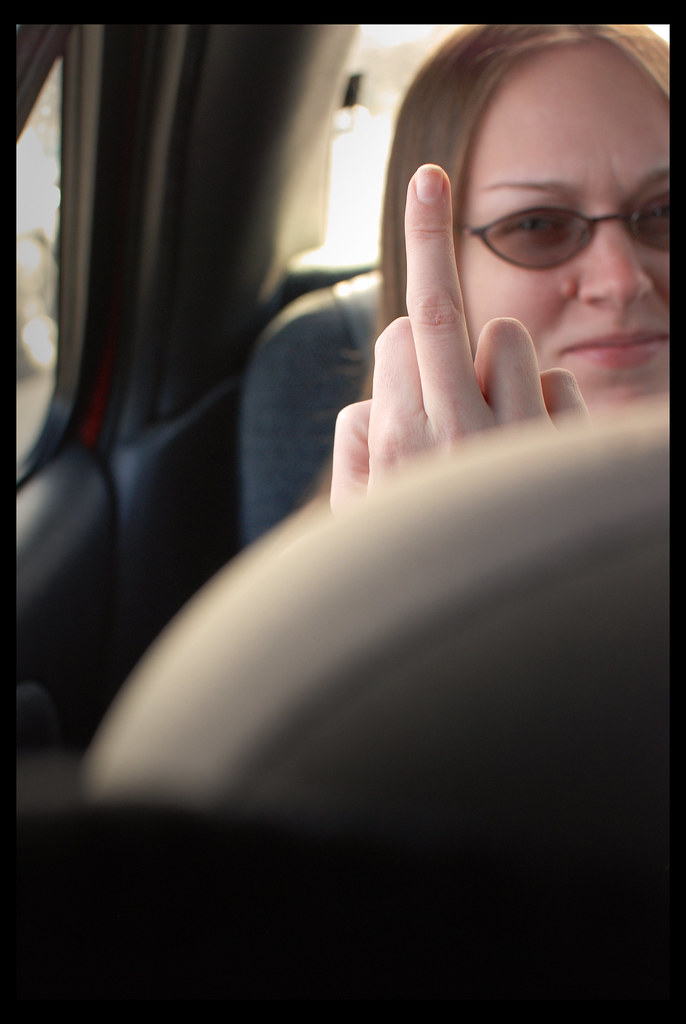
Friday of last week was the breaking point. Impulse told me to either rebel against the confines of the month's long mental tax of a schedule or resign to a state of permanent misery. I rebelled. Despite obligations and duties and expectations, I lifted a generous helping of middle finger to the overlords (both real and conjured) and eloped with my wilted muse to "Pennsyltuckey" to photograph things and in a fashion that might barely be able to rejuvenate a dying passion.

The drive North felt surreal on its own. Lots of time to ruminate on choices and the momentum of my life, its direction and how much say I ever really had in its current state. I may have continued falling victim to self-imposed stresses were it not for Kyle, my photographer friend whom I drove up to visit in my act of rebellion. There are precious few with whom I feel creative wavelengths fittingly pair up to, and Kyle happens to be among the few. We wasted little time, quick to pack up camera bags at 10:30 at night and rush out to capture however many stars would manifest themselves in the presence of the moon's bright glow.

Something I hadn't done a lot of since the battery of photography-as-business transactions had been genuine exploration. Traveling not only to places which were new, but where I probably wasn't supposed to be. I understand now more than ever the critical nature that feeling of risk plays into my enjoyment of photography, and more than that, how critical a thing that risk is to finding those opportunities to create images that speak to me. Inherently it is because of the experience attached to them that they impact me so strongly, which can never be conveyed to others and therefore they don't stand out one way or the other to the casual observer. But to me, they encapsulate and romanticize an experience that I can recount as if it had happened yesterday no matter how many years have passed since the photo was taken. In this instance, we found an abandoned quarry, filled with water, surrounded by trees, isolated from the city lights. It was our trespass, and it was good.

Since picking up the OMD E-M1, I'd yet to really put the camera through its paces. The only miles clocked on the camera were sloppy real estate jobs I'd dragged the thing to, trying to learn its intricacies in completely the wrong way. With the expectations of working shoots, the freedom to screw up wasn't there, and I simply reiterated the rigid shooting practices of my old system. Out there, in the low light freedom of that quarry in the middle of nowhere, I was free to push the machine, to test the limits of its high ISO capabilities, see how well it would play with my bag-o-lenses, experiment with its new Live Bulb feature, actually develop a second nature with the controls... so many crucial things to one's relationship with a tool. Much to my pleasure, the E-M1 developed a second nature feel remarkably fast, especially with the efficiency of its dual function twin dials (made playing with night exposures magnitudes more direct than any experience I'd ever had with the E-P3). In general, the experience was still slightly hit-or-miss given the guess work require with composition, but following the digital level and at least having some context of the sky made it world's easier than any experience prior (even if only by a fraction over the E-P3).

One night in and I could veritably feel my body and mind release pressure. Like a steam valve that had been in the red for so long, finally whistling with sweet release.

The next morning we slept in. No point in waking up early to catch the first light of an overcast sky. Morning rise was just another obligation, another expectation, and this rebellion wasn't going to be commanded by self-imposed photographic deadlines. Instead, we had a leisurely breakfast at a classic diner with probably the best omelettes and home fries I've ever tasted. Exquisite coffee, too, not weak nor burnt, but fresh and perfectly creamy. A good start. And in the vein of the prior evening's exploits, we engaged in the thing that drove both our muses - a good trespass.

Kyle had just moved into the area in the last month and was cataloging a host of new locations well ripened with age and yet to be explored. The mark of the day was a steel production plant that fell on hard times in the last year and was up for sale. Alas, upon arrival the main plant itself was already undergoing demolition, but several outer buildings were still available to the perusing curious.

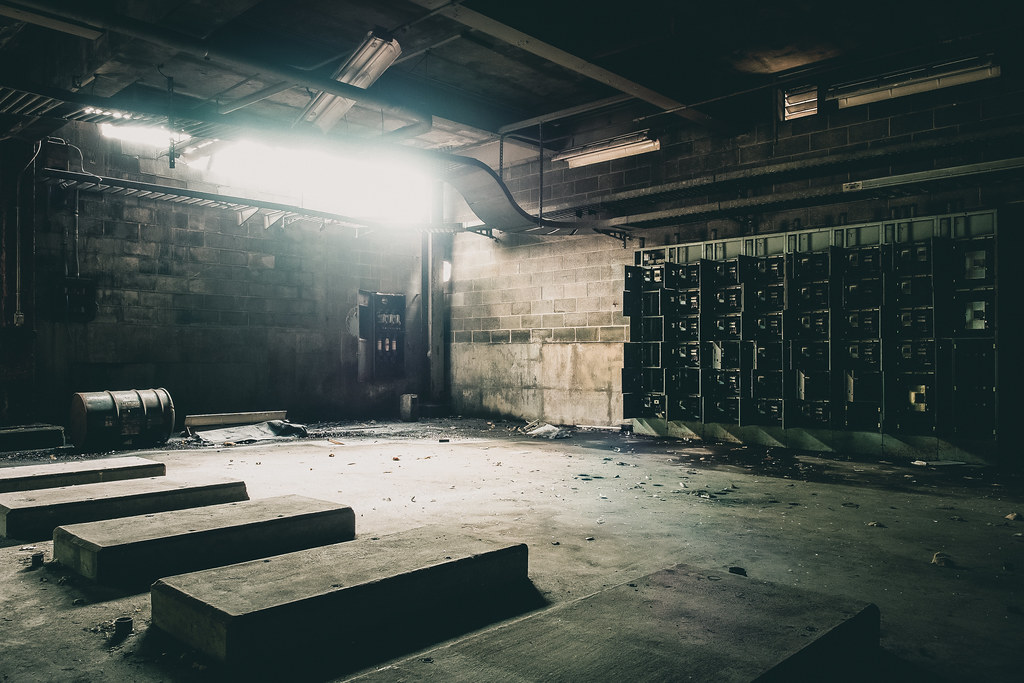
Of primary interest to us was a large, empty warehouse, likely used to store completed product during the plants heyday. Like any large, open space, photographing it was less a study of direct objects, of things, and more a study of light and how it permeated the space. In waiting for the light to change periodically, however, I had the opportunity to test another of the E-M1's touted features which caught my interest particularly - WiFi remote operation of the camera.

Joke about how awful "selfies" are all you like, I hate them myself. But in the practice of exploring places most people simply don't go, there is an inescapable allure to capturing a photograph of you and your crew in whatever amazingly alternative environment you find yourselves in.

Much to my giddy excitement, operating the E-M1 via Olympus' OI Share app on my Nexus 5 was a seamless experience, with lag in live view output minimal (not good enough for action, true, but more than sufficient for any number of more realistic uses). It was such a wildly new thing, to operate a camera, live view and settings included, with a remote nearly 50 feet away, that I found myself testing it over and over again, trying to find the boundaries of its usefulness and, barring fast action, coming up short of ways in which it wasn't the loveliest thing. With a series of shutter delays available, the ability to exclusively focus the image without triggering the shutter, full control over ISO, aperture, shutter speed, white balance... it was the greatest thing ever. Of course, only later that day would I discover its crux - it eats batteries alive. All in all, however, a small price to pay.

Perhaps 2 hours later we opted to hike around more of the heavily wooded lengths of the property in search of more hollowed buildings to explore, running into little more than extensive cobwebs in the trees which would agitate us for the rest of the day. By the time we decided to trek back to the car, however, the demolition staff tearing down the former plant had left for the day and we obliged ourselves the opportunity to investigate the large heaps of rubble. Overcast skies still dominated exterior scenes, pockets of sunlight growing rarer as our exploits unfolded. Out of morbid curiosity I set the E-M1 to one of its multiple HDR modes, HDR1 specifically, which bracketed 4 shots, kept a RAW file at even exposure but produced a JPG on the side composed of the exposure gamut made available by the bracketed exposures.

Continuing to impress me in unexpected way, the HDR processing built into the E-M1 surprised me with how responsibly the JPG files were rendered. HDR1 specifically kept contrast high and leaned more toward retention of highlights than worrying about full exposure gamut retention. The files may not have been my cup of tea, but it was pleasant to get an idea of the breadth of information available in the captured RAW file with the compiled JPG render, and I wouldn't have hesitated to upload the HDR JPG files had I been aiming to upload content on the fly. There was also something to be said of the weird sense of power in ones hands with the full speed of the E-M1 shutter firing off 4 shots in less than half a second (with the HLD-7 battery grip attached). I'd been on the fence about the mushier sound of the E-M1's shutter after years spent with the sharp click produced by the E-P3 and GF1, but the sound of the thing in full on rapid fire was strangely intoxicating.

Our explore concluded when our stomachs grumbled angrily for sustenance. We drove back to Kyle's place to drop off our bags of gear, kept cameras in hand and walked the main strip of his new home town both to photograph its lazy transition into nightfall and locate an ideal eatery at which to indulge our appetites. We settled on a very "Jimmy Buffet" tiki bar & grill just up the street from his new abode, ate burgers, drank beer, and once settled and content with ourselves, resumed out walk of the main strip, capturing the homely small town storefronts in the twilight.

I played with the HDR mode some more, wondering how well it would perform in both dealing with motion in a scene and the randomness of hand held long exposures. Remarkably it resolved both without falter, not a ghost to be seen or hiccup in rendering despite speeding cars and the shaky hands of a tipsy photographer. In keeping with the trend I'd set earlier in the rubble field, I continued to shoot in HDR mode for the rest of the night, only wishing the gamut captured in the JPG files could somehow be pre-baked into the RAW files themselves (alas, that task remains relegated to the post-process).

Walking off the beers from earlier, we wandered past many highlight locations, and I found myself quickly developing an affinity for the atmosphere of this little town in Pennsylvania. Being both a college town and located excruciatingly near to a popular tourist magnet of a theme park, it was simply in nice shape compared to the other small towns I'd grown used to frequenting on excursions to the North. Cute small businesses specializing in antiques and floral arrangements, not afraid to leave their displays sitting in the street all night, populated the main strip. Monuments and plaques dotted special constructs on many street corners commemorating local history, inconsequential on the grand scale but advertised with pride.

During the entire foot tour of the strip, I couldn't help but ruminate on the idea "This is aging with grace". Starkly different from the likes of my own home town, which has been rotting for over a decade and showing it nakedly with homeless increasingly present and visible, storefronts not only closed and empty but vandalized, and clearly broken people wandering from place to place in a zombie-like autopilot shuffle, scarcely aware of themselves, let alone each other. The sagging spirits of my home community are as much a weight as the socio-economic downturn itself, and the density of our nearly-urban population breeds a kind of dog-eat-dog mentality simply not encountered in similarly dense population centers spotting the Appalachians. It will always be a thing that bothers me, regardless of whether it is an actionable problem or not. And I will always wonder if such an environment of the small town now called home by Kyle would see me thrive or suffer. Mentally thrive, most likely. Financial suffer... unfortunately. Oh, how I want to not have to worry about money.

A little hike around the college campus, quick stop in the beer outlet (for his sake, I had to drive home) and it was a done day. But it was a good day, ultimately, and exactly the kind of day I needed. No expectations, no obligations, no schedule or set hours of operation. In four months it was the first day of its kind so far as it was rationalized by my (oft strangely wired) brain. Amazing what one single day of unabashed freedom can do.

In the future, I aim to take one at least... oh... every other week. Bare minimum.

Monday, August 25, 2014

Moving On

I've spent the better part of the last 3 years shooting exclusively with the Olympus E-P3 along with a strong assortment of M. Zuiko primes. The system coalesced into transparent, functional bliss, easily the best pairing of camera and lenses ever to grace my bag. Alas, with the recent acquisition of Olympus' OMD E-M1 and its first pro zoom, the M. Zuiko 12-40mm f/2.8, I already feel the comfort and reliability of my relationship with that former system falling into an obscure area of fond nostalgia. I'm sure I will at least return to the lenses over time, they are still functional with marginal advantages in certain situations compared to the new kit in my bag. But inevitably it feels as if an era has ended and I have stepped waveringly into a new echelon of photography.

Many of us who practice our shutterbug impulses for any span of time start off with the baby steps of kit zooms on smaller formats. Those of us who truly acquire an affinity for the art inevitably make the jump into the world of prime lenses. We intentionally limit the flexibility afforded by zooms for sake of abstract qualities like shallow depth of field and the unique way in which we learn to manipulate the fixed field of view to imply emotion. Perhaps those yet above me on the ladder look back fondly on the days when they returned to the zoom lens, not budget, kit glass housed in flimsy plastic barrels, but rather precise machines of tight gearing, expert milling and solid metal frames. Less zooms and more an absorption of prime lenses housed in one body (with useless in-between focal length peppered in). What a world that such a feat of optical engineering exists.

In honor of the glass that has carried my art and my career through the past 3 years, I pay homage with my experiences, lessons learned and most affectionate uses of the strength in their optics.


I choose to start with both the first and most useful prime lens I ever acquired for my Olympus system, the M. Zuiko 12mm f/2.0. A wickedly fast optic for the width of its focal length. Even before any sort of motivation for its acquisition for sake of real estate work (which wouldn't begin until months after its addition to my bag), it stood out as an immediate need in the practice of strong urban exploration interior photography. Images produced with this lens have been the birth of my business, the direct cause of my success in the career path of photography as well as the tool with which that business has regularly been conducted. Ultra-wide zooms be damned.

A metallic beast, it has survived some of the ugliest drops, bangs and scrapes without a scratch to its front element (despite several lens caps shattered to fragments). Its 24mm equivalent focal length has been a boon to my real estate work in being wide enough to exaggerate the depth of a room, yet not too wide so as to be unbelievably distorting. Distortion at the edges of the frame are so marginal as to be nonexistent, lines always straight to a fault. With f/2.0 native aperture, it has allowed me to see in conditions challenging enough to the human eye, thus becoming the agent of my muse in astral photography. It stands as the first lens to implement Olympus' unique manual focus ring, capable of instantly commanding the camera body into manual mode with etched markings to indicate the range at which the elements are focused and thus an enormous help in the practice of night sky photography or even simply shooting in the dark. It has been nothing but relentlessly reliable after years of use and barbaric abuse.

Today the lens bares no markings of wear despite its tumbles. It has only become marginally softer in corners of the frame, a sign of age and wear easily corrected with a "tune-up" at any lens service department. In fact, it's still so excruciatingly good I find myself compelled to resume its use in the practice of real estate photography for sake of its marginal advantages over the 12-40mm f/2.8 zoom (not as if I'm using the longer focal lengths in real estate work anyway). Simply put, it may be the most in-expendable lens I have ever owned. Were it to spontaneously crumble into pieces through an act of God in my hands one day... I'd go right ahead and buy another. Only it would be the newer, sleeker black version (because as you know all real photographers use/wear black everything).


Portraiture beyond the random candid shot on 50mm equivalent f/1.8 lenses never struck me as a particularly attractive artistic venture. Prior to acquisition of Olympus' M. Zuiko 45mm f/1.8, any experience I had in the telephoto range was relegated to kit zooms in the mid-range with slow apertures and unattractive bokeh. The 45mm corrected my suppositions about portrait work, genuinely shallow depth of field and the joys of controlled studio work.

I can't recall what motivated its addition to my bag, possibly nothing more than the attractiveness of the price and a desire for a prime geared toward shooting people more or less in the fashion my old Nikkor 35mm f/1.8 inspired. At 90mm equivalent, it certainly proved unsuitable for the kind of candid work I had done before, but it didn't take much time to realize the power of expression it captured with its tight framing of the face. While portrait work never took off as a business venture, it has remained a persistent personal project.

Of all the primes in the old kit, this poor, plastic-laden optic certainly shows its wear worse than the metallic pieces it plays companion to. Its optical performance, however, has yet to waver with age, wear and use, still plenty capable of rendering flawlessly sharp the most diminutive of fine details. Two areas this lens proves most useful are in landscapes/nightscapes and in controlled studio work. I've often preferred the tight framing of this short telephoto to accentuate distance between objects, and the nature of "sunstars" produced when stopped down to f/8.0 is a thing of magic when capturing the city from the rooftops. In the studio I developed an infallible system with this lens in regards to exposure - always 1/160 shutter speed, f/2.8, ISO 200. Should shadows cast on the subject's face, drop it down to f/2.2 and the problem is solved. It was such an enjoyably reliable thing I'd often insist on photographing friends standing in front of my living room curtains while I hunkered back in the kitchen for sake of proper framing. And you better believe those (oft drunken) snapshots came out studio quality so long as they were framed properly.

My experience with short telephoto lenses is admittedly limited. But based on my experiences using this diminutive piece of plastic and glass, I find the 75mm f/1.8 (its metallic older brother) that much more appealing. It is a prime I feel would accompany my pro zoom just fine.


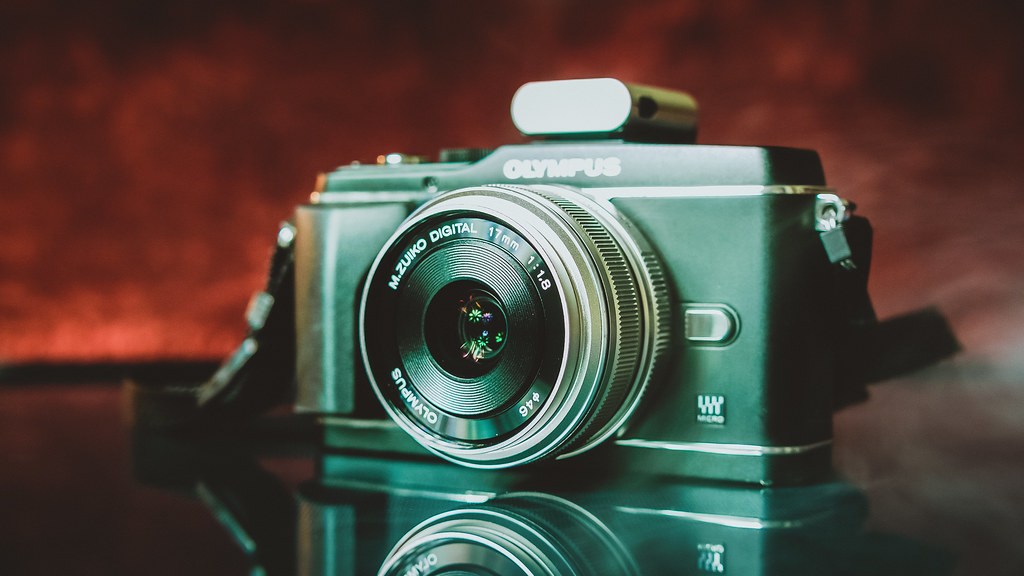
The M. Zuiko 17mm f/1.8 entered my kit late in the game, but it has been my first choice in go-anywhere do-anything lens since acquisition. It has the stout bulldog frame of its brother 12mm f/2.0 and borrows the capacity for dreamy, candid portraits from nifty fifty lenses above it on the focal length scale. Were I ever imposed with the limitation of only ever being able to shoot a single lens henceforth for the rest of my life, it would not require thinking to immediately state "M. Zuiko 17mm f/1.8".

Something unique about the 35mm equivalent focal length that I did not understand until shooting with this lens was the very nature of how pointedly distance from the subject affects how it is seen in the final image. At such an awkward in-between focal length, it is remarkably capable of providing the impression of a wide lens when distanced from the subject, yet equally capable of capturing a person's face up close and implying a genuine sense of intimacy with the subject (a la nifty fifty). It is that versatility of the optic which has kept it mounted on my camera more than any other when shooting for myself.

While hiking with good friends, this lens allows me to capture a stark sunset vista atop the rocks of some ragged old mountain, then immediately turn to my hiking partner and capture the golden glow on their face with intimate detail and subject isolation. A truly bizarre degree flexibility, but plenty welcome. It may be telling that Olympus' 12-40mm f/2.8 zoom is dialed into 17mm as its default, its baseline focal length (when the extension of the zoom is retracted completely into the body). It is also only second to the 45mm in regard to sharpness wide open, and this is a lens that lends itself well to shooting wide open in the case of people photography. Much like the 12mm f/2.0, this lens may also find a cozy spot yet open in my camera bag, for those times the heft of a pro zoom is both uncomfortable and uncalled for.


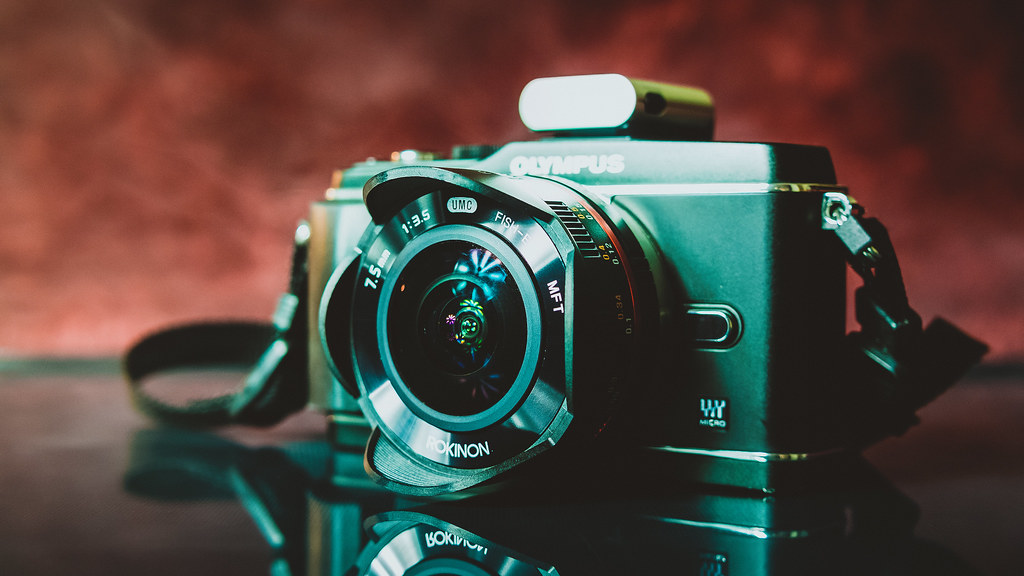
A fisheye lens is never really a replaceable optic. It's a gimmick, a special effects lens for rare scenarios in which is obscenely warped perspective wanted and warranted. As such, this lens falls outside the standard paradigms of my "real" prime kit, but that is not to downplay how markedly sharp an optic Samyang/Rokinon's 7.5mm f/3.5 is, wide open, stopped down, what have you. It may very well be too sharp to be believable in some situations.

For some time in 2012 I found myself enamored with rooftops in the city and desired something dramatic and intentionally unreasonable in its depiction of depth and perspective, an ideal case for the fisheye. A full metal, all manual lens, it serves its purpose well when called for, and produces likely the best sunstars of any Micro Four Thirds lens even wide open at f/3.5. Its painted outer coating has worn from various bangs into the concrete over time, but optically it remains unreasonably sharp. As a manual lens, it is mildly finicky with the light meter in the E-P3 - often night exposures become a testy challenge, with the meter reading exposures as being 3 stops hot, but the actual exposure being mid-range at best. That may very well be a challenge of all fisheye lenses, hitting internal light meters with light from incident angles outside their sensor range.

Beyond use in exaggerating rooftop shenanigans, it served as an ideal videography lens for minor video work done for conventions hiring me for work outside my comfort zone. Stable video will forever be the bane of the amateur videographer, however the distortion and accentuated width of the fisheye's field of view effectively negated any and all issues had with shaky footage. I'm set to conduct video work for the same convention crew next year - alas, this lens may collect some measure of dust until then (when I get to run it on the 5-axis stabilization of the E-M1 and really learn what stable video can look like).


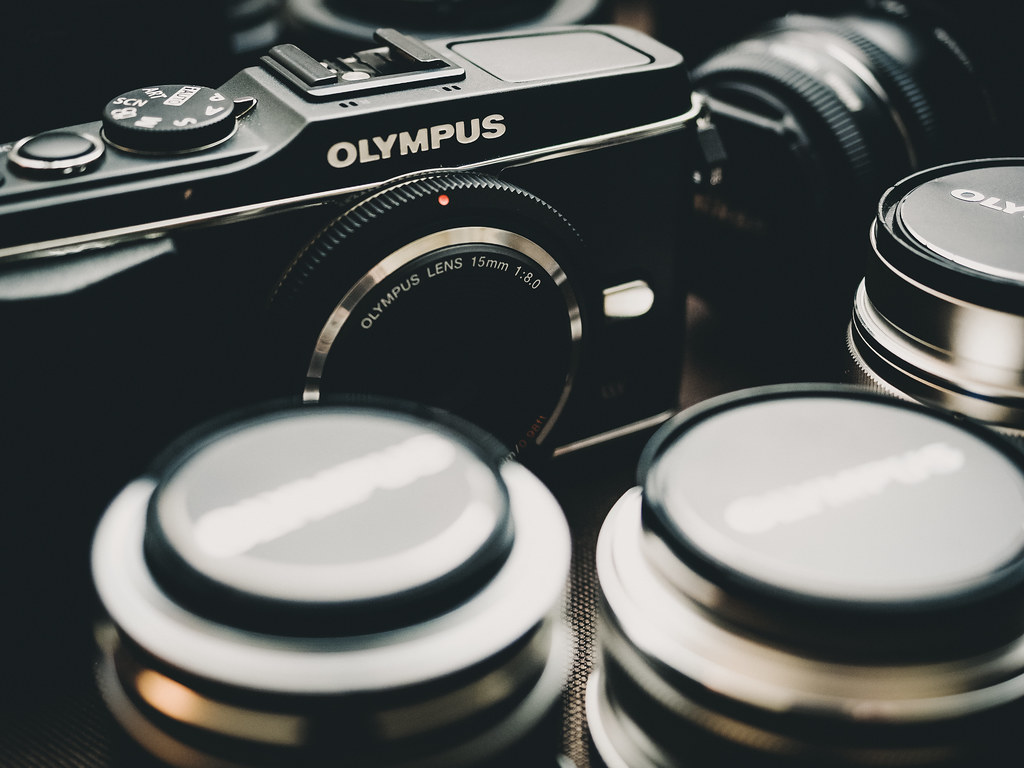
I may or may not have been known to refer to Olympus' 15mm f/8.0 body cap lens as the "Instagram Special".

Let's face it, this "lens" was never designed with optical superiority in mind. Even so, given that one crops the aspect ratio into a (beloved) square, the center regions of this tiny optic do produce images usable for such business as sharing online via social media. Hence the concept of the "Instagram Special" (I refuse to not use quotes with that statement).

In practice this lens has only ever seen actual use in one scenario - while driving. Arguments against photographing-while-driving aside, when on business travel or venturing through Coal Country and the mountainsides to see a dear friend, I've been glad to have a small, quick, fixed-focus optic available, wide enough to capture the scene out the window of my car and with such limitless depth of field so as to produce plenty strong a landscape image. Much as its price point would indicate, it is a toy lens, and I treat it with toy considerations, and it has been useful in that regard as a superior optic to my cell phone for sake of capturing good square images to share on Instagram.

Despite the inclination of most to sell obsolete gear, I actually foresee myself more or less perma-mounting this bodycap onto my E-P3 and using it exclusively as an always-in-the-car shooter. I see things often enough on the road that I would like to photograph but am typically making use of my cell phone as a GPS - this prospective alternative use makes only too much sense. Fire images to the cell phone when I'm stopped with the PENPAL, edit them quickly with canned filters, sounds like a fun use of replaced equipment to me.
                                                                                              

All this said of the lenses themselves, I must take the time to commend Olympus' masterfully constructed E-P3 as well for its tenure in my hands, enduring rugged operation and being relentlessly pushed to the limits of its capability.

I purchased the E-P3 as a direct replacement to the Panasonic GF1 lost in my car accident. It represented the pinnacle of what was possible with a Micro Four Thirds sensor at the time, equipped with the exact same imaging unit as the GF1 before, but dialed in via clever engineering and software to produce the best images possible in such a tiny format. It never stood up to the likes of even APS-C in regards to image fidelity at high ISO, but I'll be damned if it didn't produce the best gamut of color I had ever seen out of a camera up to that point.

With James Bond style sex appeal, it fit right in with my minimalist paradigm. Whereas most I shoot with have always been markedly careful and covetous of their cameras, regarding them like expensive jewelry, the E-P3 became my tool, a reliable shooter that awoke me to the concept of the camera as a disposable agent of the practice of art, no different than a paintbrush. And despite that mentality of fatalist disrespect, it continued shooting strong no matter how hard the impact into the wall, no matter how wet the body in the rain, no matter how swollen with fungus in the seals.

It still just keeps shooting.

At well over 100,000 clicks on the shutter I suspect it will lose steam eventually. Inevitably. But it has given me the best 3 years of my life in photographs I will look on fondly for decades. I'm not sure I will ever be able to stomach abandoning it to a pile of electronic scrap, rather I would encase it in a glass case to present to all as my partner in crime, the agent of my creative success. In an age of so many cameras, all equally as disposable as the next, it simply feels wonderful to have developed a relationship with a tool that didn't take my abuses to heart, rather kept pushing on with minimal interruption no matter how wet or cold or hot or far to drop.

Bravo Olympus. Dare I say it I'm not sure I will ever develop quite the same level of relationship with a camera again. Now pardon me while the men in white coats take me away for perceiving a relationship with a piece of exceptional engineering.

Monday, August 18, 2014

Scary Steps

I belligerently dropped quite a bit of coin last night. Despite planning on this upgrade path for months now, it's always terrifying to buy into something new, especially with years of familiarity under one's belt. The Olympus OMD E-M1, paired with the M. Zuiko 12-40mm f/2.8 lens, the HLD-7 vertical grip with an extra BLN-1 battery to occupy it, and the FL-600R flash unit. Almost as if, in one fell swoop, I replaced everything I've been using in my practice of photography up to this point. And it's scaring the hell out of me.

A fellow shutterbug and I mused on the source of this seemingly unnatural fear of the new. Most photographers are thrilled to acquire a new piece of kit, so it simply didn't seem right that I would be so apprehensive about it. After some introspective rumination, however, I'm pretty well decided on my rationale being a fear of expectation. I've spent years, over a decade now, making the best of consumer cameras paired with competent prime glass, making the absolute most of their potential until I was flattened against the glass ceiling those units inherently carry. The acquisition of the E-M1, a "pro" grade camera body, and the 12-40mm f/2.8, a "pro" grade lens, and even the FL-600R (which may not be flagged as "pro" but any flash with TTL metering stands well and above the full manual assortment I've otherwise used), represents an abandonment of that glass ceiling.

While operating within the limits of the Micro Four Thirds sensor may represent a ceiling of its own that I'm sure I will hit, operating with a "pro" grade camera instills me with a dread that I have fewer excuses for my screw ups in the future. And more abstract, the very form of this camera impresses upon others the expectation that "Yes, this man is a competent photographer". While using PEN cameras and my old GF1, I've always had a sort of novelty about me, wherein I was not immediately recognized as a photographer, perhaps a tourist, or a cheeky kid who likes taking pictures for money sometimes. I'll have no such "out" in utilizing the E-M1. Large and domineering (for an MFT camera) with the vertical grip attached, there will be no mistake what I am there to do, what I exist to do. So strange, for years wanting to be recognized as A Photographer, and now the deliberate label terrifies me. I am afraid to be recognized.

While I await the delivery of this new bit of kit, I will be working on reviews of the assortment of primes that have defined my career and my aesthetic up to this point. I'm sure I will still use them, but while I am in an emotionally jarred, melodramatic state of mind I will be writing them with a bittersweet fondness as if they are dying stars collapsing into universal entropy. Transition is hard.

Thursday, August 14, 2014

Missing Studio Days

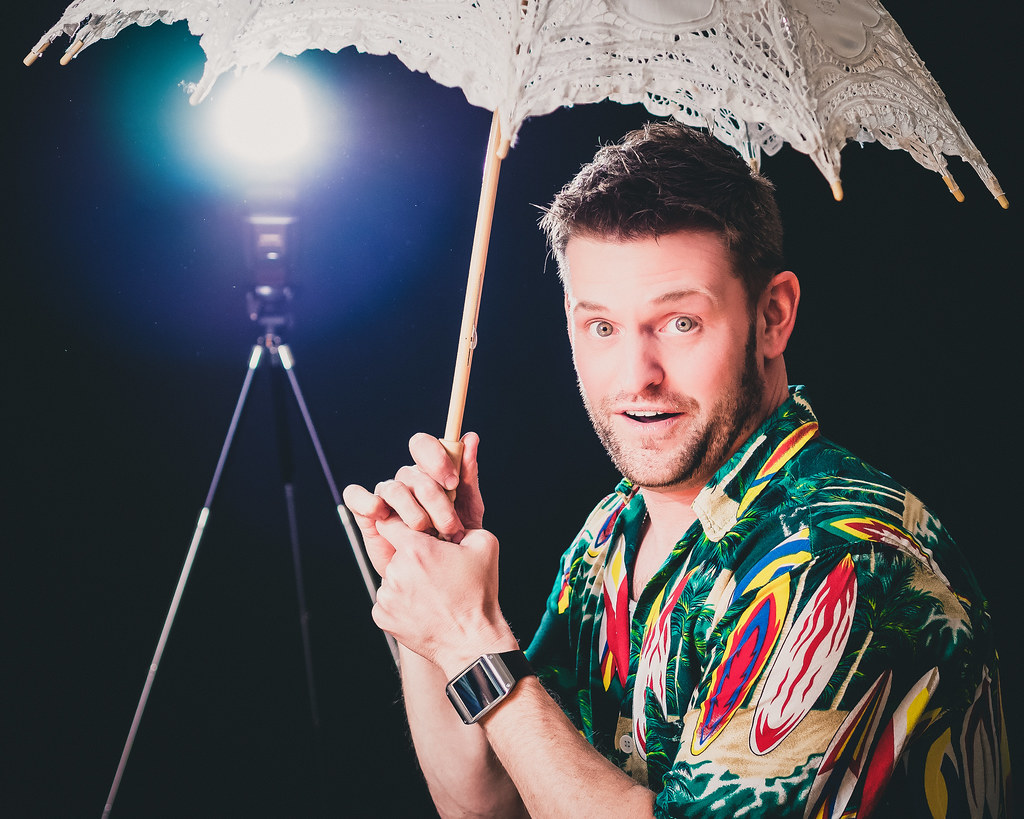
Some days it's really easy to remember what you've forgotten. This past week, I've really missed days having fun with studio setups, taking ridiculous portraits (clearly, seen left) and generally having gobs of fun with lights.

This particular studio scene was from a party held by a good friend of mine to celebrate a mutual friend's 50th birthday. She wanted a gathering off all her buddies for aimless revelry and imbibing. I offered to bring along my studio kit for some added fun since the whole crowd had a history of costuming. Props were provided for added fun.

I'd set up my backdrop, a terribly unwieldy matte black linen, in his garage. Per my usual process, some wrinkle releaser (the whole bottle, in fact) served to smooth out the ghastly spiderweb pattern on the sheet on account of its time trapped in an over sized plastic bag. I had a YN-560 II manual flash mounted on a CowBoyStudio radio trigger firing into a silver umbrella for the main light, and toyed with the other radio triggered YN-560 II mounted on a cheap collapsing Targus tripod from Target. Locked my E-P3 with the 45mm mounted to the Golden Settings - f/2.8, ISO 200, 1/160 shutter speed. If I wanted a brighter image, I'd drop the aperture down a little, but never below f/2.2. Otherwise the setup was infallible.

That night my linen stands unfortunately broke under the pressure of too many drunk people standing on the lip of the backdrop. I trashed the irreparably cheap plastic goods and donated the backdrop to a seamstress at the party. I'd gotten my money's worth out of the kit from working jobs anyway, and if ever needed again I would purchase higher quality, less plastic goods. So far that scenario hasn't come up, alas. The kit was originally purchased in support of a commercial shooting job for the LiveWellDC! campaign (a bust of a job, unfortunately). I don't necessarily foresee another job with those specific needs coming in the future.

Perhaps with a room, a garage, something that can be dedicated studio space, I'll pick up another background kit for myself. For now, I'll simply miss the pleasures of the supremely controlled setup, where the magic was less a matter of chance and opportune moments and more a vivid collaboration of minds on either side of the camera.

Wednesday, August 13, 2014

Fun in the (Faux) Studio

In preparation for that battery of reviews I mentioned in the post prior, I spent last night experimenting with some product photo setups to showcase the lenses and provide reference images for the posts themselves. Sometimes I forget how enjoyable experimental, no-budget setups can be.

A couple weeks back the 43" plasma television formerly occupying my living room blew a capacitor on the screen control board, which unfortunately fried the internals of the screen itself and rendering the thing little more than a heavy, dim mirror with tinny speakers. While waiting to find an appropriate collection center for the electronic it has been sitting in the office being large and useless. Now, originally I was on the hunt for another flat, perhaps matte black item on which to sit the camera to be photographed for the simple, standard showcase image, but my pondering found me staring at the dead TV with a bright halogen bulb illuminating the back of my head.

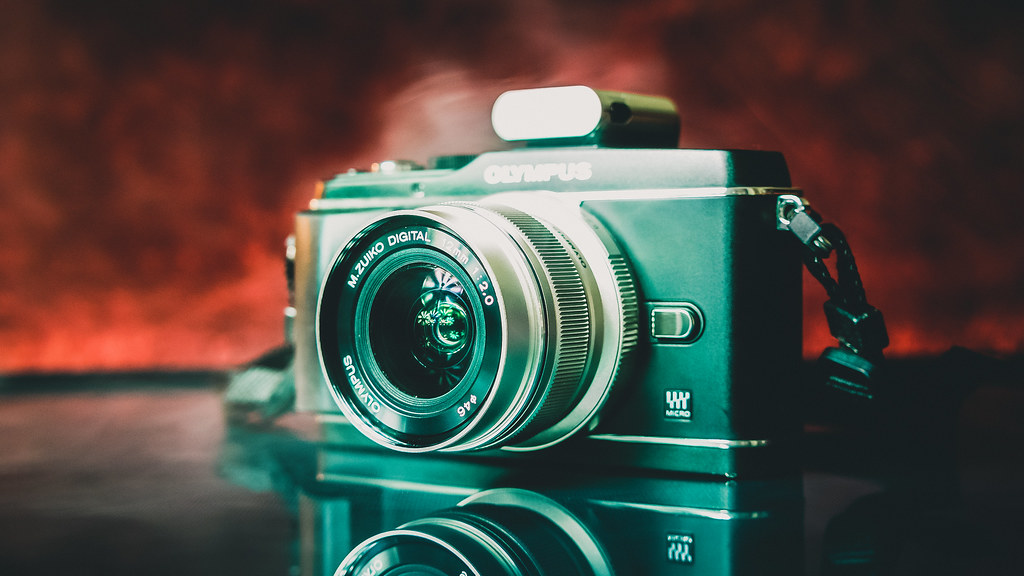
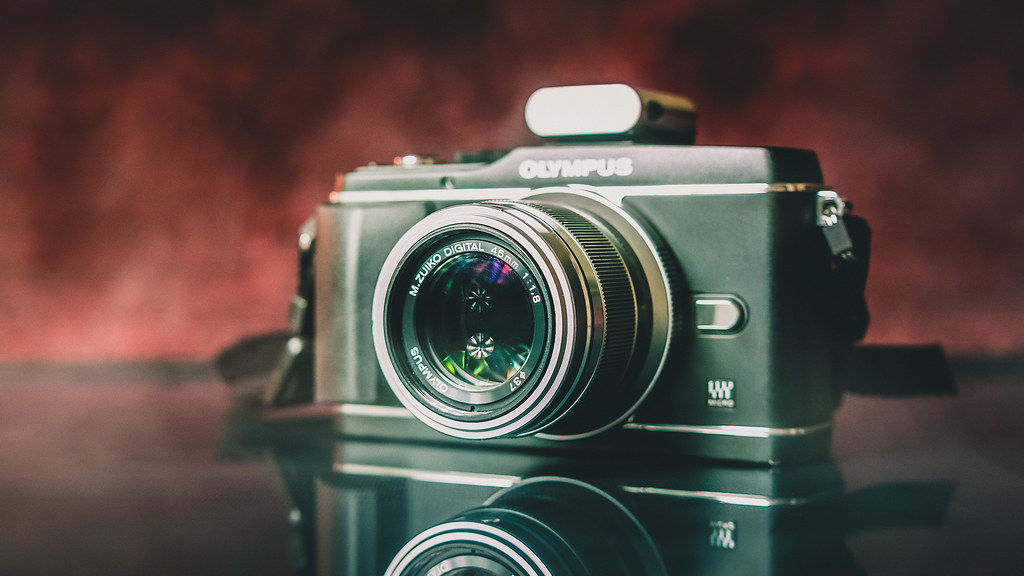
Simple setup. I stacked a multitude of pillows high on the bed and draped a red microfiber blanket over them, letting the length of the sheet laying horizontal transition into a seamless background. At that point it was only a matter of unscrewing the factory stand on the plasma TV and laying it on the blanket, propped up slightly by a tightly coiled belt so as to make it slightly less level and show off the reflection in the TV screen. And oh my did the reflection produced look absolutely incredible, with a carbon fiber alike cross hatch pattern inlaid below the glass with all sorts of unexpected subtle blue tint (which played well with the stark red of the microfiber backdrop). Lighting was provided by a single 85 watt CFL bulb mounted on a stand with a silver umbrella to throw the light down softly from above and to the left.

The setup alone left me tickled, but an added smoke/fog effect sealed it as stellar (to me, anyway). Not that I wish to argue anything in regards to vaping/smoking, but in realizing I was able to produce vast quantities of smokey vapor with my electronic cigarette, I began slowly bellowing a foggy mist over the setup for each shot, experimenting with different directions and speeds for their respective looks. A fun process for sure.

My only gripe came after the fact, realizing that the images produced on my petite Nikon V1 simply lack the same color and allure of the Olympus tones and colors I've grown so accustomed to, but that's okay. My future is pending an additional Olympus acquisition which will remedy my gripes concerning my current backup camera.

Plan is to attempt another round of "product" photos today at some point. I am reminded that I really need a dedicated studio space, somewhere I can assemble oddball setups such as this and not have to break them back down for sake of sleep.

Tuesday, August 12, 2014

Gear Posts (There are many of them, but I could do mine?)

Of course we've all reviewed the many gear reviews as practitioners of photography. Like any good consumer, we'd like to know what we're getting before we lay down a pretty penny (many, many pretty pennies) for a new body or lens. Same applies to technique, rehashed a thousand times and usually saying the same thing you've read from hundreds of other reviewers (if you've the stamina to devour the internet's boundless content for that long). It's an industry standard thing at this point.

I've never produced a review of the equipment I use myself. Typically I assume the plentiful bounties of information already prevalent on such notable review sites such as Camera Labs and DP Review suffice (or in the case of those looking for a personal touch to gear in action, the likes of Steve Huff or Robin Wong). But alas, I find myself bored, and am considering the elaborate exposition of my regularly employed photographic techniques and field experiences with specific cameras and lenses. The idea makes me feel like a sell out, but I've honestly run out of things to talk about outside of incessant whining about a work-burn-out-induced creative rut. Plus it's always good to have a project to work on, especially when you are your most fragile (great advice from many a great friend).

As a late, much respected actor and childhood role model once said, "You're only given one little spark of madness, you mustn't lose it".