Monday, November 16, 2015

Baltimore City Shots of September

Going to try going in a little bit of a different direction with this blog to try and update it with content more often (and allow myself some time to digest the things that I'm doing at any given time).

I've been taking a different direction with my editing process as compared to the usual hard line processes I've followed for years. It may very well come down to dissatisfaction with how little I publish lately because the images I'm taking don't necessarily compel me once I get them onto a computer and up on the monitor. They're a joy in the process of the taking, but I often let that joy of the moment fade and thus never produce anything to share. This isn't to say I'm not beating on photos constantly. Quite the contrary, I spend nearly every evening massaging various photos shot within the recent months quite a bit, they simply never go anywhere. Ultimately, though, what is the point of photography if not to share?

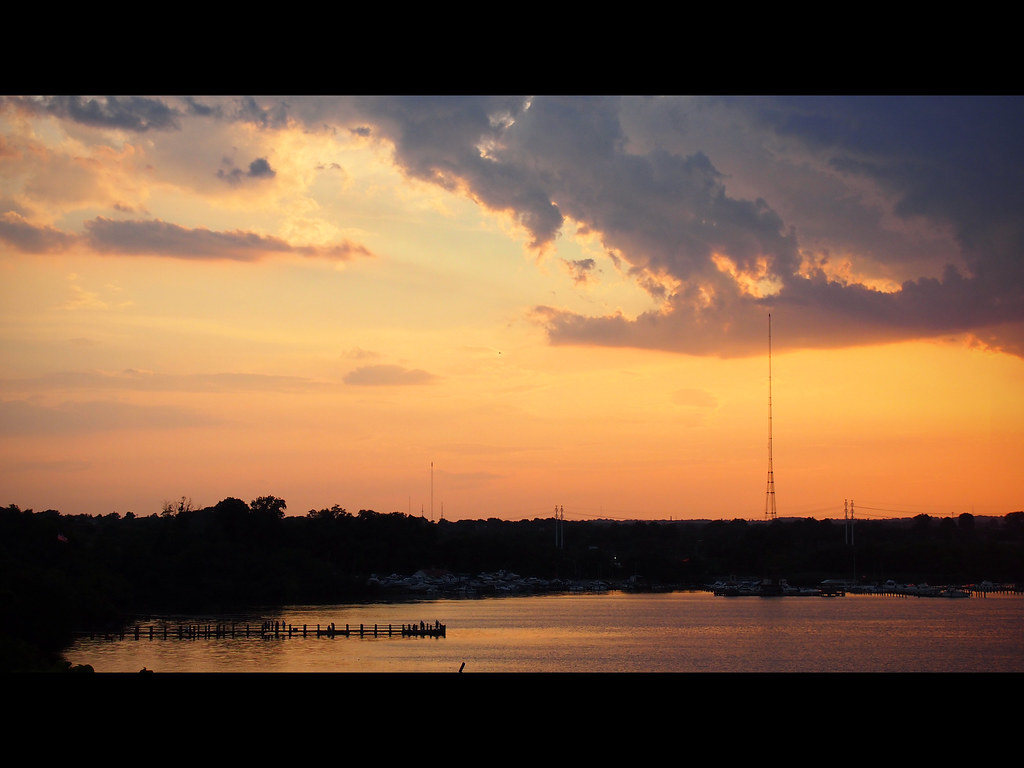
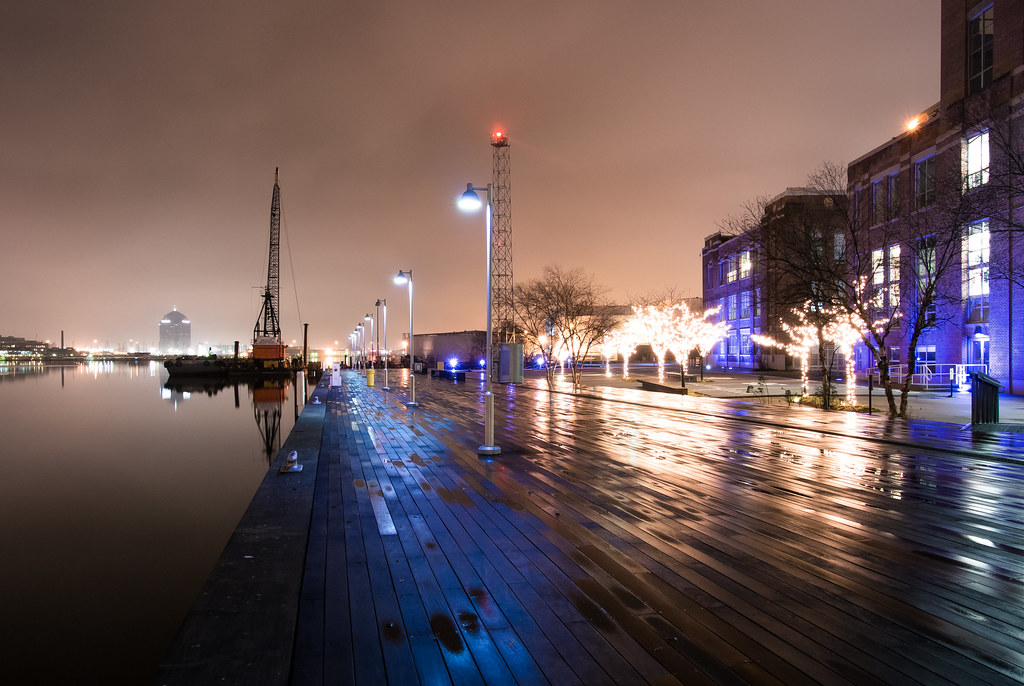
I took the following images in Baltimore City back in September while walking the streets with my friends Kevin and Rob around the Federal Hill area. The city can be quite beautiful at night, but I blame my jaded senses for not finding them more interesting. I was trying to capture interesting starbursts in the hard points of light, hence the use of f/11 (which on the micro four-thirds format introduces a bit of softening due to diffraction, a crux in the use of such a small format).

Olympus OMD E-M1, M. Zuiko 12-40mm f/2.8 at 20mm, f/11, 10".

Olympus OMD E-M1, M. Zuiko 12-40mm f/2.8 at 40mm, f/11, 13".

Despite the availability of over 12 stops of latitude in dynamic range, I rarely ever took advantage of it in my processing. Maybe it was the pixel-peeping realization of added noise or the severe aversion to the look of notorious "clown vomit" HDR. As a result, my images at night rarely ever seemed to capture the breadth of a scene for insistence on heightened contrast. Lately, though, finally getting over my OCD tendencies to only adjust Lightroom sliders in factors of 5 or 10 and actually using them in the fluid manner they're designed to be used, I've more comfortably tapped into the range of tones available in an image, freely experimenting with what was otherwise hidden in nearly-clipped shadows and highlights.

Frankly, there's a lot there that I just wasn't touching before. The style may be far less "artsy" with heavily lifted blacks and crushed whites in the tone curve, but for sake of a realistic image I find them appealing in much the same way I like the OOC JPG files Olympus' engine produces for my mobile uploads (which still remain my most enjoyed post-processing method to date for the immediacy and ease). And once past the +/- 50 mark on the shadows and highlights sliders, those starbursts I was hunting for took a pretty fantastic shape compared to the gross blobs of light they'd otherwise present.

For this purpose, I've been enjoying the M. Zuiko 12-40mm f/2.8 more and more. Odd, because I once thought the lens would be relegated to a desk cabinet for its overlap with my 17mm f/1.8 and 12mm f/2.0, but with age those primes have lost some spark and re-learning the flexibility of zoom lenses in my real estate work has made me less elitist in my attitudes toward the normal zoom range in general. I may still run to my primes for people photos or candid shooting, but anything laboriously considered (such as a landscape or architectural study) enjoys the freedom to fine-tune composition and framing in a more dynamic fashion than would otherwise be limited by where my feet can take me (alas, I have not yet learned to levitate, nor added a Little Giant ladder to my backpack).

I do find myself annoyed more and more by flare/ghosting, however. It's an unavoidable facet of photography, of course, but my patience for it has dwindled. I once took it to be a facet of the M. Zuiko 7-14mm f/2.8, but having similar experiences with other lenses I'm learning it's a direct result of how I like to include hard sources of light in my photos. Arguably this indicates that I'm simply doing it wrong, photographing a scene that is. In real estate work I've developed methods for negating the issue, but it will always persist in the form of purple blobs in night photos, sometimes treatable with deliberate post work but other times relegating shots to un-rescue-able. First world problems, I suppose... it's likely a very common struggle I've just had the luck to not encounter until recently (or perhaps I simply never noticed it before?).

Olympus OMD E-M1, M. Zuiko 12-40mm f/2.8 at 34mm, f/11, 10".

Anywho, I'm going to try and keep steadfast in posting images I've worked on in the evenings here on out and pontificate on whats going through my head at that moment. Probably a far more productive use of my time and any readers attention than superficially high-brow commentary on otherwise un-relate-able subject matter forced through my fingertips.
Friday, November 13, 2015

Looking to Move Toward the High-End

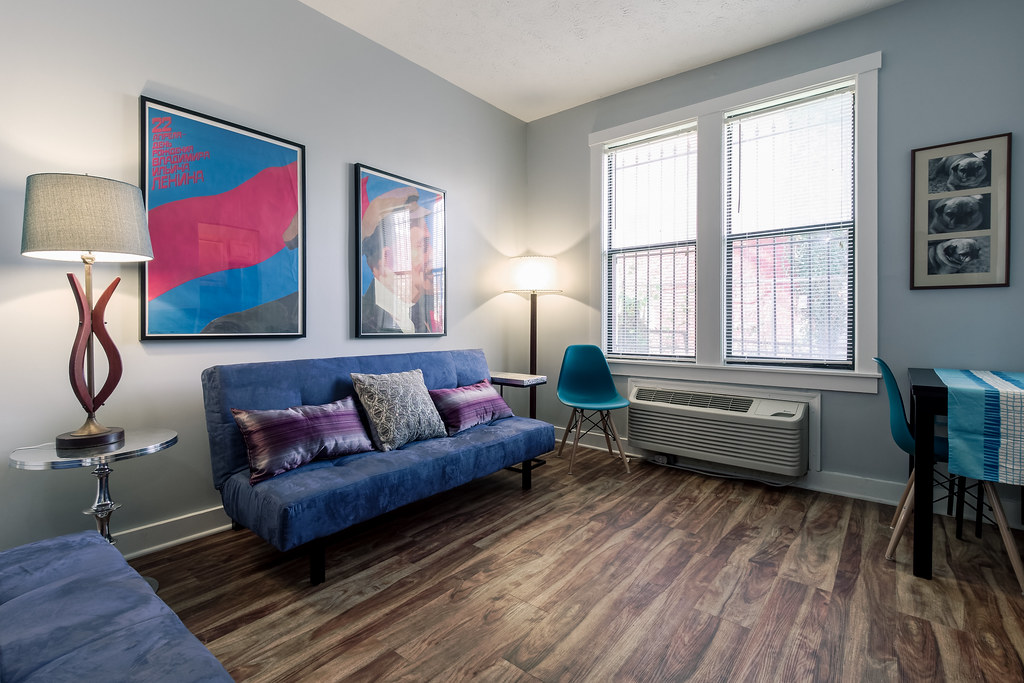
Really nicely designed condo space shot for Airbnb a couple weekends ago (www.airbnb.com).
Shot on the Olympus OMD E-M1 with the M. Zuiko 7-14mm f/2.8, 0.4" at f/8.0 and ISO 200.

I've been working in the low end of real estate photography for a good while now. Calling my local market foothold a monopoly would be hyperbole, of course, but given my neglect of deliberate marketing (and even lack of a dedicated website for my brand) people know me by word of mouth, and I am generally agreed upon as a reliable provider of above-average real estate photos with low-overhead and high-turnaround time. Basically the dream for realtors dealing in sub-$300K and strictly rental properties (my shoot for Silo Point continues to be my one and only outlier in that equation... would love to have a client like that again).

Lately my idle hours have been spent navigating varied tutorials written on real estate photography, some featuring things I know already, others showcasing the different available styles currently big in the mainstream market. Naturally these tutorials showcase higher end listings, the kinds of spaces with lots of custom furniture and lighting to create a genuinely one-of-a-kind space. More than the information in the tutorials, I find myself focused on these cleverly designed spaces as subjects I really want to photograph. Sometimes I've been lucky enough to shoot such spaces on my current contracts, but because the nature of the work necessitates low-overhead and high-turnaround I don't get to invest the time and effort I'd really like to, so they always end up looking just above-average at best.

But I really want to get out of this low-end trap I'm in. I don't want to lose momentum in the advancement of my business all because of the high-volume nature of building a successful business purely on low-end work (to a degree, it's the difference between wage slavery and salaried work). Thus I am committing to a new plan of income stream sacrifice for necessary portfolio building (which also includes actually developing a dedicated portfolio showcasing website again).

Clients straddling the line between low and high-end, or who have investments in both spheres of real estate, are plenty obvious in the scheduling process based on the content of our dialogue. They usually pay attention to little details such as when the light comes through the windows, and remark on how well their spaces are lit naturally. Because the nature of my contract demands high-turnaround, I usually book these clients amid a mess of others less attentive for sake of making big earnings for that day. Currently I'm operating on a breakneck pace that fits driving to a listing, the shoot, and driving to the next listing all within tight 1-hour blocks, ultimately leaving only 20-30 minutes for the actual photography for each space (it's insane, but I'm good at operating under such pressure). Without the time to really ingest a space and deliberately consider how it is lit, I will never create the kinds of images I want to be creating.

The change I am committing to right now is to isolate these clients with higher end considerations, take the gamble on the preparation of their spaces and allot maybe 2 or 3 hours to their listing to allow for relaxed, considered, creative investment in the photographs taken for those properties. Instead of the shotgun volume of shots (4 corners of each room and 1-2 straight on, my current autopilot standard angles), I will consider only the angles which best showcase the room (maybe 1 or 2 of the strongest angles, more if the room is just that good), and develop images with very calculated techniques using flash and compositing (the kind of editing processes that delineate high-end real estate photography from photographers I admire). In post, rather than quickly punching each image with a preset and delivering as product, I will construct pieces of art that sell a space unquestionably (and not be begrudged the time investment because they will be images I am personally invested in at the inception of their capture). Rather than a mammoth block of 40 mediocre images, I will deliver 12-15 with the highest considerations.

Or so that is the ideal of how I'm envisioning this personal time and income stream investment playing out. Suppose we'll see how well it goes in practice.

The sacrifice of 2 blocks of time for standard shoots to enable this kind of invested image capture translates to a few hundred dollars in sacrificed income. Once upon a time that would have sounded awful to me, but at current it plays rather well into maintenance of mental health and retaining passion for photography as an art form beyond the burnout of photography as business. And as a happy aside, it's a liberating thing to realize your personal considerations of health and passion can comfortably trump the capitalist freight train of business.

Thursday, November 12, 2015

Seasonal GAS

Really hard to beat the infallibility of a 100K+ segment RGB light meter for night shooting.
Shot on the Nikon V1 with the 10-30mm f/3.5-5.6 at 10mm, f/8.0 and 20" at ISO 100.
For the first time in a long while I've been manic over the idea of buying into a completely new camera system for reasons as yet inexplicable. I theorize that a lack of self-motivated outings to photograph for my sake instead of the sake of a client tied in with the already heavy seasonal SADs (Seasonal Affective Disorder) is driving my brain to consumerist notions that picking up a new camera in a new system and a new format will be a sort of savior to my rapidly rotting muse. Thinking historically, there seems to be a trend with the Winter months and the onset of seasonal GAS (Gear Acquisition Syndrome).

Specifically, and most recently, I'm thinking back to the Nikon V1, which I purchased on deep discount at Ritz Camera while the company was shuttering all of its storefronts. I remember developing a really difficult-to-navigate love/hate relationship with that camera, always regarding it as a direct competitor, and an inferior one at that, to the Olympus E-P3 that stood as my workhorse at the time. Both cameras were similar in size, my preferred kit for each was an assortment of prime lenses, and ultimately they were twin systems in which the V1 overlapped the E-P3 but with enough shortcomings to negate it in 90% of stuff-I'm-taking-with-me-to-shoot-with-tonight choices. But right now, I find myself fondly thinking back to that camera and rather wishing I still had it to wander the streets at night. For all it got wrong with nearly no buttons/dials/switches, it had solid autofocus at night and Nikon's RGB meters have always handled night exposures better than the rest. That is what my current creative panging cries for right now - a superior night photography experience.

Thus the current subject of my GAS is the Nikon D750, in great departure from my typical minimalist mindset when it comes to equipment. Next to my current workhorse Olympus E-M1, the D750 is a tank, heavy and clunky and lacking all sorts of design finesse despite being but a lowly plastic sensor housing. It goes without saying the imaging capabilities, ability to accurately acquire focus at night, and superior metering would set the tank apart from my E-M1. I've long been yearning for a prime lens kit system, and the Film Maker's package from Nikon comes with 35mm, 50mm, and 85mm f/1.8 lenses, plus spare batteries. But most importantly, and the real differentiator for me between any Olympus and Nikon camera matchup, is the difference in how files are toned. Olympus has always held some notoriety for very punchy and deeply saturated colors in their JPG output, and that ultimately translates to how their RAW files come out as well (not all RAWs are created equal). Nikon, on the other hand, takes more of a flat tone approach, which I honestly think is more of what I'm hunting for right now.

There is a quality to night images photographed on the Nikon V1 in which shadows and highlights would only really clip at my behest with sliders in Lightroom, whereas my Olympus cameras have always tended to clip blacks in night scenes, requiring precarious exposure compensation adjustments which inevitably clip highlights for not too terribly much recovery in the blacks of the frame. Everyone pre-bakes their RAW files just a little bit, and the Sony/Aptina sensors paired with Nikon's rendering engine provides such a beautiful base canvas to work on when in pursuit of a truly high-fidelity image. Olympus' approach, on the other hand, I always tended to prefer because it coaxes the direction of image processing with variations in the arguably punchier direction of its rendering of color and contrast. All of this is to say that an Olympus camera will always be superior for everyday shooting because it can help guide an aloof muse, whereas a Nikon camera's place, to me, seems much more in tune with those with a preconceived vision of what is to be photographed, providing a base palette that is malleable to go in the direction of the photographer's choosing. Right now, I want that flat base palette.

The rational side of me of course says "You don't need to buy a damn thing, just get off your ass and go photograph what you see". And I really can't argue with that logic, because as cliche as the saying is it really is the camera with you that is the best camera. In the meantime, however, I'm going to quietly crave my old Nikon roots.

Thursday, November 5, 2015

Homage to E-P3


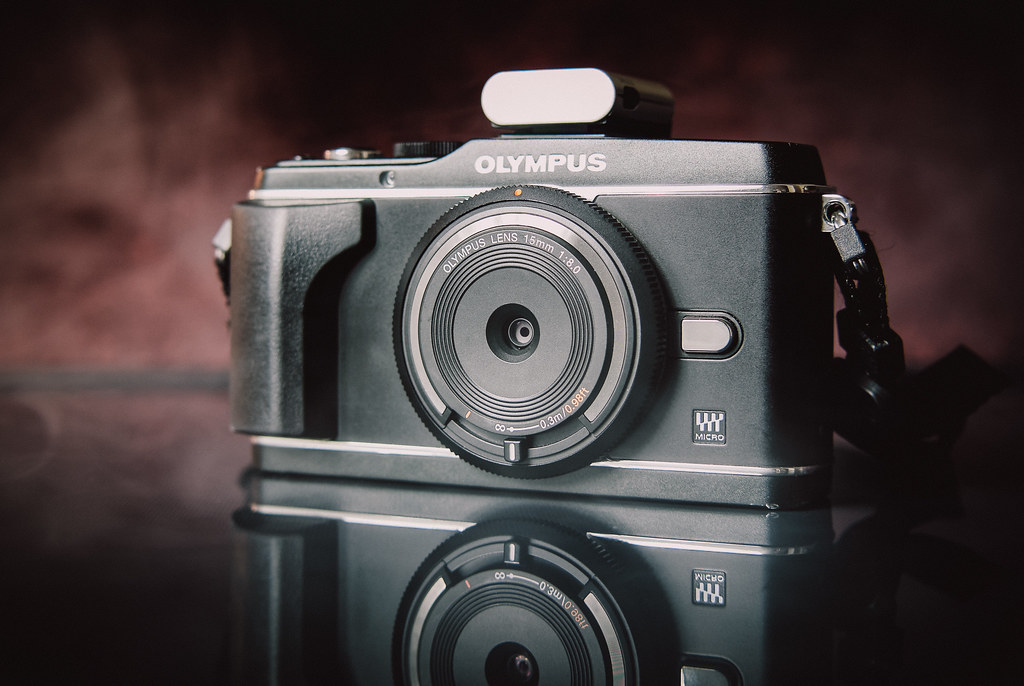
I'm ultimately late in mentioning this, but the Olympus E-P3 has been officially retired. Of all the things that could have done it in, the battery charger shorted (yes, I'm aware I could just get a replacement, but superficially forcing this camera into retirement is actually a weird sort of necessity for reasons of quirky mental allocations of value and function... basically I'm just weird).

Purchased in August of 2011, the Olympus E-P3 was as close as I could seem to get to a true spiritual successor to the Panasonic GF1 that died tragically in The Car Accident (caps for emphasis). I was new to Olympus menus, new to the famed Olympus JPG engine, and the sensor was arguably old hat by the time the E-P3 was released, but it appealed to me in both design and image quality from first snap.

One of the my first shots with the E-P3 on August 1, 2011.
Shot with the M. Zuiko 14-42mm f/3.5-5.6 RII at 35mm, 1/160" @ f/7.1 and ISO 200.
I built up an entire prime lens system around this camera body, always in love with the form factor of rangefinder styling. Not even a full year later in 2012, I started picking up my first paid photography work and kicked off my business with the E-P3, M. Zuiko 12mm f/2.0, and 45mm f/1.8 (eventually adding the 17mm f/1.8 which would become my favorite prime lens of all time). A simple, diminutive kit, which earned jeers from clients until they saw the photos and were left baffled.

The E-P3 had banged into more walls and railings than I can remember, dropped more times than fingers and toes can account for, and took a tumble off a moving train once. Never a problem for it to deal with a little abuse, it kept on shooting like nothing happened. Even after picking up the Olympus E-M1 and PRO M. Zuiko zoom lenses to build a (superficial) professional-looking front, the E-P3 still came with me in the car and was frequently my go-to for casual street shooting. Paired with the 45mm f/1.8 (itself showing a lot of wear and tear these days) I had a perfectly subtle combo which produced stellar images even 4 years later.

Olympus got a lot right with the E-P3. It was a perfect maturation of all design philosophies governing Micro Four Thirds at the time, marrying speedy menu operation with smart wheel-based controls and a touch screen that was actually useful (and totally not the gimmicky thing I thought it was until I actually used it). The sensor was older Panasonic tech, but Olympus squeezed every frothing drop of quality from it, and I still miss the use of OLEDs in the rear screen display (I'd often whine about images looking better on the back of my camera than on my computer monitor... that was an actual issue to me once upon a time... wow). With the VF-3 in the hot shoe, I discovered my love of waist-level viewfinder composition, and with the PENPAL bluetooth accessory expanded my horizons by editing and distributing images with my tablet in a completely new workflow paradigm. Mostly, though... I miss the size.

One of the last frames captured with the E-P3.
Shot with the M. Zuiko 45mm f/1.8, 1/400" @ f/3.5 and ISO 200.
Word around the rumor mill is that Olympus plans on releasing a re-envisioning of the PEN line next year. And frankly I can't wait. For all its technological advances over the PENs, the E-M1 simply isn't the camera I want to be using all the time. Even sans vertical grip, there is a lost charm that I could probably get back with an E-P5, but I wouldn't want to hamstring my budget given how much I'm already anticipating this re-imagining, this... New PEN. Coupled with the rumors of those hyper-primes Olympus has patented... Oh yes, I am absolutely prepared to rebuild the prime lens kit.

So thank you, E-P3. Thank for your years of service, thank you for accepting my beatings with grace, and thank you for putting into perspective the kind of photographer I want to be seen as. Now please don't be jealous as I froth over your yet-unborn successor.


Mood Maintenance Methodology


My friend, Karen, shared a video with me maybe 2 years ago. A short by a photographer in which he dribbles on in a depressed monologue about the seasonal woes that are inevitably tied to Winter and the daylight ruin of turning clocks back an hour every November. It's actually a very good piece, and while perhaps not particularly inspiring in any overt, life changing way, it's reassuring in that the struggle of keeping creative drive up, keeping one's emotional health well managed, during the season is a shared hardship.

Personally, I remember Winter seasons when I'd simply retire the camera to a bag for months at a time and binge in excess on video games as my alternative escape. This was, of course, back before photography became a powerhouse hobby that largely governs major decisions and life choices for me, and today (and probably for the past 3-4 years) video games hold my attention about as well as a rattle captivates a baby. Lightroom and Photoshop are my video games now, and I'll sooner kill off evenings beating up old RAW files (and not publishing the results) than invest enough time to get past the starting area of Skyrim. But one can only batter the same RAW files for so long before they become redundant and boring, and once again evenings with nothing to do return to tax an already stir crazy brain.

So what is a creatively impassioned person to do when the daylight hours grow short and are otherwise robbed by the demands of a traditional work schedule?

I'll say right now, the working solution that has gotten me through the last 2 years with minimal cabin fever insanity seems so obvious I can't help but question my critical thinking skills. Thing is, it does require persistent dedication to an overall routine change, and it isn't something that is gently transitioned into but must happen immediately when the clocks turn back. Or, more accurately, it requires no routine change at all, but rather a willingness to ignore the arbitrary factor that humanity has agreed upon as global delusion, time. So maybe it would be more helpful to never turn your clocks back at all, because the most effective cure for seasonal downs I've yet found is simply getting up early.

I mean really early. Before the sun comes up early. Hell, before the sun comes up and with enough time to shower, eat breakfast, watch a dumb morning cartoon, drive somewhere 30 minutes away, and then hike another 15 minutes to the spot kind of early. Any successful photographer harps on those wee morning hours as this magical "other world", and their images are amazing and there is a good reason for it. I'm still not disciplined enough to pull off those 3AM mornings the Big Names manage, but holy crap, even waking up with enough time to spend an hour photographing the morning before driving into work is a thing of soul enriching magic.

Think about it. You're going to spend some block of probably more than 8 hours in a batcave of an office, and even if you rush to get in early, nobody else is on that schedule (forever governed by the arbitrary time on their clocks) so you'll still wind up staying later just to complete tasks as they gradually roll in. Coming into work early only ensures you're going to put in a few extra hours and, maybe, work a shorter Friday or something inconsequential (or if you're salaried, nothing at all). Because your peers are operating on a social clock and value a culture which eats at 7 or 8PM and drinks until 11PM and then maybe crashes out by midnight, the immediate perception is that we must conform to this late evening routine lest we relegate ourselves to the bin of social outcasts (see also: old people). And because of the overbearing influence of our peers, be they friends or coworkers, this change may not seem as easy as it actually is.

In the end we're all pretty depressed to walk out the office gates at 5PM and see that the sun dipped under the horizon 30 minutes ago with a mocking "See ya, bitches!". For the majority of people, that's the point of the social pressure to get together in the evenings, because human beings are generally social creatures and it only makes sense to surround oneself with friends during the long-cold-dark season. But for creative types, the ones who lose their minds when they slip into any dry spell in which new work is not produced nor projects pursued, that kind of socialization is about as effective in coping with the season as a nicotine patch for a pack-a-day smoker (pro tip: they're not super effective). The social atmosphere is a temporary distraction from the underlying stress of wanting to create new (and thoughtful) work. And the amazing thing is that's totally possible to do even during the Winter months, but it requires a shunning of the social circle band-aid, willingness to adopt some old man sleeping habits and the self-motivation to actually get out of bed at 4 or 5 in the morning. It's a lifestyle change, and like commitment to a healthy diet (not to be confused with fad dieting) making the choice and following through with it the first time is the hard part. After that, it's routine.

None of this is to say you aren't going to "slip", and considering that "slipping" generally just means "hanging out with your friends late one night" that's not so bad. Personally, I still allow myself such egregious betrayal of my lauded Winter Routine Change on weekends. In my struggle, the bulk of my depression came during the week, rolling into the office before the sun came up and leaving well after it had gone down. As it applies to me, my steadfast commitment is to be awake well before sunrise on weekday mornings, run through my usual morning routine, but still have a solid chunk of time during which I can go somewhere compelling and photograph the sunrise or the morning fog. That is the nuance of the coping mechanism as it applies to me. It will apply to everyone differently.

The larger point of this jabbering thought-bomb is that there is an option available, specifically as it relates to photographers, to find a new muse and keep the good work flowing instead of enduring 6 months of persistent distractions spoiled by the nagging realization that you aren't producing anything you really care about. I have some good friends in the photography world who frequently lament the coming 6 month Long Dark. They decried it months ago with forlorn words, like an inescapable apocalypse. But now it's upon us, upon them, and I don't want to see anyone struggle to keep motivated all because of a shift in social patterns brought on by antiquated time measurement rules.

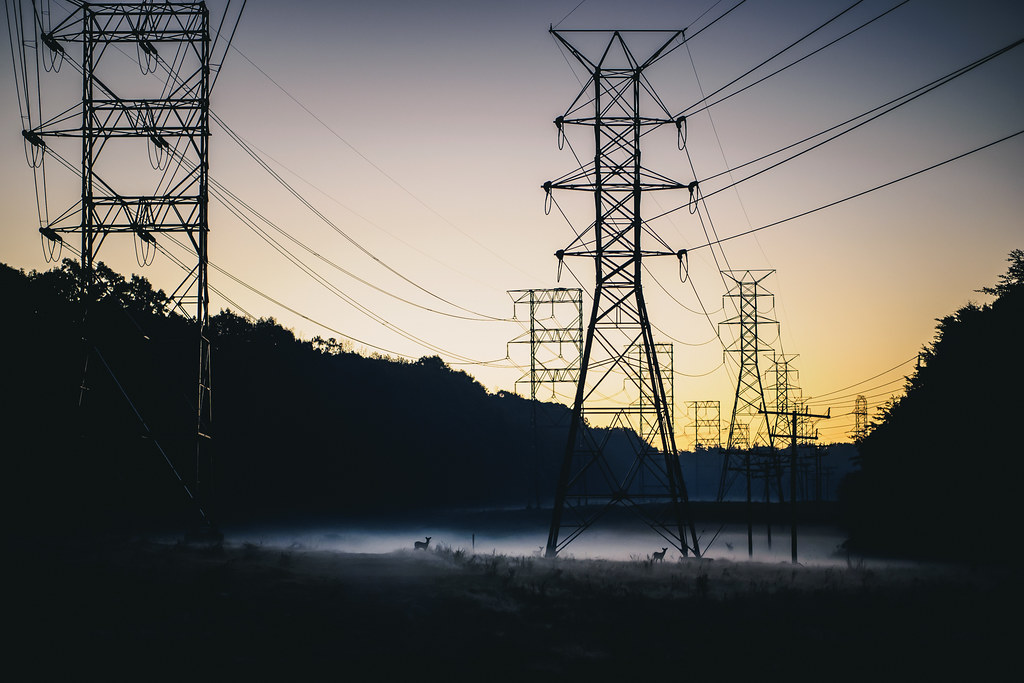
So do me a favor; if you're struggling to keep positive while the nights are extra long, try going to bed just a little bit earlier, set an alarm to jostle you awake at 5AM, get dressed and eat something delicious, then drive somewhere with an amazing view of the horizon. You'll probably hate it at first, but I promise the gold creep over the lip of the Earth from where you're standing will make it the easiest day you've ever gone through.

Bonus points if you catch the deer in the morning fog.

Tuesday, November 3, 2015

What am I even doing anymore?

Couldn't have arrived in time to photograph this bit of clever street art at a better time of day.
Shot on the LG G4, 28mm, 1/600" @ f/1.8, ISO 50

I notice many of my favorite photographers and photographic projects have some sort of overarching story to tell. Their work isn't singular and disconnected as solitary pieces of exceptional work. Rather, it's a collection of above average to pretty-damn-good facilitating the narrative. Personally I'm trapped in this awkward inbetween stage of development in the craft wherein I can either specialize and go the way of the Fine Art Photographer (FAP, hehe) or chase the narrative and call it Lifestyle Photography. My muse vacillates wildly between the two depending on my mood at the time, more often than not leaning toward lifestyle work but holy crap is it hard to set aside the time to sort through photos and assemble a narrative. I don't want to upload sets to Flickr to share openly because they mean nothing without that underlying story and are thus merely above average photographs (maybe I'm too self critical, or perhaps taking my Flickr gallery too seriously).

Suppose the overarching point is I'd like to write more about the things I am doing, and I spend a lot of time lamenting my failure to share those stories. Normally I'm against permitting myself excuses, but in this case I'm going to squarely fault working constantly. All the time. 9 or 12 hour workdays in a claustrophobic office among people with whom I have nothing in common in an industry not in the slightest aligned with my personal ambitions. It's a pretty goddamn draining existence to deal with, and at all uncommon for me to be absolutely braindead by the time I get home with little interest in anything above eating dinner, playing a casual game or something equally less demanding of brainpower, and going to sleep. Motivation to do literally anything productive is just completely sapped because I've spent an entire day managing my own misery. I do this 5 days a week, and then when the weekend arrives I've saddled myself to the brim with photography work, which is infinitely more thrilling and motivating, and the struggle to make it a viable replacement for Misery Management is totally worth it, but it's also very time consuming and again I'm left with little bandwidth to express any narrative with the necessary agency to do it justice. Which is why pretty much every blog post you see from me is written while I'm at Misery Management with some down time between tasks.

And I've been up to some cool stuff lately. Took a trip to Philly, took some photos for the BGE Baltimore Before & After photo gallery and took a kid's portrait that wound up flaring up some weird emotions when casually posted to Reddit. I shot my friends on Halloween at a country bar with line dancing while they were dressed up like a donkey, a sock monkey, and Michael Vick's dog. Looking back on the last 3 weeks in such short and sweet terms reminds me that my life is awesome and totally worth sharing because there are lessons and discoveries to be made about life and people and relationships by recounting them. And damn does it seem greedy to be keeping that stuff to myself. Pretending there's some charm and appeal to being the mysterious photographer who wanders, aloof, in and out of life without any lasting imprint is bunk. I'm not mysteriously fading in and out, I'm simply working so much I don't have much time to actually exist as my own person instead of a means to someone else's end.

It's kind of early to be committing to New Year's resolutions (they're kind of dumb and arbitrary anyway...), but I suppose it's never too early to set a goal for myself to make the time to be me for more than scattered weekends at a time. I thought setting aside one weekend a month for myself was a great step forward, but in reality it's put into very clear context how much abuse I've been allowing myself to inflict upon... myself. I mean, for fuck's sake, who actually has to mark time off in a calendar to just be themselves.

Friday, October 16, 2015

High End Smartphone Photography with the LG G4


Apologies for the sudden and abrupt dry spell. It seems I am only ever able to maintain a steady pace of publishing for a few weeks at a time at best, inevitably followed by a months-long dry spell in which the focus to sit down and produce written content is elusive.

The last couple months have seen a series of fun outings strictly designed as Photography for Me endeavors. Finally agreeing with the assessment of my peers regarding a breakneck, burnout-conducive pace of Photography for Work, I've made it a point to reserve at least one weekend of every month for myself, and on those Me Weekends plans are usually set in motion to venture out with friends to some location a couple hours out and photograph something not at all local, typically out in the mountains of Virginia or Pennsylvania (because who am I kidding, my aesthetic is rooted in the Appalachians). This weekend, in fact, we're planning on spending a couple days up in Philadelphia, which is of course not Mountain Country but, for me, a place chock full of happy memories.

It should prove to be a great venue to apply focus on my current photographic tool fascinations with higher end smartphone cameras. The mobile phone based focus of modern photography culture isn't a vaguery to my musings on this blog in the past, but most recently I was forced to upgrade my cell phone due to a hardware failure and opted to go for the handset with the most compelling camera. Based on the numbers and ratings by various sites heavily focused on the directly quantifiable, you'd probably take that to mean the Samsung Galaxy S6 or iPhone 6S, but after handling several units at the store, from the ergonomics and intuitive control scheme perspective the LG G4 easily delivers what I find to be the most complete and well considered option, and with a camera well on par with the more quantifiable "winners" of the contest I find little to criticize.

I remember the days of flip phones with hardly even passable VGA cameras, so digging into the feature set of the G4's native camera software may finally be the thing that has me considering the smartphone as a reasonable and completely viable photographic tool. Manual settings (except for aperture, which is fixed at f/1.8 as a compromise of tiny lens design), up to 30 second exposures, really remarkable optical stabilization which works in tandem with the gyro sensor to assist in leveling images (which also begs for mention of a built-in level gauge), it seems very clear to me that this unit was designed by a photography enthusiast. The JPG engine renders clean 16 megapixel images which could easily stand the test of mid-size printing, but if that's not enough the native camera software even allows for the capture of .DNG RAW files, one of which is processed and shown as the banner image for this very blog.

JPG night shot of the Key Bridge in Baltimore, MD. Shot at ISO 50, 30" shutter speed as its affixed f/1.8 aperture. Barring pixel-level blue caused by tripod motion instigated by heavy winds that night, the quality of the image is great, with lots of latitude in the available .DNG to correct for the hard highlight blowout of the street lamps on the bridge and beyond.


And the RAW quality is great for what it is. Noisy even at native ISO 50, but plenty sharp, and with a surprising amount of latitude in shadows and highlights for manipulation. In practice, the biggest issue I've had with using the phone as a dedicated camera has been for long exposures on a tripod in which stability is hard to attain given the light weight of the phone. I've tried countering the issue with various weights hooked onto the center post of the tripod, but even the slightest breeze seems enough to trigger shot-blurring shake. But seriously, read that again - Shooting long exposures with a cell phone on a tripod in RAW, and my biggest complaint is that it doesn't weigh enough? If you're looking for an indicator of the esteem to which I hold the G4's camera and interface, there you go.

Realizing the potential of the phone's camera, I quickly went on the hunt for the most optimal tripod mount for my uses. Many people recommended the ShoulderPod line which does look like the best bang-for-the-buck option, but knowing my uses and having a MeFoto brand tripod at my disposal already, I went with MeFoto's SideKick360+ mount which both allows for use on other tripods but, more importantly, fits natively into the arca swiss plate vice employed by their tripod heads. A pricier option, yes, but well built and, personally, speed and convenience are abstracts for which I am willing to pay extra when it suits my workflow.


It seems extremely silly and maybe even overkill to mount one's smartphone to a tripod for the purpose of photography, but in practice it opens up a weird new world of possibilities by virtue of the fact that, the camera in question being the phone you have in your pocket, it is small, lightweight, easy to carry, and unassuming. Additionally, the ease and straightforward nature of any smartphone photography workflow makes it, frankly, enjoyable, with gorgeous and instant results that can compete very well with more cumbersome traditional workflows on dedicated cameras. At the very worst, it is the fun of Polaroid/Instax photography, but with more flexibility.

My latest fixation with the joy of a smartphone workflow has been in the production of time lapse shorts. I found myself experimenting with time lapse photography late in 2013 and through the duration of 2014 before I decided it wasn't going anywhere and sold off the kit I was using to produce it. I'd seen many time lapse shorts on Instagram and it had me curious to see what software was available for more power-user oriented time lapse capture, which quickly led me to LapseIt Pro. A cheap app at just $2, it features incredibly in-depth interval controls, options for locking white balance and exposure, a (currently beta) module which allows for manual camera settings as opposed to automatic adjustments, and most importantly a solid rendering engine able to export clips set to various frame rates in classic file formats like .MP4 but also new, smart compression formats like .H264. Producing time lapse was a fun and calming act of meditation to me while I practiced it before, and since rediscovering it in such a simplified form, it's returned to my daily routine as an artistic sort of mental collection.


On the whole, delving into the maturation of smartphone photography has been the kind of back-to-basics pursuit I've been desperately needing to nurture creativity otherwise suffocated by the constraints of business practice (which is not to denigrate Photography as Business, more to demarcate the difference between the two). Cruising around running time lapse with my phone while simultaneously shooting stills with the PEN E-P3 has been ideal, however the E-P3 is soon to be retired given recent troubles which can be attributed to age and abuse of the camera. Still have some charge left on the battery, but once it's out, it's out. The next gear acquisition will inevitably be a replacement "fun time" camera, which has been something on my mind for some time now but most recently I believe my muse would be best soothed by some akin to the GM1 or GM5 paired with the lovely new Lumix 42.5mm f/1.7 (I have the 45mm f/1.8 from Olympus already, but the significantly improved close focus distance of the Lumix makes it extremely attractive given how I often try to use the 45mm).

A few more LG G4 time lapse captures are below for your enjoyment. Perhaps in time I will come to learn smartphone video editing software and manage to produce something with all these assorted clips. In the meantime I am happy to simply produce them!


EDIT 10/19/2015: Apologies, but it did not dawn on me until some time after making this post live that the embedded time lapse videos were not consistently loading. I still can't seem to determine the reason for this, but in place of the video embeds I've made links directly to the .MP4 files available via direct links which should work just fine.