Sunday, May 29, 2016

Composite Practice

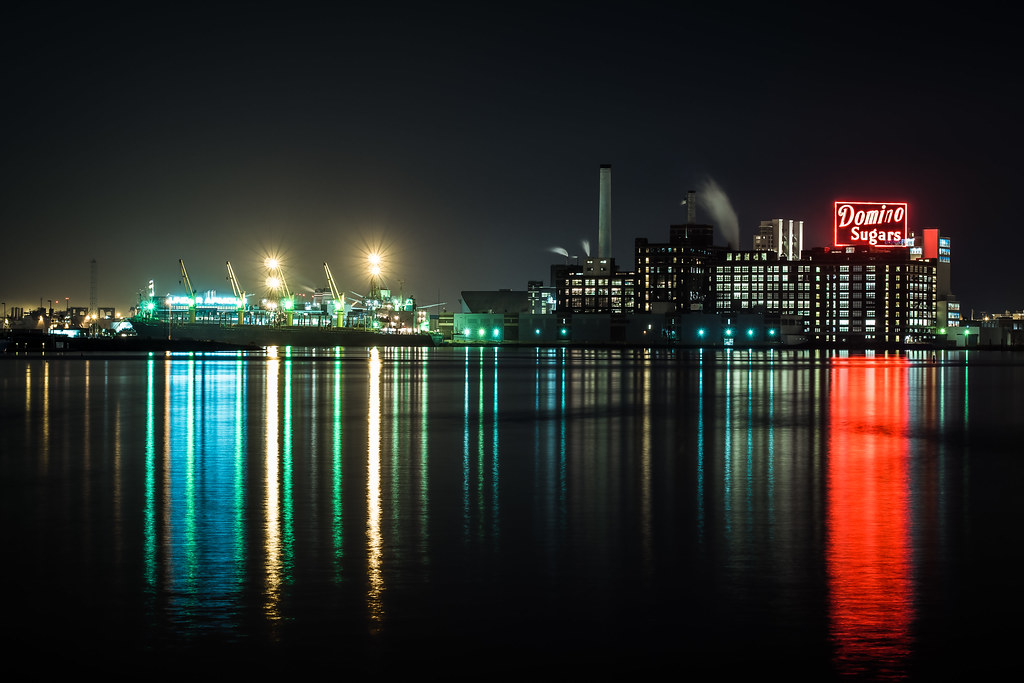
Olympus EP5 with M. Zuiko 45mm f/1.8, 4" at f/5.6 and ISO 200.

Photo work has slowed down a ton in the last couple weeks. Not that there haven't been jobs in my queue, but scheduling them has been a pitfall what with the month's inordinate quantity of rainfall and folks simply getting an early start to their Summer vacations. It's worked out quite lovely, actually, affording me some long overdue time to shoot creatively on my own time and play with techniques I simply haven't had sufficient time to explore.

As of late, I've been an enormous fan of composite stills frames. I demonstrated the method earlier in the year with something of a rough how-to post, but this past week I found myself exploring the method in other scenarios (not just smoothing out water) and seeing just how far it would allow me to push an image before it broke down from a data standpoint. Much like long exposure work, the time investment involved has made me slow down, and it's been resulting in images I quite like.

I'll start with the negatives in my composite practice. I thought the method might work wonders for scenes including people and cars in motion, producing either a similar effect as traditional long exposures or otherwise presenting as smooth motion blur in the same way. I was pretty wrong in that assumption. When the shutter speed is too high, the result ends up being multiple copies of the subject stacked on top of itself when that subject is in motion, with no smooth blurring, and even when the shutter speed is low enough to create that blur (such as with cars at night), there are too many ugly repeating patterns that ruin the effect. Different smart object staking modes may help make a smoother, watery effect of cars and people, but those repeating patterns are an image killer to my eye.

More importantly, however, my experiments with composite work were intended to test image fidelity, and therein lay the positives.

Olympus EP5 with 45mm f/1.8, 1.6" at f/5.6 and ISO 200. 
Stacking images with median or mean calculations reduces signal noise because that noise is random in each frame, thus theoretically one can push and pull an image irresponsibly with introducing destructive aftereffects. Frames of still subjects at night, where my Olympus cameras have traditionally been prone to heavy noise in the sky, have never looked cleaner. Paired with some smart sharpening in Photoshop, composite still frames look more like down sampled higher resolution images than the native 16 megapixel files they truly are, and that's great, especially as I aim to apply the technique in higher end real estate work and landscapes. Most importantly to me, however, the full breadth of dynamic range available in any single frame is accessible without introducing edge glow or over sampled noise characteristics. Unlike traditional HDR, there is no expanded dynamic range available beyond what the sensor provides on its own, but when pushing shadows to the max or dropping highlights to a minimum (which is admittedly not ideal for any image ever), there are no indications of the image data breaking down as would be present in a single shot.

Most samples I produced were taken with the time lapse feature intervalometer, set up to take 10 frames with settings locked down either in manual or by AE lock. Per theoretical math, 10 frames stacked shot at ISO 200 produces the equivalent of an ISO 20 image, which in truth is probably a bit overkill (and if you go by DXOMark's measured ISO values, it's actually more an ISO 10 image). But, overkill or not, it's a remarkably clean look, with refined edge lines and genuinely noise free areas of flat color and tone. And sometimes that kind of overkill cleanliness in an image is something you're looking for.

Olympus EP5 with 45mm f/1.8, 1/10" at f/5.6 and ISO 200.
As it applies to real estate, this experimentation is a stepping stone to the techniques frequently used in higher end work. To drop a name, Swizzler on Flickr has always been a role model of mine in the realm of interior photography, and his method is very much in line with this composite method with the additional element of varied off-camera flash used in each individual frame. The look is natural and appealing beyond what is traditionally seen in the real estate photography space (garish HDR), simply because the light is distributed evenly through the composite flash frames and broad areas of limited color or tone are very clean. It's a look I appreciate, and a look I have opportunities to produce, and maybe throw my own twist on it as I find the nuanced elements that appeal to me in the workflow.

As an aside, I've enjoyed using the EP5 with my little trio of M. Zuiko primes once again. After sitting on my hands for nearly a year, I sent my grossly out of spec 12mm f/2.0 in for service through GetOlympus it's back to working like a beauty (seriously, thank you to Olympus for having such keen service available in my region through Precision Camera, those guys are great). There's just no getting around it for me, even with a complete kit of pro zooms and the EM1 available, I'm a prime shooter, and more than that I'm a minimalist. A small camera with a small subset of focal lengths I like to use will always satisfy me more than the admitted versatility and flexibility of a larger system. And, ultimately, that's okay. Still need the pro kit for the working stuff anyway, so going that direction last year was not a mistake or waste.
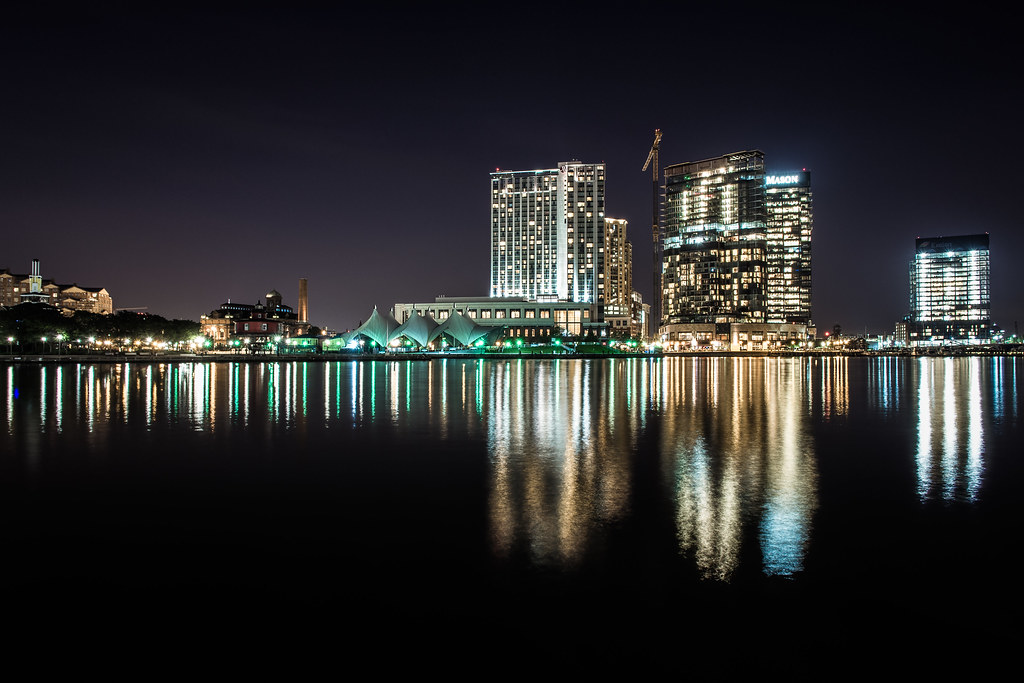
Olympus EP5 with 12mm f/2.0, 3.2" at f/5.6 and ISO 200.

This afternoon I'm making a trip down to Shenandoah National Park with Rob and we aim to hike and shoot landscapes and, when the sun goes down, try to capture some Milky Way in the night sky. We'll see how far our stamina takes us. Should be a fun Sunday.

Saturday, April 23, 2016

When am I?


Spending a lot of time sitting in my car these days in between shoots, idling passing time waiting for clients to be on-site and ready. The passing time is transparent to me, and it's vexing when I look at the calendar and see that somehow the entirety of 3 weeks has passed in a pocket of time I recognize as "yesterday".

Photography-as-work has defined my state of being since April rolled around. The month is nearly over and it feels as if it never happened at all. With my new photography contract, I made the erroneous decision to approach it with the same methodology as my long-standing real estate contract. It didn't take long for me to realize the mistake, these are very different clients governed by very different expectations. And while I managed to adapt my workflow appropriately, I failed to take into account the toll it would take on my private life, and as such the last 2 weeks have been 12 to 16 hour days of non-stop work. That is the crux of contract labor - with no awareness of each other nor the demands of everyday life, it is up to the contracted to establish the balance necessary amid the volume of work. I did poorly with this and am paying the price.

But, today I complete the machine gun beat of jobs and have the opportunity to establish the boundaries of my limitations once again.

Over drinks with friends Kevin and Rob last night, I was able to let out some stresses I've carried too long. I stood on a stoop in Baltimore and proclaimed with a passion I hadn't felt in a long time, "I have sucked the joy out of every thing I love". A cliche statement, but perfectly reflective of sentiments on my back, like pounds of sand, for years. The box I've cornered the practice of photography into, the finite rules and standards that work so well in commercial photography work and enable rapid completion to the end of doing more shorts in less time, has framed every exercise of photography in such a way that it is nearly repulsive to extend beyond those confines and experiment, the very function of photography-as-art. And yet the sterile work I do privately bound in that box does not satisfy me nor bring the joy of the kind of knee-jerk photography I still dare to carry as my namesake. Photography is now a formula to me, and expanding beyond such rigid thinking requires weeks of practiced effort to defy until the satisfaction of spontaneity is once again achieved.

Verbalizing the problem has done more than any blog-based ranting to assuage the stress and disappointment in myself for allowing an artful craft to become such a soulless exercise. And it's wonderful to have people who understand the problem, able to sympathize and commiserate with me in the struggle, regardless of whether or not they are able to directly impart a fix or change. Sometimes you just need someone willing to listen, able to understand.

And barring the back pain from awkwardly situating myself in my car to type this out, I feel enormously better today than the block of time I can only call "yesterday". Time to run off to my next shoot, now.

Wednesday, April 6, 2016

New work, new balance

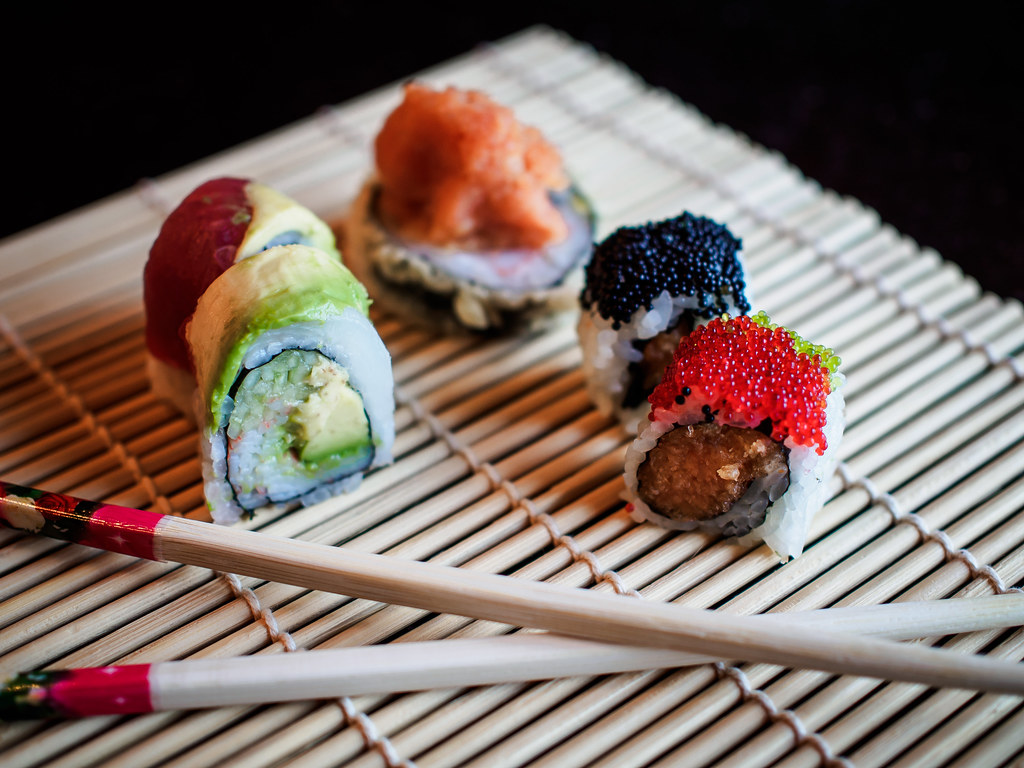
Olympus E-P5 with 25mm f/1.8, 1/20" at f/2.0 and ISO 200.

Despite not believing it was possible to expand my business after high performance last year nearly maxing out available time, I picked up a new contract last month which is finding imaginative ways of dominating ever minute slivers of time not already occupied by the hustle and bustle of photo work. This is not a complaint, mind you, but certainly recognition that my inability to say "No", ever, ensures that I will manifest, magically, hidden chunks of time in my shoot schedule through new efficiencies or, more likely, time off from that full-time job I struggle to reconcile in my convoluted career path.

Last month I was contacted by a firm seeking a photographer to handle contract food photography assignments in the DC area (my work, inevitably, will always center on DC). I jumped on this with enthusiasm as food photography is nearly on the same level as portrait work in my short list of dream jobs. After stressing an inordinate amount in the production of samples for the contracting firm to gauge my quality of work (basically a photography-based interview), I quickly received a contract letter and the usual 1099 form, as well as an account by which the shoots would be managed. All very well organized and extremely responsive by email communication, which in the remote nature of the work (I have no idea where the firm's actual office is, or if they even have one) is critical. Then came the flood.

I'm not entirely sure whether the influx of assignments is a backlog of the region or if I should simply expect this volume regularly, but from the viewpoint of a new hire it was quite a lot at once. I did myself no favors by readily gobbling up assignments offered in the NoVA and DE regions as well, which naturally populated my assignment queue by orders of magnitude more. With a service region extending from Mananas, VA to Wilmington, DE, I've had to get creative with my scheduling to make anything work reasonably with the time constraints imposed by broader travel requirements. Juggling these assignments alongside ongoing real estate work, handled similarly on contract and fed to me with the same sort of volume and frequency... it's been a challenge. I've had no choice on a couple occasions but to take an hour of time away from my full-time office work, lock myself into a spare office, and run through the list of clients to schedule times. Inevitably, my weekend dates quickly see their scheduling opportunities evaporate, and to ensure consistent completion of assignments while retaining some semblance of reason in the travel requirements, I'm allowing my full-time job to take quite a hit, at least this month, on time available. The liberal PTO policy at the office has been the blessing permitting my pursuit of photography-as-work for over 4 years, growing from negligible sideline work to a legitimate small business. This may be the first time I've willingly put it second in my workplace importance priorities, and admittedly I'm concerned the abuse of time off may finally come back to bite me.

The photography involved has come very naturally to me, with the requirements of the contracting agency clearly understood and the product straightforward to deliver. Surprisingly my greatest struggle in this new work has been with communicating with clients. Unresponsiveness is something I'm used to from real estate assignments, some people simply forget when you leave a message or don't have the free time or head space to work out a time and date even after the 11th phone call or email. Restaurants, however, have introduced a new hurdle, the language barrier. Frankly, I had no idea how many restaurants are actually foreign-owned. Many owners have been of the English-as-a-second-language variety, which is not a jab at them, simply acknowledgment of the challenge. I've had to learn to speak slower and with considered clarity, and especially with a pared down vocabulary. Remembering my time in high school learning to speak Spanish, the trick has been to limit my use of English to the complexity with which I can command Spanish today, i.e. simple and sometimes in nothing but disjointed nouns. Thus far it's been working out - I find myself more frustrated by employees who refuse to take initiative in scheduling by putting me in touch with their managers.

So it's a busy period. Time and time again, I am dumbfounded by the very real capacity for photography to grow more viable as an alternative to 9-to-5 work. As with every year, my questions are of which career path to invest the most of myself in at any given time. Last year that question was easy to answer as I received markedly little graphic design work at the office, but this year holds the potential to see quite a lot of such work in offices out of State, which directly negates potential growth in my photography business. My photography business has eaten slowly at my office-life commitments for 4 years, it was only a matter of time until the office bit back.

As always, the goal is balance.

Tuesday, March 1, 2016

Patrick Kavanagh


It's more than a little soul crushing to read about ambition and talent snuffed out early, more so when it's a vessel of talent and ambition you know personally and have seen grow in the arts.

Patrick Kavanagh was the son of Rhonda, the woman with whom I shared the consequences of that brutal car accident that dictated our lives' narrative back in 2011 and left nothing the same. Four years my younger, we met at a Superbowl party his mother was hosting, indulging rum and non-competitive poker. He was quick to offer up insight into his life as an artist, intrigued by my own pursuit of photography. Music stood as his primary love interest in the arts, but he also pursued digital art and video with his high school friends. Varied content, everywhere, and embodying the pure fun and exploration of refining new media and learning your niche nuance as an artist.

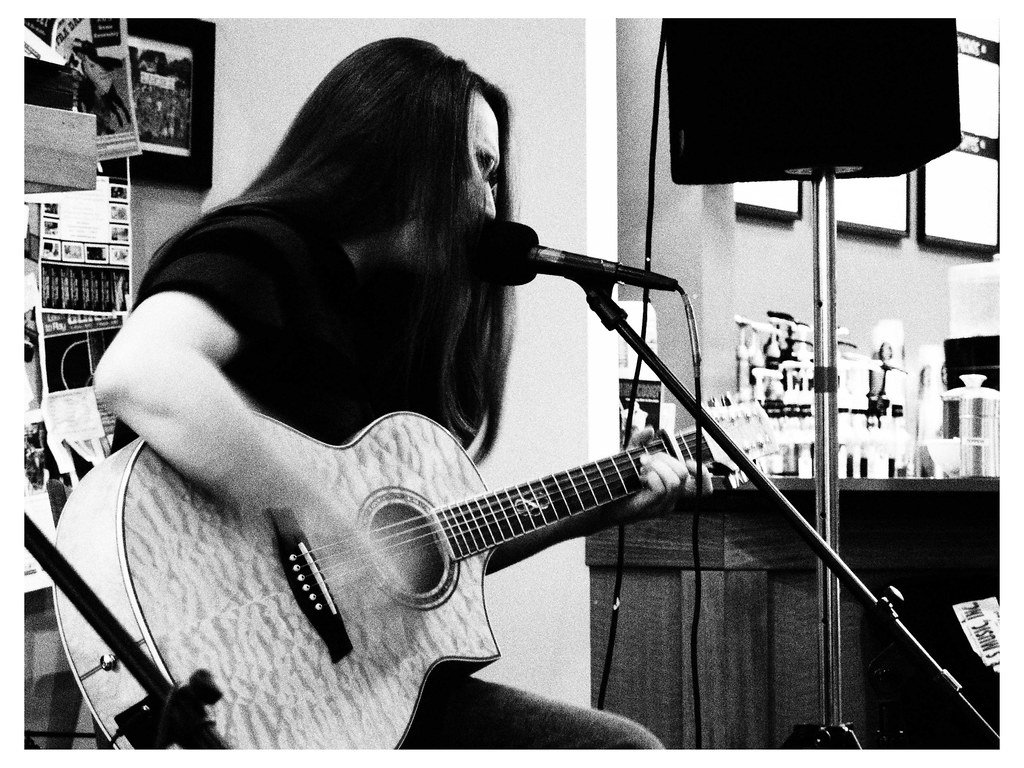
His life's narrative was driven by the experiential, and I found a good friend in him because we could take turns talking and listening respectively as we described the experiences we soaked in from life on this futile hunt for a more permanent satisfaction. We met up at Starbucks a few times, the classic coffee retreat, and indulged a shared hookah pipe as impressionable young guys our age are apt to do on occasion. Backed up by other local musicians and his troupe of friends, he arranged for a mini-concert of sorts at Zu Coffee in Annapolis, an open mic night to which a gaggle of musicians arrived to play short self-written sets while the audience gargled on caffeine. I was still on the outside edge of recovery at the time, and had just picked up a little Olympus XZ-1 as a placeholder camera, so the night was helpful to me personally, getting back into the artistic approach in a setting full of other artists, easing a cluttered mind with soothing acoustic guitar. I'm thankful he thought to invite me along.

My most vivid memory of spending time with Patrick was a trip to Patapsco River Valley State Park. On the Ilchester Road side of the park, there is a railroad truss bridge that leads into a tunnel heading eastward through the park, a freight line of some sort. Pat just picked up a new, small, portable guitar, and I thought it would be fun to capture video of him performing a quaint acoustic piece in the tunnel itself. Admittedly he just covered some songs he knew, songs he liked, but it was the first time I'd heard him sing, and the power of his voice alone would have rocked me to the core, let alone with the added acoustic influence of reverberating sound waves in the tunnel crafting an impact in person I will always regret not being able to sufficiently record. Passionate, and powerful, it embodied something, a feeling, which to this day I cannot identify succinctly, only in an assortment of emotions and impressions imparted by the sound.

As my life came back together we drifted apart, both driven in our own directions personally and in artistic pursuit. But I always kept track of his exploits on social media, and always appreciated the insight. And then he was diagnosed with cancer, and the narrative changed again. His life slowed down, but the pace was countered with an actively spiteful spunk, almost self-aggrandizing, mocking his cancer and mocking his chemo, chiding his baldness, and remaining ultimately optimistic about the things he'll do, the strides of progress, after each medical milestone. A cynic would have found the positivity absolutely insufferable. After every surgery or round of chemo, it was back to work on the magnum opus album of the moment, and that dedication was amazing to witness.

This morning I caught sight of a post by Rhonda. "My lovely boy rest in peace now. Your legacy lives on". I don't have much in the way of details, but gather Patrick passed last night, February 29th. A leap day, of all the incidentally curious dates to mark an event on a calendar.

July of last year, 2015, another young artist, Kevin Sutherland, was lost too young in life and inspired a monologue regarding how to honor the artist, how to show one's respects to their influence, and how to immortalize them through proliferation of that influence by sharing the artist's work. Much as I would love to share a catalogue of photographs documenting Patrick's experiences and reflections, his chosen medium is music, which presents that storied perspective of his lifetime in a different way, but one that is no less valuable. So please, I encourage you to take the time to absorb his music, encompass the experience and let it influence your work. The honor for Patrick, his immortality, is the influence of his art upon the art of everyone who shares in it.

Rest easy, Pat. And thank you for the time and the influence you imparted upon me in person. Your story is bedrock to our narrative.


Monday, February 22, 2016

Con Culture


Attended MAGFest this past weekend with Rob, Kevin, and a gaggle of friends and acquaintances, from old to new. It was certainly an experience. While I've attended many Furry themed conventions over the last 7 years, oddly I'd yet to attend... well, one that wasn't strictly for Furries (call it weird, but the art and creativity centric vibe of furry cons is ideal for me).

The Music and Gaming Festival (MAGFest) is, as the name indicates, a convention for gamers. Gamer as a label applies to a remarkably wide gamut of people, but this event in particular seemed mostly directed at the Indie scene of videogames, with an entire section of the convention space dedicated to Indie game developers, lots of retro arcade cabinets, and even merchandise clearly targeting the niche retro and indie gaming crowds (think Mario Bros and Pokemon plushies and Starfox t-shirts). It was actually a refreshing culture of gamers, being away from the more aggressive shoot-everyone-and-call-your-mom-a-whore, much more casual enjoyment and an overall desire for group enjoyment instead of individual praise (which was also nice because, although competitions were being run, the typical competitive atmosphere was not there and everyone just enjoyed playing games).

Unfortunately (or fortunately, depends on who you are), the biggest difference between this gaming convention and furry conventions comes down to population. MAGFest was huge, probably in the ballpark of 25,000 people attending, and while I can be a social creature a crowd of that magnitude is difficult to make sense of and approach, so I spent a good bit of my time retreating to the hotel balcony or wandering out to the waterfront to disconnect from social suffocation. Morning and early afternoon hours weren't so bad, but late evenings right up to 2AM, 3AM, even 4AM and beyond, proved a stress factory. As is typical to convention culture, late hours are party hours, but I am a self-labeled Old Man and can deal with maybe one night of partying a month, not 4 days with 25K+ partiers in tow... nope. Nope nope nope nope nope.

But, despite the perpetual party I lacked stamina for, nobody was a jerk or malicious or destructive, so it was still an overall positive experience!

I didn't take too many photos. Alas, the cosplay was neat and many times well done, but despite my enjoyment of furries, cosplay outside that sub genre doesn't much appeal to me. Instead of being a photographically liberating experience, it became the Convention of People Watching.


The hotel itself, the Gaylord National Harbor, was incredibly in its own right. A self-contained atrium with a tiny village-like setup in the center, I'd never seen anything like it before. Definitely glad for the balcony view. Even at my most antisocial, I never felt depressed about wasting my time watching the crowds from this perch over the weekend. Admittedly, I do wish I'd set the tripod up more than once to photograph this interior, the variation in lighting was fantastic.


Made a fun friend with an incidental encounter with Crescent, a Crux character I've seen at furry conventions many times before. Actually talked with him this time, though, which was great engagement. Not to mention he and his friends were extremely fun and outgoing for photos (probably the highlight of my convention photography for the weekend).

I learned quick shooting these guys the appeal of the E-P5 with the 7-14mm f/2.8. It seemed like an unwieldy combination at first that I only dealt with to keep the 42.5mm f/1.2 mounted on the E-M1, but frequently I found myself eschewing the E-M1 entirely to hold the E-P5 up high, fixed around 9mm focal length and focusing right in on the center. Extremely easy fire-and-forget setup, just flip the screen to angle downward and hold the camera up high for some fun drama in a candid snapshot.


I tried to photograph a couple cosplayers in the mix, running off the energy from hanging out with the furries for a bit. Fun stuff, but it was still more interesting to experience first hand than to try and photograph. Probably an issue with my brain, but I have a hard time suspending disbelief with known characters. Still, really fun stuff to see in person, especially when augmented by top notch play acting.


Friday night's DJ Battle set was pretty incredible. Never listened to anything by any of the artists there, despite all of them being huge artists in the gaming culture scene. Most of the music played ended up being remixes of Undertale music, which was surprisingly fantastic mixed into electronica. Far more danceable than I expected it to be. Not to mention the stage lighting was awesome and audio configuration top notch (been to many shows where audio levels were poorly set and trashed what could've been great music).

My mistake with the concert venue was not packing the 40-150mm f/2.8 instead of the 42.5mm f/1.2. Kevin was nailing some great stage shots with his 70-200 f/4 which is basically the same focal range on his Canon Rebel. I'm content with having simply enjoyed the music, though. Were I less agoraphobic at the time I would have immediately run into the mob and done wide shots in the mix, but my headspace wasn't particularly good for large swaths of the convention (social anxiety is a new and very weird thing I've been grappling with).

But it was a good time. Very different from my past experiences of convention culture, and while I have all intentions of doing it again, my approach will be significantly different next time around. Another part of the journey through conventions is learning where you fall, what appeals to you, and where you want to go in the convention experience. This weekend was basically a really difficult tutorial. Many thanks to Kevin specifically for dragging my butt out to it!

Tuesday, February 2, 2016

Sometimes the practitioners of photography are more interesting than photographs

A series of Instagram posts of photos snapped during the weekend's aforementioned Loch Raven Reservoir hike. Still a fan of the modern advent of quick photo sharing with rapid, but generally competent edits. Knock mechanisms of social media as you will, if the immediacy keeps you inspired then it's foolish to denigrate the engine of your inspiration.


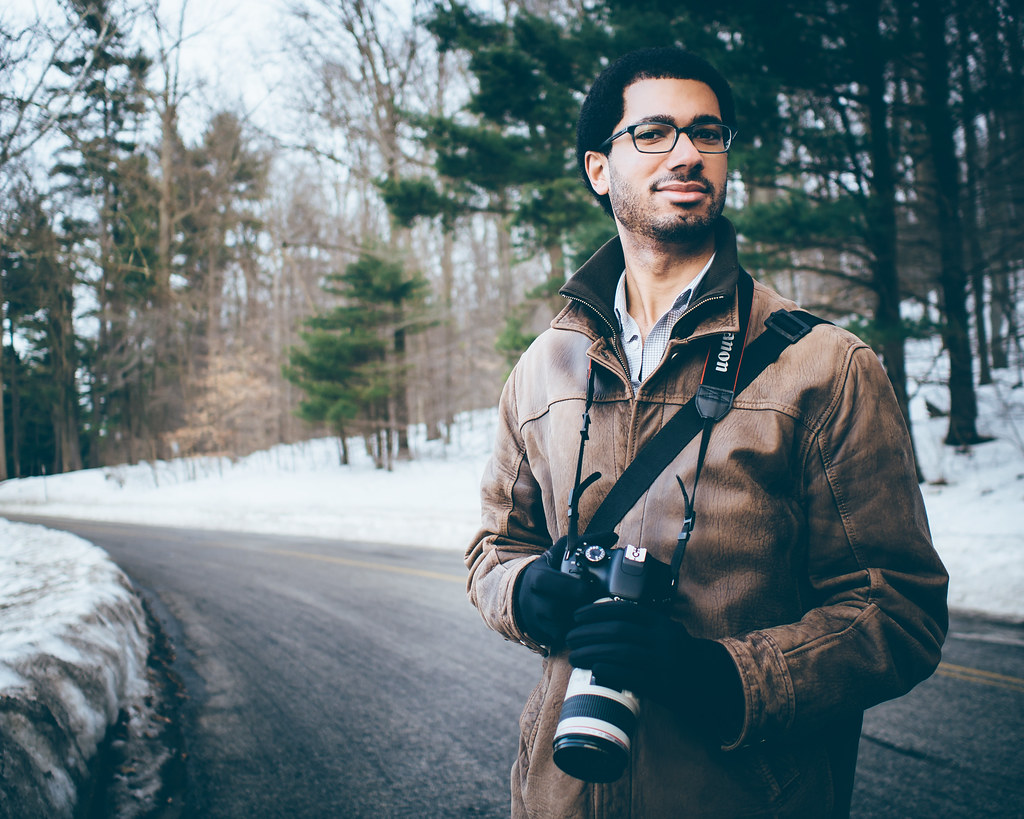
It also helps to have generally attractive friends, even when they insist on hiding behind big zoom lenses.

Forgot just how much I love portraiture

Shot on the Olympus E-P5 and 17mm f/1.8, 1/250" at ISO 200.

This weekend some good friends and I got together for a random hike-and-dine around the Loch Raven Reservoir area just north of Baltimore City. I'd been up that way once before for a real estate job, and since then had a curiosity about its potential as a new hiking spot to add to the list. Despite rapidly disappearing since last week's blizzard, snow still blanketed the landscape, but even wet, snow filled shoes aren't that bad when it's 50 degrees outside.

Ultimately the landscape was flat and dead and boring, but it was still nice to get out for a little hike with a sizeable group (and introduce as of yet unintroduced circles of friends to each other). I had tons of fun photographing my friends as they brandished their cameras, though, which reminded me of the muse I sort of left behind back in 2012. People photography is kind of awesome, and portraits taken candidly during a hike have always appealed more to me than any landscape (even if those "dreamscapes" with the 10-stop ND filter are pretty fun to capture).

Back in 2012 and up through some of 2013, while I was still in the thick of urban exploration on the regular, there was a point I stopped caring about the buildings and more aimed to capture the experience of exploring with candid faces. The same muse bled into hiking as it was all effectively the same thing. I think I just liked capturing the subtleties of other people's' curiosity.


It's a fun aesthetic that I miss. And inevitably it is elusive to me now because I'm not adventuring as much nor in the same ways I used to. Most of my work today is safe, crosses no boundaries to speak of, and doesn't imply even an inkling of risk. It's a problem. There's remarkably little value to be squeezed from the stones of the tried, the true, the done-before. My career as a working photographer did not get the kickstart it did because someone noticed all those pictures of pleasant parks and convention snapshots.

That said, there's also remarkably little adventuring left to be had locally. But that's okay. Plans are in motion to venture up to a friend's place in Pennsylvania and ideally we'll seek out the shoddy remnants of a defunct Pennsyltuckey and discover something otherwise missing in our creative lives. Gentrification and newfound money never make their way to the lost mining towns of Old Appalachia.