Tuesday, March 1, 2016

Patrick Kavanagh


It's more than a little soul crushing to read about ambition and talent snuffed out early, more so when it's a vessel of talent and ambition you know personally and have seen grow in the arts.

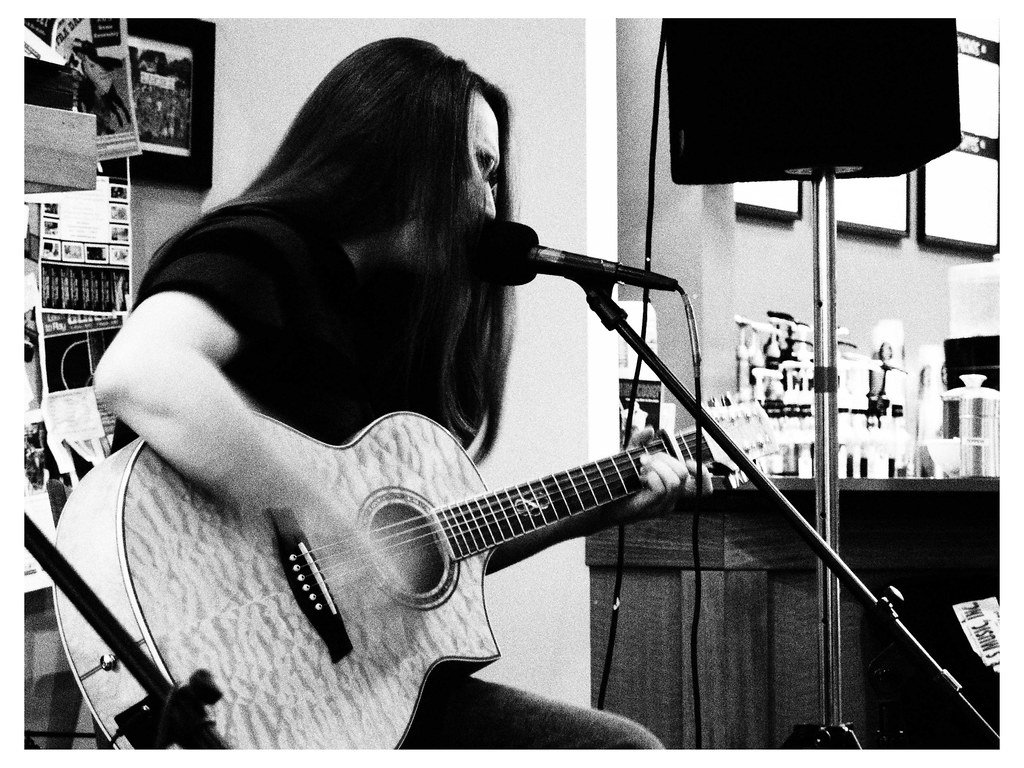
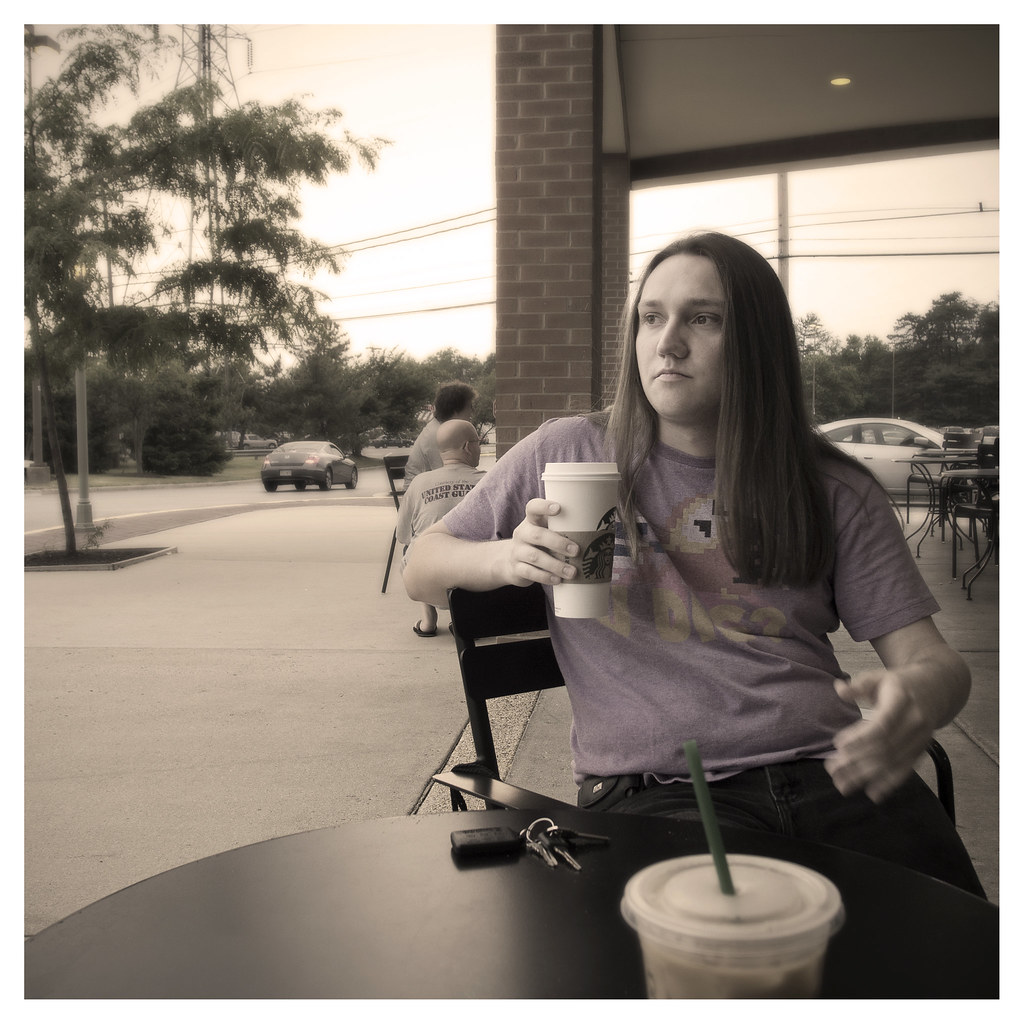
Patrick Kavanagh was the son of Rhonda, the woman with whom I shared the consequences of that brutal car accident that dictated our lives' narrative back in 2011 and left nothing the same. Four years my younger, we met at a Superbowl party his mother was hosting, indulging rum and non-competitive poker. He was quick to offer up insight into his life as an artist, intrigued by my own pursuit of photography. Music stood as his primary love interest in the arts, but he also pursued digital art and video with his high school friends. Varied content, everywhere, and embodying the pure fun and exploration of refining new media and learning your niche nuance as an artist.

His life's narrative was driven by the experiential, and I found a good friend in him because we could take turns talking and listening respectively as we described the experiences we soaked in from life on this futile hunt for a more permanent satisfaction. We met up at Starbucks a few times, the classic coffee retreat, and indulged a shared hookah pipe as impressionable young guys our age are apt to do on occasion. Backed up by other local musicians and his troupe of friends, he arranged for a mini-concert of sorts at Zu Coffee in Annapolis, an open mic night to which a gaggle of musicians arrived to play short self-written sets while the audience gargled on caffeine. I was still on the outside edge of recovery at the time, and had just picked up a little Olympus XZ-1 as a placeholder camera, so the night was helpful to me personally, getting back into the artistic approach in a setting full of other artists, easing a cluttered mind with soothing acoustic guitar. I'm thankful he thought to invite me along.

My most vivid memory of spending time with Patrick was a trip to Patapsco River Valley State Park. On the Ilchester Road side of the park, there is a railroad truss bridge that leads into a tunnel heading eastward through the park, a freight line of some sort. Pat just picked up a new, small, portable guitar, and I thought it would be fun to capture video of him performing a quaint acoustic piece in the tunnel itself. Admittedly he just covered some songs he knew, songs he liked, but it was the first time I'd heard him sing, and the power of his voice alone would have rocked me to the core, let alone with the added acoustic influence of reverberating sound waves in the tunnel crafting an impact in person I will always regret not being able to sufficiently record. Passionate, and powerful, it embodied something, a feeling, which to this day I cannot identify succinctly, only in an assortment of emotions and impressions imparted by the sound.

As my life came back together we drifted apart, both driven in our own directions personally and in artistic pursuit. But I always kept track of his exploits on social media, and always appreciated the insight. And then he was diagnosed with cancer, and the narrative changed again. His life slowed down, but the pace was countered with an actively spiteful spunk, almost self-aggrandizing, mocking his cancer and mocking his chemo, chiding his baldness, and remaining ultimately optimistic about the things he'll do, the strides of progress, after each medical milestone. A cynic would have found the positivity absolutely insufferable. After every surgery or round of chemo, it was back to work on the magnum opus album of the moment, and that dedication was amazing to witness.

This morning I caught sight of a post by Rhonda. "My lovely boy rest in peace now. Your legacy lives on". I don't have much in the way of details, but gather Patrick passed last night, February 29th. A leap day, of all the incidentally curious dates to mark an event on a calendar.

July of last year, 2015, another young artist, Kevin Sutherland, was lost too young in life and inspired a monologue regarding how to honor the artist, how to show one's respects to their influence, and how to immortalize them through proliferation of that influence by sharing the artist's work. Much as I would love to share a catalogue of photographs documenting Patrick's experiences and reflections, his chosen medium is music, which presents that storied perspective of his lifetime in a different way, but one that is no less valuable. So please, I encourage you to take the time to absorb his music, encompass the experience and let it influence your work. The honor for Patrick, his immortality, is the influence of his art upon the art of everyone who shares in it.

Rest easy, Pat. And thank you for the time and the influence you imparted upon me in person. Your story is bedrock to our narrative.

Monday, February 22, 2016

Con Culture


Attended MAGFest this past weekend with Rob, Kevin, and a gaggle of friends and acquaintances, from old to new. It was certainly an experience. While I've attended many Furry themed conventions over the last 7 years, oddly I'd yet to attend... well, one that wasn't strictly for Furries (call it weird, but the art and creativity centric vibe of furry cons is ideal for me).

The Music and Gaming Festival (MAGFest) is, as the name indicates, a convention for gamers. Gamer as a label applies to a remarkably wide gamut of people, but this event in particular seemed mostly directed at the Indie scene of videogames, with an entire section of the convention space dedicated to Indie game developers, lots of retro arcade cabinets, and even merchandise clearly targeting the niche retro and indie gaming crowds (think Mario Bros and Pokemon plushies and Starfox t-shirts). It was actually a refreshing culture of gamers, being away from the more aggressive shoot-everyone-and-call-your-mom-a-whore, much more casual enjoyment and an overall desire for group enjoyment instead of individual praise (which was also nice because, although competitions were being run, the typical competitive atmosphere was not there and everyone just enjoyed playing games).

Unfortunately (or fortunately, depends on who you are), the biggest difference between this gaming convention and furry conventions comes down to population. MAGFest was huge, probably in the ballpark of 25,000 people attending, and while I can be a social creature a crowd of that magnitude is difficult to make sense of and approach, so I spent a good bit of my time retreating to the hotel balcony or wandering out to the waterfront to disconnect from social suffocation. Morning and early afternoon hours weren't so bad, but late evenings right up to 2AM, 3AM, even 4AM and beyond, proved a stress factory. As is typical to convention culture, late hours are party hours, but I am a self-labeled Old Man and can deal with maybe one night of partying a month, not 4 days with 25K+ partiers in tow... nope. Nope nope nope nope nope.

But, despite the perpetual party I lacked stamina for, nobody was a jerk or malicious or destructive, so it was still an overall positive experience!

I didn't take too many photos. Alas, the cosplay was neat and many times well done, but despite my enjoyment of furries, cosplay outside that sub genre doesn't much appeal to me. Instead of being a photographically liberating experience, it became the Convention of People Watching.


The hotel itself, the Gaylord National Harbor, was incredibly in its own right. A self-contained atrium with a tiny village-like setup in the center, I'd never seen anything like it before. Definitely glad for the balcony view. Even at my most antisocial, I never felt depressed about wasting my time watching the crowds from this perch over the weekend. Admittedly, I do wish I'd set the tripod up more than once to photograph this interior, the variation in lighting was fantastic.


Made a fun friend with an incidental encounter with Crescent, a Crux character I've seen at furry conventions many times before. Actually talked with him this time, though, which was great engagement. Not to mention he and his friends were extremely fun and outgoing for photos (probably the highlight of my convention photography for the weekend).

I learned quick shooting these guys the appeal of the E-P5 with the 7-14mm f/2.8. It seemed like an unwieldy combination at first that I only dealt with to keep the 42.5mm f/1.2 mounted on the E-M1, but frequently I found myself eschewing the E-M1 entirely to hold the E-P5 up high, fixed around 9mm focal length and focusing right in on the center. Extremely easy fire-and-forget setup, just flip the screen to angle downward and hold the camera up high for some fun drama in a candid snapshot.


I tried to photograph a couple cosplayers in the mix, running off the energy from hanging out with the furries for a bit. Fun stuff, but it was still more interesting to experience first hand than to try and photograph. Probably an issue with my brain, but I have a hard time suspending disbelief with known characters. Still, really fun stuff to see in person, especially when augmented by top notch play acting.


Friday night's DJ Battle set was pretty incredible. Never listened to anything by any of the artists there, despite all of them being huge artists in the gaming culture scene. Most of the music played ended up being remixes of Undertale music, which was surprisingly fantastic mixed into electronica. Far more danceable than I expected it to be. Not to mention the stage lighting was awesome and audio configuration top notch (been to many shows where audio levels were poorly set and trashed what could've been great music).

My mistake with the concert venue was not packing the 40-150mm f/2.8 instead of the 42.5mm f/1.2. Kevin was nailing some great stage shots with his 70-200 f/4 which is basically the same focal range on his Canon Rebel. I'm content with having simply enjoyed the music, though. Were I less agoraphobic at the time I would have immediately run into the mob and done wide shots in the mix, but my headspace wasn't particularly good for large swaths of the convention (social anxiety is a new and very weird thing I've been grappling with).

But it was a good time. Very different from my past experiences of convention culture, and while I have all intentions of doing it again, my approach will be significantly different next time around. Another part of the journey through conventions is learning where you fall, what appeals to you, and where you want to go in the convention experience. This weekend was basically a really difficult tutorial. Many thanks to Kevin specifically for dragging my butt out to it!

Tuesday, February 2, 2016

Sometimes the practitioners of photography are more interesting than photographs

A series of Instagram posts of photos snapped during the weekend's aforementioned Loch Raven Reservoir hike. Still a fan of the modern advent of quick photo sharing with rapid, but generally competent edits. Knock mechanisms of social media as you will, if the immediacy keeps you inspired then it's foolish to denigrate the engine of your inspiration.


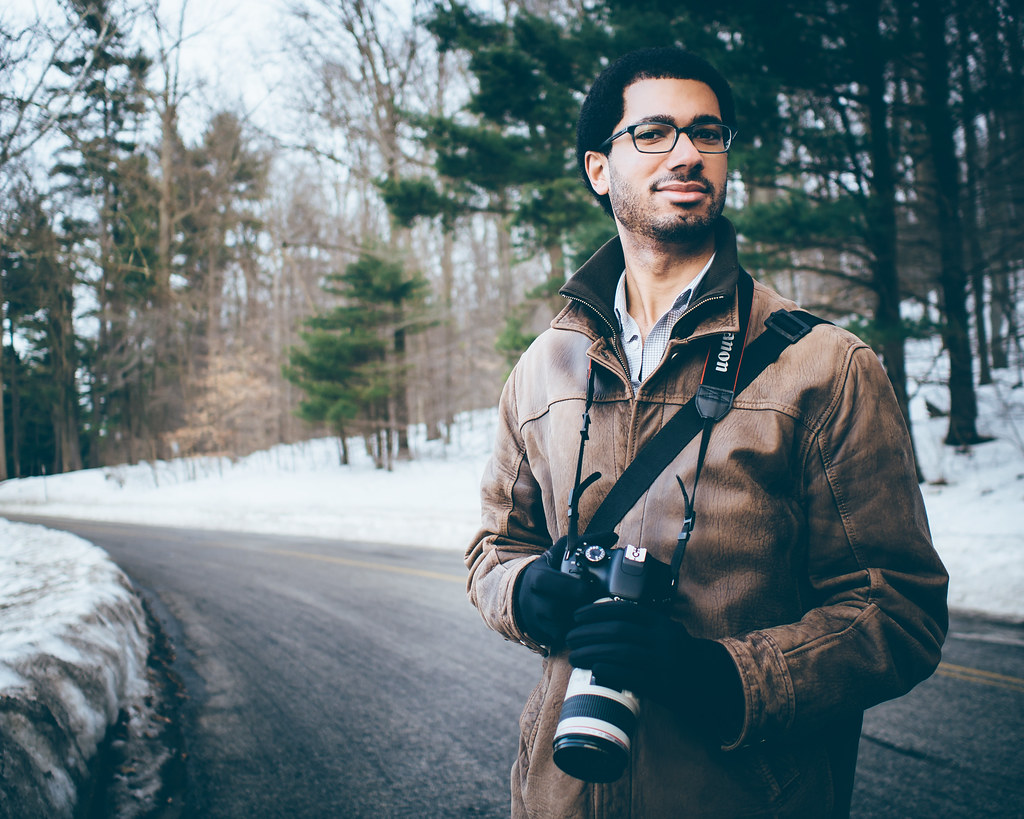
It also helps to have generally attractive friends, even when they insist on hiding behind big zoom lenses.

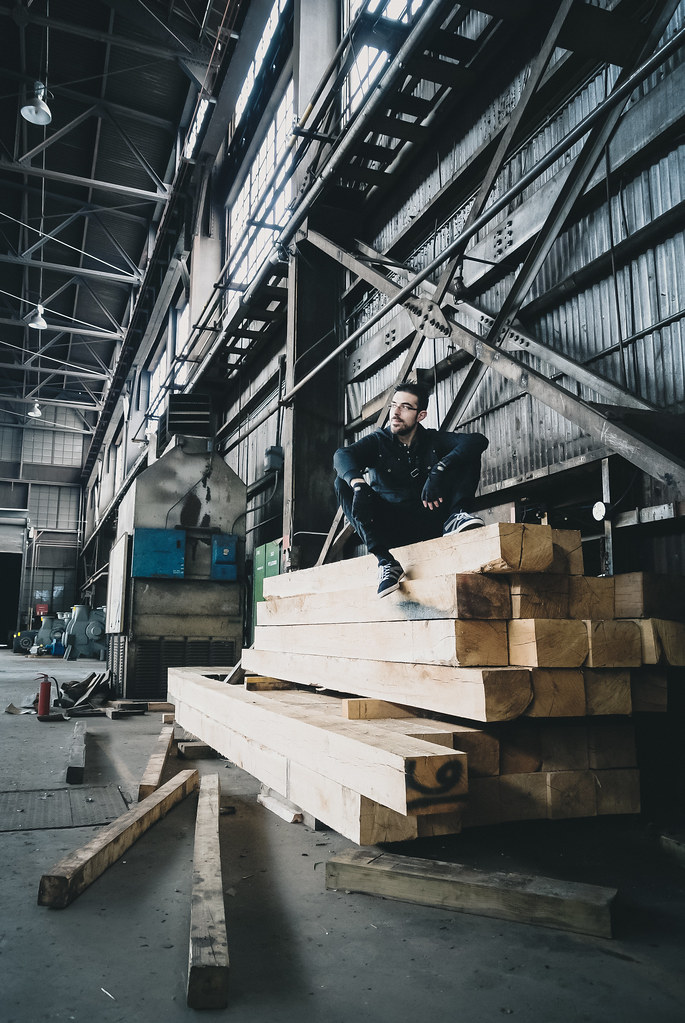
Forgot just how much I love portraiture

Shot on the Olympus E-P5 and 17mm f/1.8, 1/250" at ISO 200.

This weekend some good friends and I got together for a random hike-and-dine around the Loch Raven Reservoir area just north of Baltimore City. I'd been up that way once before for a real estate job, and since then had a curiosity about its potential as a new hiking spot to add to the list. Despite rapidly disappearing since last week's blizzard, snow still blanketed the landscape, but even wet, snow filled shoes aren't that bad when it's 50 degrees outside.

Ultimately the landscape was flat and dead and boring, but it was still nice to get out for a little hike with a sizeable group (and introduce as of yet unintroduced circles of friends to each other). I had tons of fun photographing my friends as they brandished their cameras, though, which reminded me of the muse I sort of left behind back in 2012. People photography is kind of awesome, and portraits taken candidly during a hike have always appealed more to me than any landscape (even if those "dreamscapes" with the 10-stop ND filter are pretty fun to capture).

Back in 2012 and up through some of 2013, while I was still in the thick of urban exploration on the regular, there was a point I stopped caring about the buildings and more aimed to capture the experience of exploring with candid faces. The same muse bled into hiking as it was all effectively the same thing. I think I just liked capturing the subtleties of other people's' curiosity.


It's a fun aesthetic that I miss. And inevitably it is elusive to me now because I'm not adventuring as much nor in the same ways I used to. Most of my work today is safe, crosses no boundaries to speak of, and doesn't imply even an inkling of risk. It's a problem. There's remarkably little value to be squeezed from the stones of the tried, the true, the done-before. My career as a working photographer did not get the kickstart it did because someone noticed all those pictures of pleasant parks and convention snapshots.

That said, there's also remarkably little adventuring left to be had locally. But that's okay. Plans are in motion to venture up to a friend's place in Pennsylvania and ideally we'll seek out the shoddy remnants of a defunct Pennsyltuckey and discover something otherwise missing in our creative lives. Gentrification and newfound money never make their way to the lost mining towns of Old Appalachia.

Thursday, January 28, 2016

I'd be lying if I said the new PEN-F wasn't compelling...

All of the recent coverage of the new Olympus PEN-F, by reviewers who've been sitting on pre-production models especially, have effectively confirmed that Olympus' reimagining of the PEN line is exactly what everyone wanted it to be. The equation of specification, design, and price point is so refined among the folks at Olympus that the PEN-F never needed to be a revolutionary entry, simply an evolutionary sort with a few minor feature additions splashed in for mass market testing (in this case, it would be the new color/mono/art mode dial on the front of the body featuring a wide assortment of film profiles for quick access to unique JPG profiles).

From everything I've read, all reports indicate the PEN-F is an engineered embrace of online sharing culture, largely designed around a JPG centric workflow and an already refined WiFi app for image download to cell phones. Personally, I've been using my PEN cameras (E-P3 and E-P5) in exactly that very vein for years at this point, so it's wonderful to see Olympus embracing the workflow and expanding it with intuitive control over their JPG engine (which many herald as the best in the business regardless of format). It's disappointing to some degree that the body is not weather sealed, but thinking practically, the likelihood of religiously mounting weather sealed PRO zoom lenses on the camera to complete the seal is distant. PENs are for primes and stuffing into a jacket pocket, not for bulky zooms and overstuffed backpacks. Otherwise, the imaging potential of the camera is spot on with the EM1, EM5 Mk. II, basically all other Olympus cameras (the jump from 16 to 20 megapixels is barely noteworthy), so it's basically an out-of-the-park hit.

That said, I'm not likely to pre-order it. Not yet, at least, and for a multitude of reasons (plus, with plenty of time between now and March, the hint of another critical release may change my interest entirely).

First comes the practical reason: I just bought an EP5. On deep discount, no less, and it's nearly equivalent an imager in practical application (or at least how I intend to use it). The PEN-F is an upgrade, but it introduces redundancy and it's not that much of an upgrade for my uses (I've often thought of the EP5 as an orphaned camera, a great design and implementation marred by a minor issue that was overblown by review sites to the point of sales castration. Like the Nikon V1, I'm curiously fond of such bastard cameras.).

Second, and in relation to above points about the PEN-F not being enough of an upgrade to warrant my purchase, there is a missing element that actually would have tipped me the rest of the way, and that is the upcoming f/1.2 prime(s). Ultimately, I know nothing about the size and weight characteristics of these coming optics, but assuming they will properly balance on the PEN-F (at least with the grip attachment), a paired package would have instantly sold me. The logic might seem inane, but it works out in my head as the beginnings of a new system, a new gear set to complete.

Beginning with the original PEN EP3, my first complete kit was an assortment of great f/1.8 primes in normal focal lengths (and the 12mm f/2.0 for flavor, I suppose). Those lenses are of varying health these days, having endured years of abuse (and abuse from me typically involves being dropped, banged, fallen onto, lots of nasty stuff), so now the kit is mostly limited to the 17mm f/1.8 and 45mm f/1.8 which is just fine for my intended use cases for the EP5 (basically an incidental use daily carry camera).

Last year I completed my OMD EM1 kit, my "pro/working man's" kit, with the 12-40mm f/2.8, 40-150mm f/2.8, and 7-14mm f/2.8. Vertical grip in tow, it's my bulky I'm going out specifically to shoot a photo for a reason gear. It's all still more or less new, though showing some wear already (I said I'm hard on gear...), so it needs no immediate maintenance or replacement.

Building a PEN-F system with f/1.2 primes would be a sort of bridge. With the imaging capabilities of the EM1 (and then some), it would easily replace my standing impulse to carry the EM1 kit on hikes and assorted adventures (the EM1 is, now and forever, mentally allocated as strictly a money maker). A grip-equipped PEN-F makes more ergonomic sense to mount, say, the 12-40mm f/2.8 onto for a little gear set crossover. But more importantly, with an f/1.2 prime (especially one of either a normal 50mm or basic wide 35mm equivalent focal length), I see potential for a treasured adventure kit like the PEN EP3 kit used to fulfill until usurped by the imaging prowess of the EM1. Not to mention, it's far too appealing to carry a second body when shooting with primes, and a pair of PENs makes more sense to me than one PEN with 2 or 3 primes in the bag (far easier to go from one camera with a 17mm f/1.8 to another camera with a 42.5mm f/1.2 than trying to swap lenses between the two). It might seem overkill to most people, and it probably is to some degree (why not just get another EP5?) but I'm still enticed.

I'm waiting patiently for the f/1.2 lens announcements. I'm sure they're months out, but the first focal length announced will decide any future equipment decisions I make this business year. I'm actually pretty happy with my loadout right now, and introducing something new is unnecessary without a compelling use case. In the meantime, I'd be better served by shipping my worn f/1.8 primes off for service than acquiring anything new.

Tuesday, January 12, 2016

Long exposures rule all (even when they're fake)

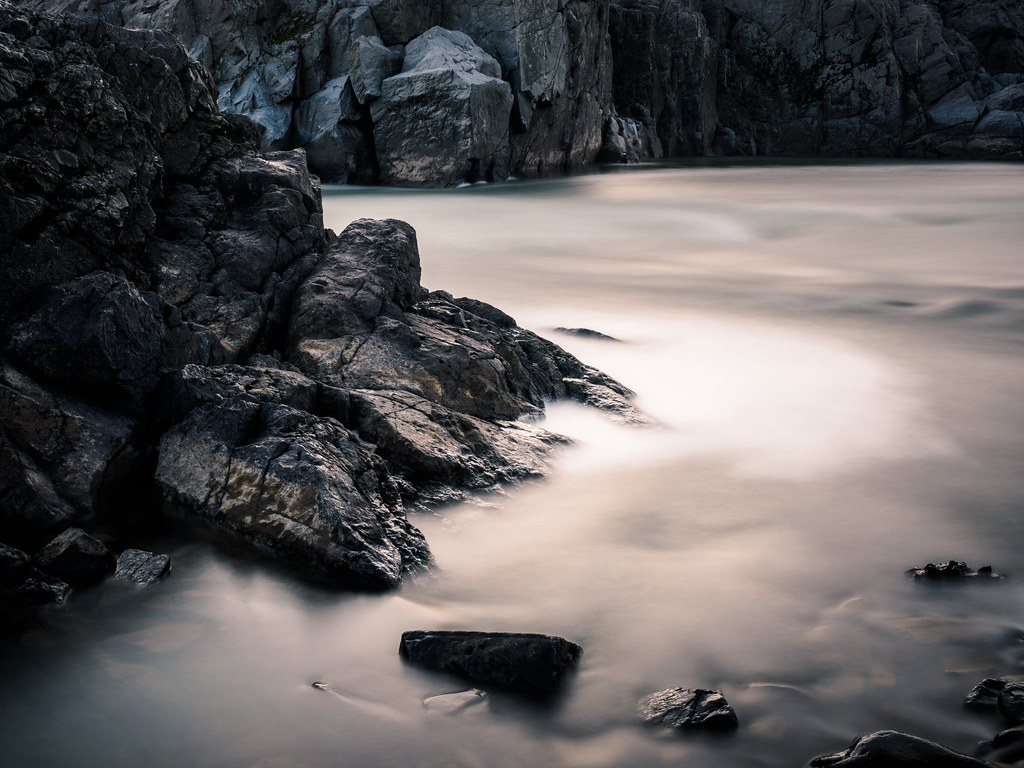
Olympus OMD E-M1 and M. Zuiko 12-40mm f/2.8 PRO with B+W 10-stop ND.
20mm at f/11, ISO 200 and 50" exposure time.

I'm sure it comes as no surprise to anyone that I have a strong affinity for long exposures. When I first picked up Photography: The Hobby back in the middle school years it was with direct intent to capture streetlight scenes as they spoke very loudly to my muse in those creatively formative years. It wasn't for many years that I finally adopted photography in the daylight, handheld, as a remotely viable exercise of the art form.

The idea of long exposure photography is very foundational to the history of photography itself because the original light-sensitive materials were extremely slow to expose, thus all photography was done with long exposures. You'll read about it in any history-centric article regarding back braces and rigid posing contraptions necessary to keep the subjects of old-timey portraits still for the duration of their photograph. Personally, I'd argue that every photography student coming into the hobby for the first time would benefit more being limited to tripod-mounted capture with the slowest film/ISO possible, and ideally the most restricted/limited light possible, to force an understanding not only of photography as a record of light's path across a frame but also of time. The impact of time on an image, I feel, is the most overlooked element at play in photography, what with video supplanting the still image as a record of time, and with the developments of the modern camera having negated focus on time as an element at play (people photographing night scenes with their smartphones, for example, are wholly unaware of the time element and simply want a frozen moment).

Until recently I stuck with tried and true methods of long exposure capture: high f-stop/slow shutter speed, use of ND filters (always a huge fan of the 10-stop ND), and simply waiting until nightfall. Newer methods (though admittedly not that new, I'm just slow on the uptake) such as compositing only recently made their way into my workflow. What makes those methods great is that they "stack" well with the traditional capture methods, which is to say the former ceilings I used to run into with exposure length on account of engineering limitations (imaging sensors get HOT when you push them over "normal" exposure lengths) disappear. Even cooler, in the absence of an ND filter and even a tripod, technology has us at that point where we can simulate the traditional long exposure, very convincingly, with a series of handheld shots stacked together. And it's really, really cool to be able to do that!

Lately in the Flickrverse I've been actively corresponding with another talented photographer under the guise of the username Space is a Lonely Town (and just for the record, I really love that username tag, it should seriously be a band name or something). Some interest was expressed in the technique used to assemble a faux long exposure image from a series of otherwise disjointed frames, so two examples of images processed with the technique, before on the left and after on the right, are below.

This first image is an assemblage of only 10 exposures, each snapped at 1/60". The math is pretty straightforward - 10 exposures x 1/60" equals a single 1/6" exposure. Arguably I could've achieved that exposure time handheld anyway, but the end goal was to test how well alignment of multiple handheld images worked in the process. You can see for yourself below.


I first came across this trick watching a video by Tony Northrup on YouTube regarding why you don't need filters (some points I agree with Tony, others I don't, it's ultimately a matter of how much time you want to spend behind the monitor in the end). Whilst decrying the perceived need for neutral density filters (of which I will still swear by even with these fun new compositing techniques in my mental camera bag), Tony demonstrates a process by which one can shoot, handheld, a scene and use Photoshop to auto-align the images as separate layers, then convert them to smart objects and change their stacking mode to median. All very standard compositing techniques, really, but it seemed almost terrifying to consider stacking handheld images for the effects. I was certain there would have to be some aberration involved, too much difference from frame to frame for alignment to properly be made, but I'll be damned if I was wrong.

From start to finish, the process is stupidly simple, however the manipulation of smart objects in Photoshop is extremely taxing on computer resources and so the technique involves a bit of a "time tax" on the back end (which isn't really so bad given the time saved on the front end of the process, but again, if you prefer to front load your efforts, ND filters still win out). With the shot below, I started off with 15 frames snapped at 1/125". I loaded up the first in the series in Lightroom and smacked it with some basic edits akin to what I would apply to any single still image, copied those edits and pasted them across the whole range of 15. Lightroom features an automatic "Edit as Layers in Photoshop" option when you right-click on a selected series of images, at which point Photoshop chugs along converting the RAW files into workable image layers with the edits applied in Lightroom. With all the layers selected, there's an "Auto-Align Layers" function in the edit menu which does an unreasonably good job of aligning selected layers based on even the most organic of content (straight lines and reference points be damned). Next it's simply a matter of converting the layers to smart objects in the layers menu and changing their stacking mode to median, which is the trick that merges the pixel values in such a way that emulates long exposure.


So the original series of 15 exposures at 1/125" have become, essentially, a single 1/12" exposure. The added benefit which is really cool is in the noise reduction vicariously a part of composite imaging. These 15 exposures were shot at ISO 200, and because of the random nature of noise generated by imaging sensors, calculating median pixel values among each smart object reduces the more pointed variance at each pixel area. Again, it's easy math - 15 exposures at ISO 200 effectively equates to 1 exposure at ISO 13, which is crazy because digital sensors don't really go that low in and of themselves. In some areas of higher variation (where the motion is) the effect is less noticeable, but where the image is static (such as on the rocks themselves) the enhanced clarity and definition and quality of the pixel-level image information is pretty amazing. I easily see myself employing the trick in other still life or even real estate applications where large reproduction, be it a big print or UHD screen, is the end display medium goal.

Tonight I'm heading to a small workshop with the Creative Photography Society to see a presentation by Denise Silva on long exposure photography, and I'm super jazzed about soaking in the experience and practice of another photographer who enjoys the technique and perspective involved as much as I do. Admittedly, I do kind of have some ideas I want to exercise on my own at the same time, primarily a blend of several traditional and composited techniques to create a single stupid-long exposure style image. Time consuming, but how cool would it be to slap on a 10-stop ND filter and take several in-camera software composited images and then stack those as smart objects in Photoshop? I don't know... sounds like fun to me!

Wednesday, January 6, 2016

It's nearly been a week already...

... How did you spend your 2016?

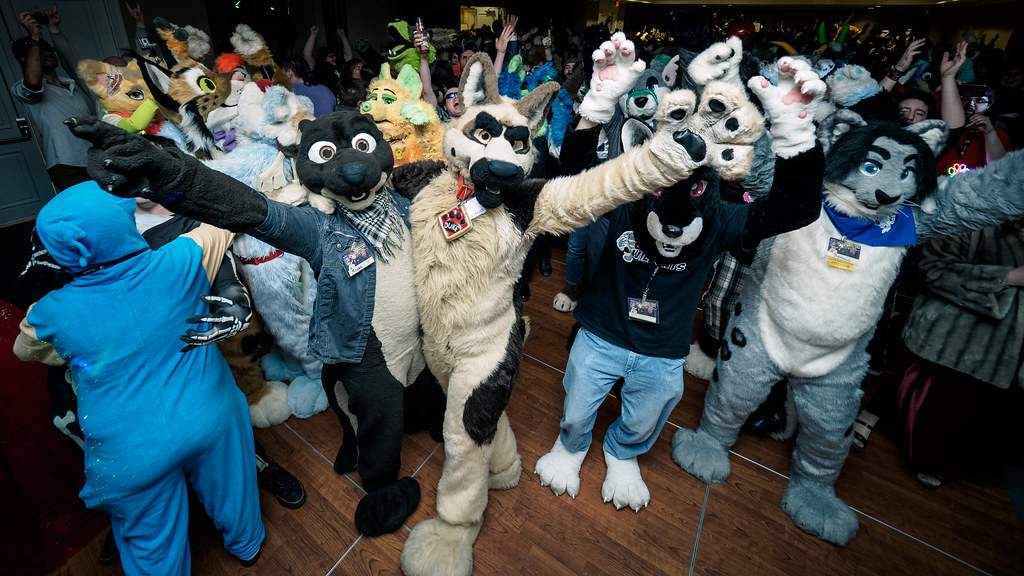
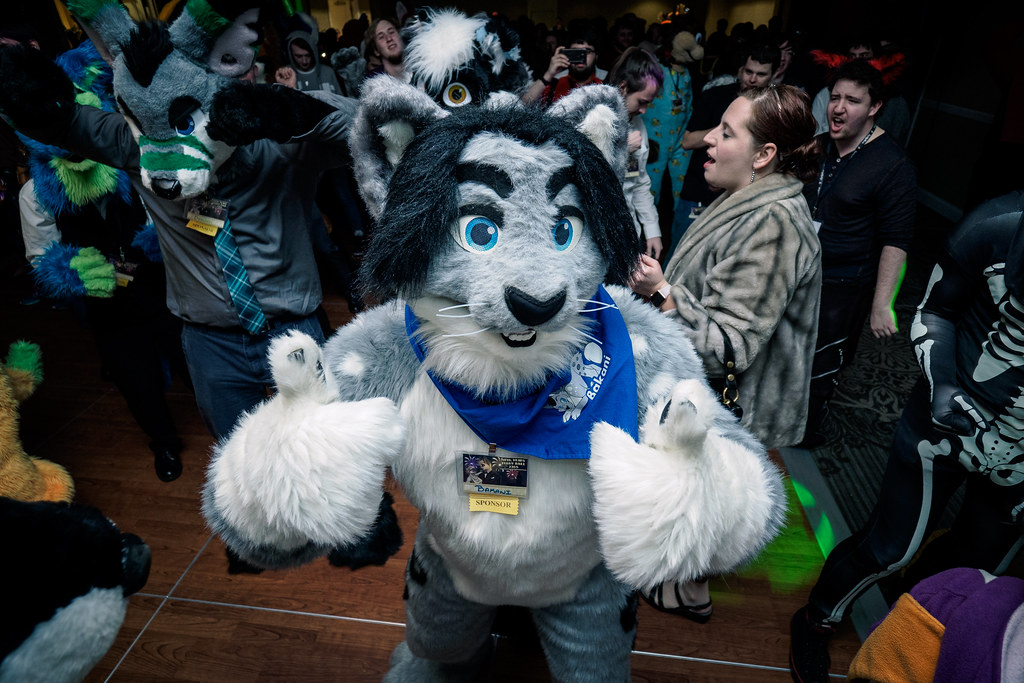
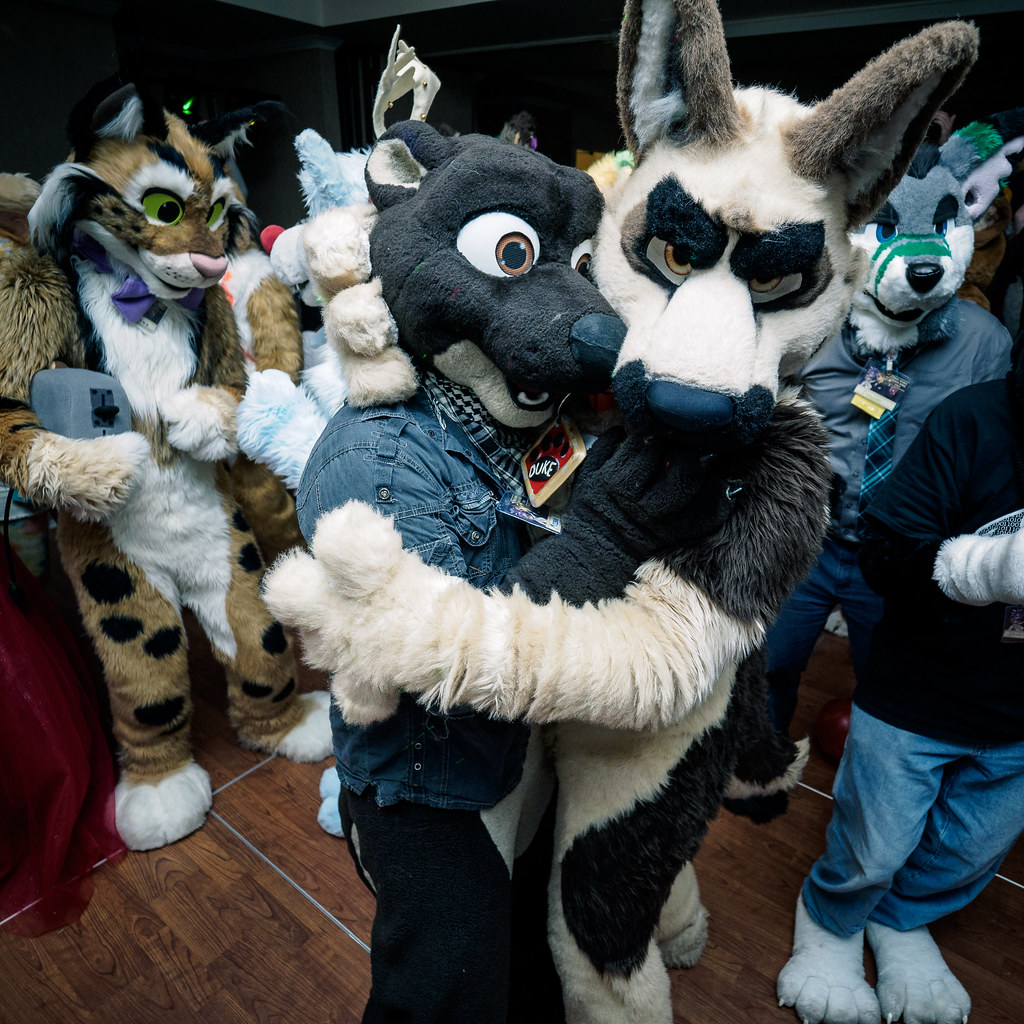
Mine was in the company of furries. Yup, those weirdos on that one dramatic Crime Show way back when (and I'm sure any number of other glamorous portrayals). Those guys know how to party, and frankly they are absolutely awesome company to keep.

Olympus OMD E-M1 paired with the M. Zuiko 7-14mm f/2.8 and FL-600R flash.
7mm at f/2.8, ISO 800, and 1/60" exposure.

I've mentioned it before, I really do have a penchant for this sort of event photography. It's not enough to be wandering the calm of hallways snapping posed snapshots of costumers and their fans, not for me. A motto I often recited to myself but lost the reigns on in the last year or so was "live interestingly", and that's really what this kind of event photography is all about on a personal level. Getting into the mix, being on the dance floor with everyone and partying right in the middle of the crowd, not chilling out on the sidelines as a quiet observer (not that there's anything wrong with that methodology, it's just not a creative process I find personally fulfilling). For a photo to matter to me, to really matter, I have to be a direct participant in the action involved, and the frames I captured at the New Years Furry Ball in Newark, Delaware, were a breath of some sort of long missed fresh air.

Olympus OMD E-M1 paired with the M. Zuiko 7-14mm f/2.8 and FL-600R flash.
9mm at f/2.8, ISO 800, and 1/60" exposure.

It's kind of funny, really, I always envisioned the M. Zuiko 7-14mm f/2.8 fitting into my arsenal as a strictly real estate lens, but it is probably my least favorite optic to use in such a capacity. Only for reasons dictated by my contracts do I use it for any work on the interior photography front, but were the option open to me I would be using my M. Zuiko 12-40mm f/2.8 with a circular polarizer and stick to focal lengths from 15mm to 35mm. No, where the 7-14mm shines is in the kind of in-the-mix event photography exercised on New Year's Eve. And it makes complete sense based on previous experience using fisheye in the same sort of venue (in fact, I was on the brink of picking up the M. Zuiko 8mm f/1.8 specifically for this event, but retracted my wallet for sake of logic-over-impulse). Sticking to the wider end on the dance floor, typically between 7mm and 9mm, bouncing flash on the ceiling (cranked up by +2/3 stops since TTL seems prone to metering on the darker side of exposure), my evening on December 31st was spent weaving in and around a mob of some 300+ fursuit clad performers dancing without fatigue for some 5 hours to both live-mixed and DJ-curated house music. It was just a damn blast.

The venue played out well for breaking in the new (old) E-P5 as well, which spent most of the night fixed with the M. Zuiko 17mm f/1.8 and sticking to natural light. When not bouncing around on the dance floor and instead sticking to the array of room parties and less-bass-heavy shenanigans, it was the camera I wanted to have with me, and it felt beautifully diminutive to carry.


For the first time in a long while, I feel much more complete and content with myself, my tools, my methodology, and especially my company, than I have felt in a long while. Still need to send in my poor, busted M. Zuiko 12mm f/2.0 in for service (it's hopelessly unsharp, not soft, unsharp, no matter what I adjust), but for now I'm more than happy with the 17mm f/1.8 all on its own. Tried sticking the PanaLeica 42.5mm f/1.2 on the E-P5 body, it was... sub-optimal from a weight/balance perspective.

I don't tend to buy into the whole "New Year's Resolution" tradition because I'm too much of a realist to accept the concept of time and the calendar as anything more than an arbitrary, man-made fabrication to gauge crop cycles and regulate social activities. But to spit in the face of my own ho-hum outlook, I would (arbitrarily) state that my New Year's Resolution for 2016 is actually just to share more. No business goals, the business is doing fine and is self-sustainable. What I intend to accomplish is the abandonment of my addiction to the arbitrary number games of popular photo sharing sites which has indirectly discouraged my enthusiasm to share photos because of some ill-conceived impression that every shot needs to be a masterpiece to merit posting, and any image posted much endure a battery of group-bombing to maximize popularity, Reddit cross-posting, all sorts of dumb and frankly anal shit I somehow arrived at as necessary actions for every single image shared.

Currently, I think my best venue might simply be a private website, something to which I can post images without any self-inflicted impulse to rig as a "winner" in the numbers game. Lately, though, I've had a lot of interest in picking up a tablet again and converting to that hardware as my primary go-to for image editing and direct share, which in clearer terms means "I'd like to edit photos on my tablet and write little blog posts on the spot to go along with them". I have tons of ideas, just have to move forward on them. The real elephant in the room is the question of "Will I set aside the time", and at the moment I have some New Year's Gusto so my answer is an enthusiastic "Hells to the yes".

Frankly, I have no idea how I expect 2016 to go. I didn't plan much ahead of time, have no real expectations of where I intend to be come 2017. Perhaps I'll inaugurate 2016 as my Year of Mental Time Off. Because seriously, I've spent 2011 to 2015 dramatically wracking my brain over all sorts of banal problems under the guise of written introspection... Maybe it's time to just talk about all the cool stuff I'm doing, not all the bullshit stuff I needlessly worry about?

Olympus OMD E-M1 paired with the M. Zuiko 7-14mm f/2.8 and FL-600R flash.
9mm at f/2.8, ISO 800, and 1/60" exposure.

Happy 2016, ya'll.